![Should you sharpen hooks?]()
Backcountry Fishing, Bottom Fishing, Drift Fishing, Flats Fishing, Fly Fishing, iOutdoors Blog, Permit Fishing, Redfish Fishing, Sail Fishing, Snook Fishing
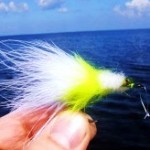 Should you sharpen a new hook?
Compared to a greenhorn fisherman, a seasoned fisherman will spend some time sharpening fishing hooks. If a recent fisherman would ask a veteran in fishing whether or not a new hook should be sharpened, his answer would surely be yes.
Whether you are a simple beginner fisherman or an experienced angler offshore angler, your point of contact with a fish is by the hook. It is the hook that lures a fish towards you, thus, making it a critical tool in fishing. The importance of the hook, especially a sharp hook, cannot be gainsaid especially when using crankbaits and similar baits where the grip of the hook to the mouth of the fish is extremely low.
Check your Hooks
To check your new hook’s sharpness, don’t just rely on the package when it says the contents are sharp. It is worth to check its sharpness by drawing its point across your fingernail. If it doesn’t leave a mark at the gentlest draw, then it is not sharp enough and needs some sharpening.
Although new hooks are sharp, sometimes, they are not sharp enough, thus, the need to sharpen them. Sharper hooks could land more fish especially when flats fishing, fly fishing, and sailfishing. A hook, although new, when not sharp enough could lose that high-priced fish you could have caught! Thus, the need to sharpen even a new hook in preparation for a fishing expedition.
Even while fishing, you should also be conscious of the sharpness of your hook especially when you have used them after a few casts or when you’re fishing in rocky areas. Once in awhile, touch the point and hone it if it is dull, otherwise, it won’t stick into a fish’s mouth.
Learn more about how to get your hooks as sharp as possible!

Flats Fishing, iOutdoors Blog, Miami Beach Fishing, Permit Fishing, Wreck Fishing
 Permit – The Best Way to Catch Them
Permit, known as Trachinotus falcatus, is a game fish of the western Atlantic Ocean. It is also known by the name round pompano or great pompano. Pound for pound, the Permit is one of the strongest fish in the world. It uses its large, wide body in the heat of battle and uses its head to keep underwater.
Description
Permit are grayish, dark or iridescent blue on top, and have silvery sides. In dark waters, the fish shows golden tints around their breasts. They possess teeth on their tongues, no scutes, and have a dorsal fin insertion directly above that of their anal fin. The common size of this species is 25 pounds. They are seen in schools of 10 to 20 fish but can occur in larger numbers. Their diet consists mainly of crab but they eat shrimp, clams and sometimes small fish as well.
Distribution and Location
Permit are often found offshore in wrecks and debris or inshore in grass flats, sand flats and channels. They are most abundant in south Florida but small specimens can be found in every coastal county.
Fishing Tips
It is important to know the Permit before attempting to catch it. This species have large eyes and can see extremely well above and under the surface of the water. When approaching this beautiful species, caution is always observed.
- It is best to fish for Permit on calm, clear days near the full and new moon. During these days, Permit can be found “floating” near the surface.
- Use 9 to 10 weight fly outfits using floating and clear floating line when fishing in the Florida Keys.
- Leaders use range from 9 to 12 feet tapered to 12 to 16 pound test fluorocarbon.
- Crab patterns and its variety is the normal arsenal when Permit fishing.
- For spin fishing, it is best to use seven-foot plus medium action spinning rod outfits. It is also essential to use quality spinning reels with superior drag.
- When spin fishing, rigging 10 to 12 lb test mono line is the standard usually observed. Along with this is the use of a 16 pound test flouro leader and 2/0 or 3/0 hooks with live crabs or shrimps.

 Permit – The Best Way to Catch Them