
iOutdoors Blog, Cape Canaveral Fishing, Florida Fishing, Mosquito Lagoon Fishing, New Smyrna Fishing, Redfish Fishing, St Augustine Fishing
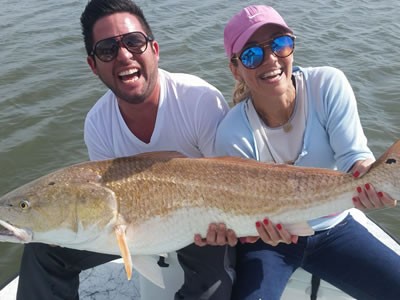
How To Catch Redfish In Florida
Redfish, also called Channel Bass or Red Drum, is one of Florida’s top sought-after saltwater sport fish. They have a wide distribution on both the East Coast and Gulf Coast. In the Atlantic Ocean, they range from Massachusetts to Florida, and in the Gulf, they range from Florida to Northern Mexico.
Flats fishing in the shallow waters of the sunshine state for bull redfish is an experience like no other. Anglers worldwide travel to Florida every year to catch redfish. Their beautiful color and freight train-like runs make for an incredible fishing experience.
Characteristics
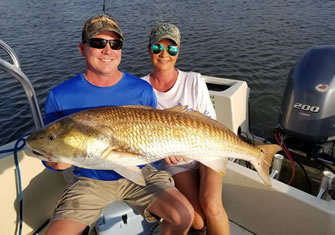
The first step to targeting and catching redfish is being able to identify one. Redfish are usually bronze or reddish in color with a white underside. One of the most distinctive features of redfish is the dark eyespot near its tail. On average, redfish measure from 11 to 24 inches depending on age and weigh up to 22 pounds. The largest fish are known as bull redfish or bull red. Generally, they are likely to exceed forty pounds during the summer during the spawning season. However, during the winter, they are more likely to be in the three to the twelve-pound range.
Red Drum is a fast-growing fish, with the juvenile redfish reaching about one pound and 11 inches in its first year. It’s considered a bull redfish when it gets over 26 inches. The name red drum comes from the male’s habit of making a knocking or drumming sound during spawning by vibrating their swim bladders. Redfish can look similar to black drums from a distance, and the colors can sometimes be easy to mix up, especially in adult redfish. However, the redfish has no chin barbels, and the black drum never has the spot near its tail.
Where To Catch Redfish In Florida
Anglers can enjoy red drum fishing almost anywhere in Florida since they are found on both Florida coasts. They live nearly everywhere on the Gulf Coast and are predominately along the upper half of the East, near Central Florida and north. East Central Florida has earned its name as the Redfish Capital of the World because of its fantastic year-round fishing in the shallow grass flats. Specifically, the Indian River, Mosquito Lagoon, and Banana River are most known for their redfish fishing and big bull redfish fishing in New Smyrna. 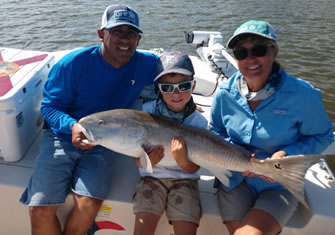
Almost all the coastal water on West Central Florida makes for good flats fishing for redfish. Specifically, Clearwater, Tampa Bay, Palm Harbor, Tarpon Springs, St. Petersburg, Sarasota Bay, and Spring Hill are filled with decent-sized redfish schools. Generally, the adult redfish move offshore to spawn and can be found offshore in large schools. They will roam into coastal rivers throughout the year sporadically or in small groups but swarm into these areas in the winter when seeking warmer water.
Where To Look
Anglers can fish for redfish in the grass flats, near mangroves, on oyster bars, off a dock, off beaches, or from a pier. The best redfish fishing is often done in shallow flats near the mangrove shorelines or grass flats. Redfish prefer shallow waters between one and four feet deep along the edges of bays with submerged vegetation. When fishing for redfish, it’s generally best to focus your attention on the areas with good structure. Redfish go to the surf zone near passes and into bays in the Fall, especially during stormy weather. Redfish live in freshwater areas, too, often being spotted in tidal creeks and rivers.
Generally, the slot size fish inhabit coastal waterways around the state. However, in the Indian River, Mosquito Lagoon, and other areas of East Central Florida, the bull reds are known to be close to shore too. For this reason, these are the best areas to catch big redfish in Florida consistently.
Redfish Capital Of The World
 The Indian River Lagoon system on the East Coast of Florida, which includes the Mosquito Lagoon, is the only place redfish live their entire lives inshore. The Banana River is another top spot for redfish in the area. Most of the redfish caught in Central Florida are caught while fishing shallow water, known as flats fishing. The fish is in the coastal lagoon year-round, making this area the redfish capital of the world and a unique place to fish.
Unlike other areas where most redfish leave the flats for deeper areas as they reach maturity, most of the redfish in Mosquito Lagoon and Indian River areas never leave the flats. East Central Florida is the only area anglers can stalk and sight fish a bull red in the 30 to 50-inch range on crystal clear fats. Among the big fish in this area are tons of slot size reds, creating excellent action even if you don’t get a bull.
Best Time Of Year For Bull Redfish
The odds of catching redfish are good in certain areas throughout the year, especially in Mosquito Lagoon and Indian River areas. However, the best time to catch a big bull red is in the late summer and early Fall.
Late summer and early Fall provide the highest probability of experiencing big redfish catches. The big fish living in deeper water offshore usually show up close to the shoreline near jetties and bridges during these months.
Best Time of Day
Redfish are known to eat throughout the day at varying times and tides. During the hot summer, the best time for redfish is early in the morning and late in the evening. They are almost always looking for food, but where they look may depend on certain temperatures and tides. For example, during mid-day or hot summer days, they will likely be up under the mangroves where the shade keeps the water temps cooler.
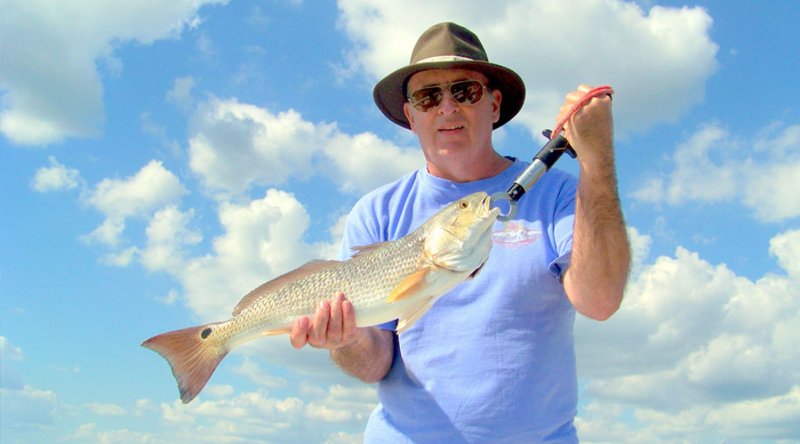 During cold winter fronts, the best time is usually once the sun is high and the grass flats have had a chance to warm up. However, anglers will often have luck early in the morning on warmer winter days in slightly deeper water. A general rule of thumb before fishing is to consider the temperature. If it’s too hot for you outside, it’s likely too hot for the redfish too. So fishing during this time, look for fish in shaded areas under docks or mangroves. Whenever it’s too cold for you, it’s probably too cold for the redfish as well. In case you’re fishing during this time, consider fishing later in the day when the temperatures warm up. Otherwise, your best bet will be in the deeper areas where the water is warmer if fishing on a frigid day. Then, as the temperature warms up throughout the day, work your way to the flats.
Top Baits and Lures For Catching Redfish
One of sport fishermen’s favorite things about fishing for redfish is that redfish eat a wide variety of baits, both natural and artificial. Dead natural bait, as well as live, will work. Live baits are the most effective method to consistently catching redfish, especially the big bull red. The best live baits are live shrimp, mullet, marine worms, mud minnows, Atlantic croaker, pinfish, ladyfish, and small blue crabs. When fishing for redfish in deeper drop-offs, pinfish and small mullet are usually the best live bait options. However, live minnows and shrimp are often the most effective when fishing in shallow mudflats. 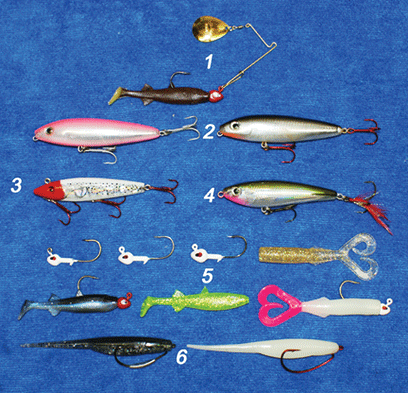
The best artificial baits are shrimp and crab-like plastic worms and jigs. Shallow running spoons and baitfish-shaped plugs are also effective. Anglers using poppers can expect explosive strikes from redfish cruising near the surface. Seasons may also impact the decision on which bait to use. Generally, in summer and Fall, redfish feed on crabs, shrimp, and mullet.
However, they primarily feed on pinfish, mullet, pinfish, sea robin, lizardfish, Atlantic croaker, and marine worms in winter and spring. Redfish are always looking for food; regardless of the environment or water depth, they adapt themselves to any situation. As a rule of thumb, if using live bait, use what’s in the water. If using artificial lures, try to imitate the baitfish or other prey that’s around.
Techniques
Bull reds on the beaches usually target mullets, so a popping cork with soft plastic is effective on the beach. Redfish will also cruise in the surf, right along with the breaks. The translucent blue tail always gives them away. Surf fishing is prevalent along the east coast. Surf fishing can involve wading in the water or fishing from the shoreline. If offshore fishing, Reds will roam in depths up to 30 feet deep. While trolling, watch for birds and blowups at the surface.
Tides
Tides play a significant role in the daily movements of redfish, especially in shallow water. Anglers can catch redfish in many different depths, but where they are and what they are doing will determine how you catch them.
In general, high tides, also known as the flood tide, will push redfish into the shallow flats. The low tide will pull them out of the shallows into the drop-offs with deeper water. This varies based on location and how much the high tide and low tide change. An effective artificial lure to use on the high tide or flood tide is one that imitates fiddler crabs. Red drum fishing during the flood tide may involve more blind casting rather than sight fishing.
Sight Fishing
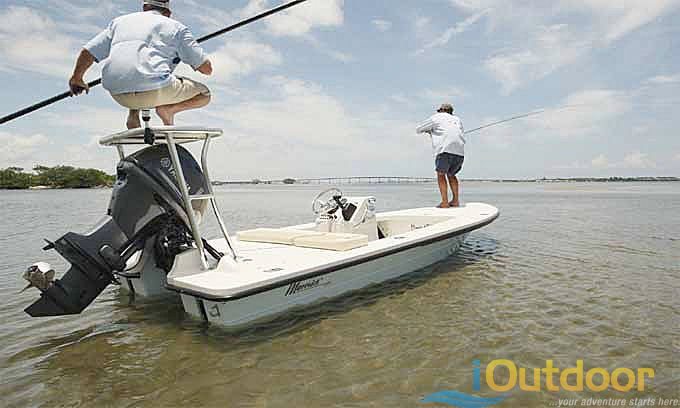
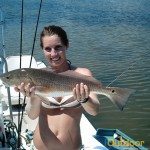 Sight fishing for redfish has become the norm for fishing redfish in many areas in Florida, with poling platforms on your boat and a strong trolling motor. The hunt is on when you know the tides and when the fish move onto a particular flat to start feeding. Sight fishing for redfish is the ultimate sportfishing experience. In many Florida mudflats, the best time to sight fish a redfish is on the incoming tide. During this time, the tide is still low enough to see the fish but high enough to hold the fish and is pushing bait towards the shoreline, creating a feeding frenzy.
Seasons may also impact where to spot reds. In the winter and spring, the Florida water is generally lower, cooler, and clearer. On sunny days the redfish will move onto the flats, where the water will warm up quicker in the sun making for ideal conditions for sight fishing for redfish. Florida waters are generally less clear in the warmer months, but spotting fish is still possible on grass flats near the edges of deep areas.
Tailing Redfish Fishing
One of the most amazing sights while fishing for redfish is spotting a tailing fish. This means they are face down in the mud looking for crabs and shrimp with their tails sticking through the surface of the water. It’s a beautiful sight and an exciting moment while fishing. The best time to catch a tailing fish is usually on the incoming tide while the water is still low enough for redfish tails to break through the surface. Anglers will usually have to cast closer to the fish to get noticed.
Red Drum Regulations
The slot limit is no less than 18 inches throughout Florida, no more than 27 inches in length. The daily bag limit is one redfish per person per day. The exception is the Northeast area in Flagler through Nassau counties, where the daily bag limit is two fish per person per day. Also, all Florida state waters from Hernando county through Collier County are catch and release only through May 31st.
Record
The all-tackle world record for the heaviest redfish caught was 94 pounds, 2 ounces. The Florida record is 52 pounds, 5 ounces.

iOutdoors Blog, Bass Fishing, Redfish Fishing, Sail Fishing, Shark Fishing, Snapper Fishing, Snook Fishing, Striper Fishing, Sword Fishing, Tarpon Fishing, Tripletail Fishing, Trout Fishing, Tuna Fishing, Wreck Fishing
What Fishing Line to use?
As a fisherman, there is a good chance that you have choices to make regarding your fishing line? Perhaps you have difficulties, your lines breaking while you were reeling a catch or casting your favorite lure. Having a faulty fishing line may not be the whole reason.
These events may reinforce the fact that you need to change your fishing line or use the wrong type. The question now is – What fishing line to use?
Like the lure and rod and reel, fishing lines are one of the components necessary for any angler’s success. It doesn’t matter if you’re catching bluegill from the bank, flipping bass out of thick grass, or trolling offshore for sailfish. You need the excellent quality and right type of line to land fish and have a hassle-free time.
With hundreds of different fishing lines on the market, what types, what sizes, what diameters should you use? It’s about the most difficult choice for most anglers.
So we were going to break down all the different fishing lines reasonably according to their uses, faults, and certain types of fishing best suited for each style.
It’s in the little details
Identifying the target species, fishing style, habitat, lures, and baits, and the angler’s skill all have a bearing in choosing the best line for the job.
From trolling spoons for oversized pike and steelhead; to deep jigging lead heads for walleyes and smallmouths; to working topwater frogs or spinner-baits for bass; there’s a specific kind of line to help anglers get the best results.
There are four significant types of fishing lines on the market today that matter for all practical purposes. Each has its pros (strengths) and cons (weaknesses), and anglers love each type.
99.9% of the anglers, when starting, only understand the difference in the packaging and color of the line. Braid, fluorocarbon, and monofilament mean nothing to them. We want to share what the pros already know about the fishing line and how they choose the different types. Share the cons no one wants to talk about and the pros of why you should be using it. You will know the perfect fishing line to use when selecting your favorite lure. Additionally, plan on fighting your favorite fish species by article end.
All Fishing Lines have Personalities
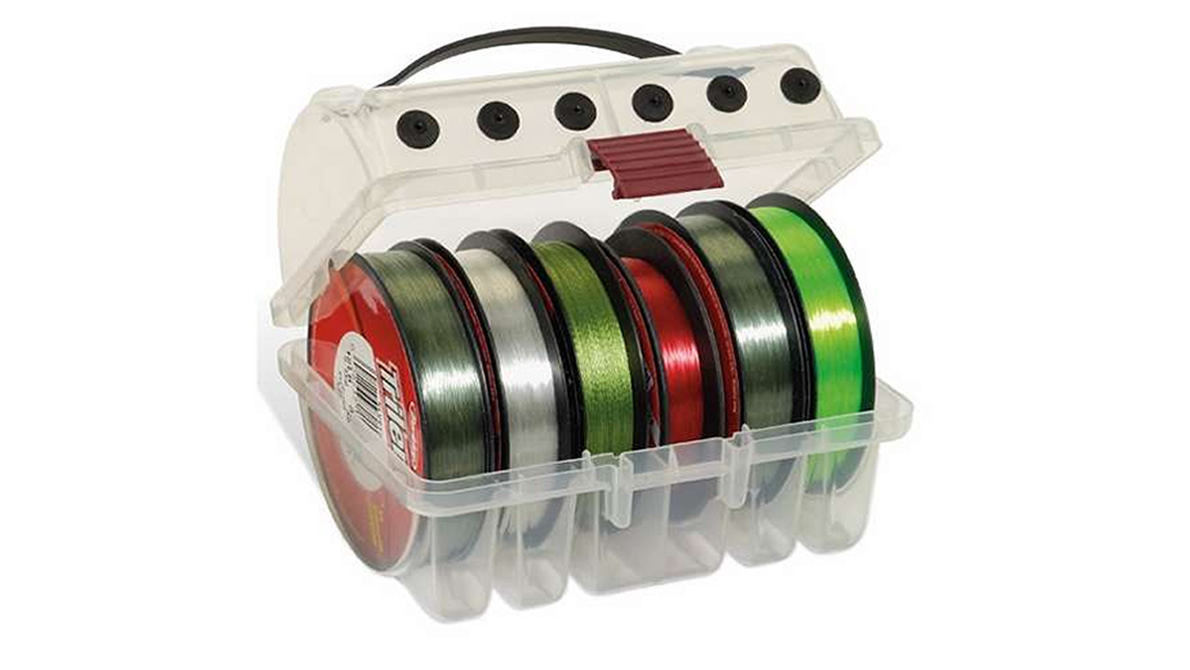
Before we start suggesting different products on the market, there are a few personalities of each line to go over. Later in the article, this will help you understand why one line might be not as good as another in your current situation.
- Abrasion Proof: Ever have a fish cut the line with his teeth? Maybe your favorite fishing spot has lots of rocks, and you get cut off all the time? Having a line that is more abrasion-resistant will help. Or, more importantly, make sure you are not using a fishing line that is not abrasion-resistant.
- Buoyancy: This is how your line floats in the water or how quickly it may sink. Different situations are going to call for a specific fishing line. The more buoyant the line is, the better it will work for topwater lures. Lik that sinking provides a better feel of the fishing lure or bite of a fish. It also helps with the hooking of fish in some cases.
- Memory: This happens to some types of lines when it gets old or is stored in the sunlight. When you cast, and your line lies in the water, is it straight or curled up? That’s memory. A fishing line with lots of memory will also get kinks or knots as you reel cast and retrieve. The biggest problem that occurs from the fishing line with lots of memory is losing all your casting distance.
- Strength: It comes in all types and forms of fishing line. Strength should not be only the breaking point. The most critical factor to consider regarding power is the diameter of the fishing line. Not all fishing lines are equally treated when looking just at diameter vs. strength. There is a time when stability is more important than the diameter, and the diameter is more important than power.
- Stretch: Is the distance the line with giving before breaking. The stretchy line is vital for certain fish and lures. In some cases, it helps with fighting a fish; other times, like with crankbaits, it gives the fish time to inhale the bait before you can react. Typically, the stretchy line also provides less sensitivity to the lure and bite of a fish.
- Visibility: This should be a given; fish can see line color. The fishing line’s specific colors work better in different color water, other fishing techniques, and various fish species. Spooking of fish because of line color is one of the number of mistakes beginners make in choosing a line.
Okay, now that we understand the fishing line’s personalities, let’s deep dive into the types of lines on the market today!
Monofilament: The Old Reliable
Since I can remember, monofilament has been the standard line for catching bluegill or Blue Marlin worldwide. Even today, the retail stores are full of inexpensive fishing lines, which is monofilament. It’s an excellent value for anglers; it works, catches fish, and casts well initially. It can be used on any style fishing reel, is easy to work with, and has good knot strength.
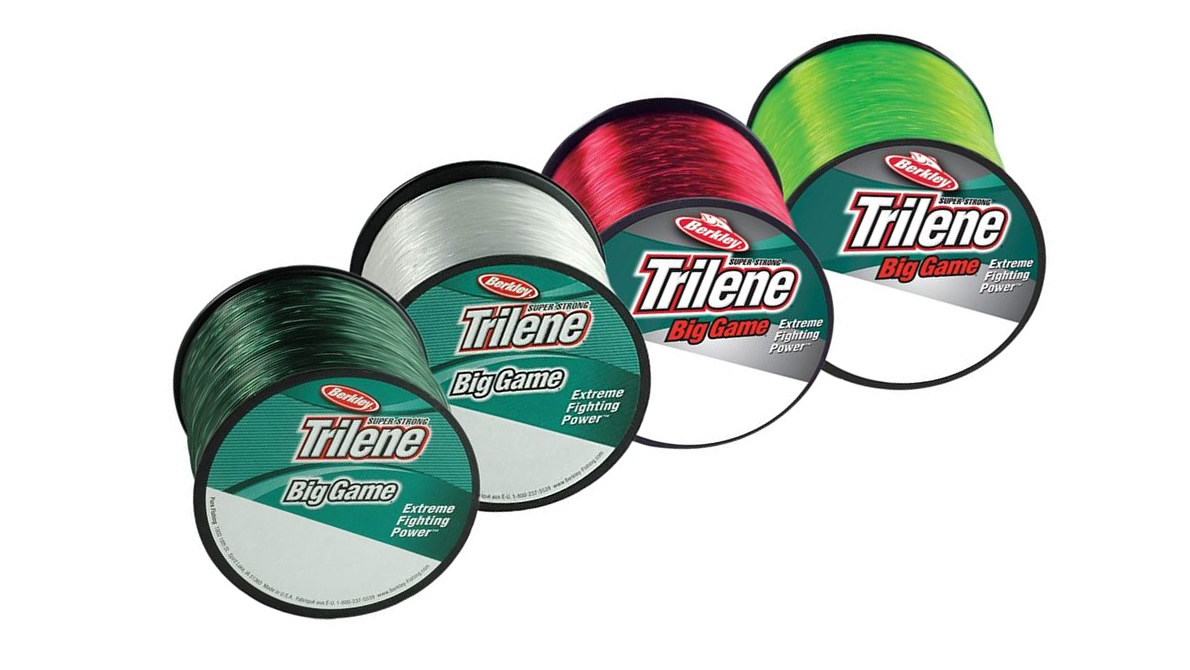
Pros of Monofilament
Monofilament is known for its reliability. It stretches under pressure; it’s durable and forgiving in the same breathe. The bulk of the fish landed in the world happen on monofilament. Some Monos are a bit stretchy; they still provide a right hook to drive hooks deep in to fish. Unlike its sister line fluorocarbon, monofilament is more forgiving and softer. It is helping with abrasions from rocks, fish teeth, and others. Think of mono as the old reliable; when you need a line you can rely on for almost all fishing forms, she won’t let you down.
Because it’s softer and more flexible than fluorocarbon, knots tie easier with mono, and cutting the line with almost anything, including your teeth, works for a Mono connection. Monofilament is exceptional for line sizes smaller than 12 pounds. It’s easy to cast lighter lures and adaptable for any terminal tackle, such as snaps, hooks, sinkers, bobbers, and swivels.
Cons of Monofilament
Monofilament is the line with the most stretch. It can be a fault or an asset for anglers. It provides less sensitivity than the fluorocarbon line, which can lead to anglers’ loss of fish as some anglers have difficulty detecting light strikes. Stretch also requires anglers to set the hook harder to drive deeply into the fish’s mouth.
The monofilament fishing line’s main fault is the memory, which creates loops, knocks, and twists, causing multiple casting issues. Monofilament can be especially tricky with lures that spin the line, like that happens when trolling. Twisting is caused by not adequately using leaders and swivels to decrease line twists.
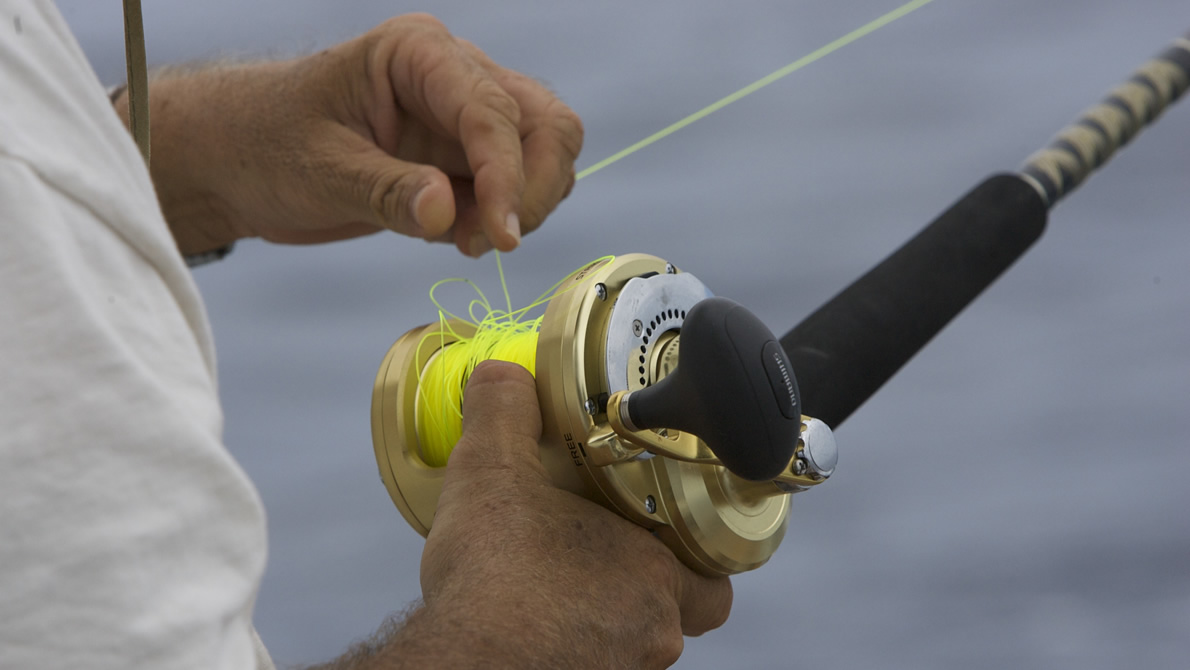
How And Why Anglers Use Mono
There are many monofilament applications, and since it’s been around for decades, many top anglers are committed to it, like a veteran fishing guide, Capt John Leech, of Kissimmee, Florida.
“I use Trilene XL monofilament line the most it’s what I feel like I get the most bites on,” he says. “Yes, still use braid and fluorocarbon with no-fault, braid has many advantages in thick covers, such as no stretch, incredible strength, solid hooksets, lots more sensitivity, longer life spam on the reel. And use monofilament because it works on sunny days, cloudy days, and all days in between. I have just always had confidence in it, so if it’s not broken, why change.”
Capt John also commented that monofilament is much cheap when your fishing every day as he does. It’s smooth, and it makes it easier to tie knots quickly.
Florida fishing guide Capt Al out of new Smyrna Beach uses limp monofilament leaders when he uses live bait, especially when bobber fishing with a slip-float rig.
For Saltwater fishing trout and redfish, it mostly uses monofilament.
“Being able to see my line is important so a hi-vis Mono is a majority what I use. And so fish won’t see or shy from it, I always employ a fluorocarbon leader.” My preferred monofilament is Berkley Trilene Big Game for trout and redfish; both are smooth casting.
Copolymer: A Basic Improvement
Attempt to make improvements to monofilament; the industry created a copolymer fishing line. It’s a newer version of the version of monofilament, with slite changes. They embedded a different cord of nylon, making it two or stains of material instead of one. This process strengths the line reduces stretch and, more importantly, provides manufacturers access to create a unique recipe and customize the line’s characteristics to specific types of fishing.
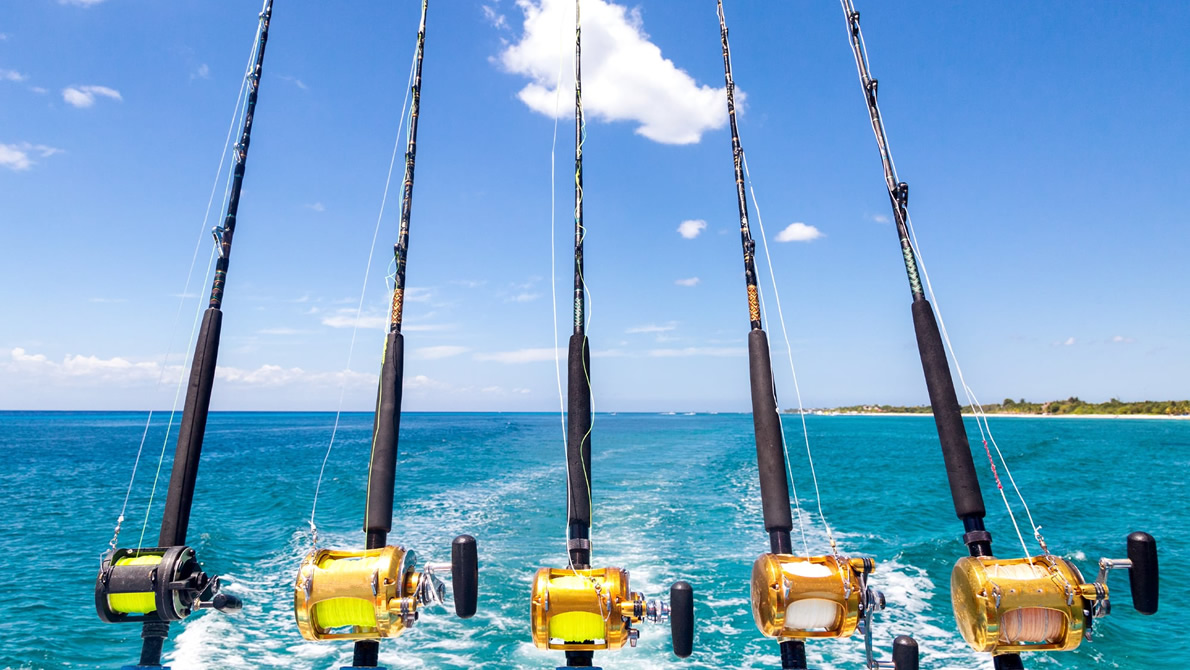
Pros of Copolymer
You wonder when you go to the store and see so many different fishing lines and ask, why? The copolymer is responsible, as the manufacturing process allows quickly unique signatures of a new line into the market. The manufacturers can mimic existing lines and make slight changes so they can say it’s better and different”? In general, its a lower stretch than monofilament but carries less memory. All while maintaining shock strength, improved casting, and knot strengths. It’s also more abrasion-proof, all while adding increased stability to the line.
Cons of Copolymer
A unique difference between monofilament and copolymer is it doesn’t float very well. While it is still nylon-based, the core to monofilament can still heat up and get sunlight damage from the UV rays. The big loser is the angler; with all the technology changes to monofilament to create copolymer, it has made the price considerably more expensive. You have to decide if the difference is of value to you.
How And Why Anglers Use Copolymer
There are many specific applications for copolymer that lead Captain Troy Wells of FortLauderdaleFishing.com uses in his day-to-day operation.
“I use copolymer line on most all reel types, and I love it for deep-water tactics like jigging and suspension rigs. It’s what we get the most fish on,” he says.” I don’t mind paying a little more; there’s no reason not to. We land more fish; you can’t convince me otherwise.”
The Ever So Popular Braided Line
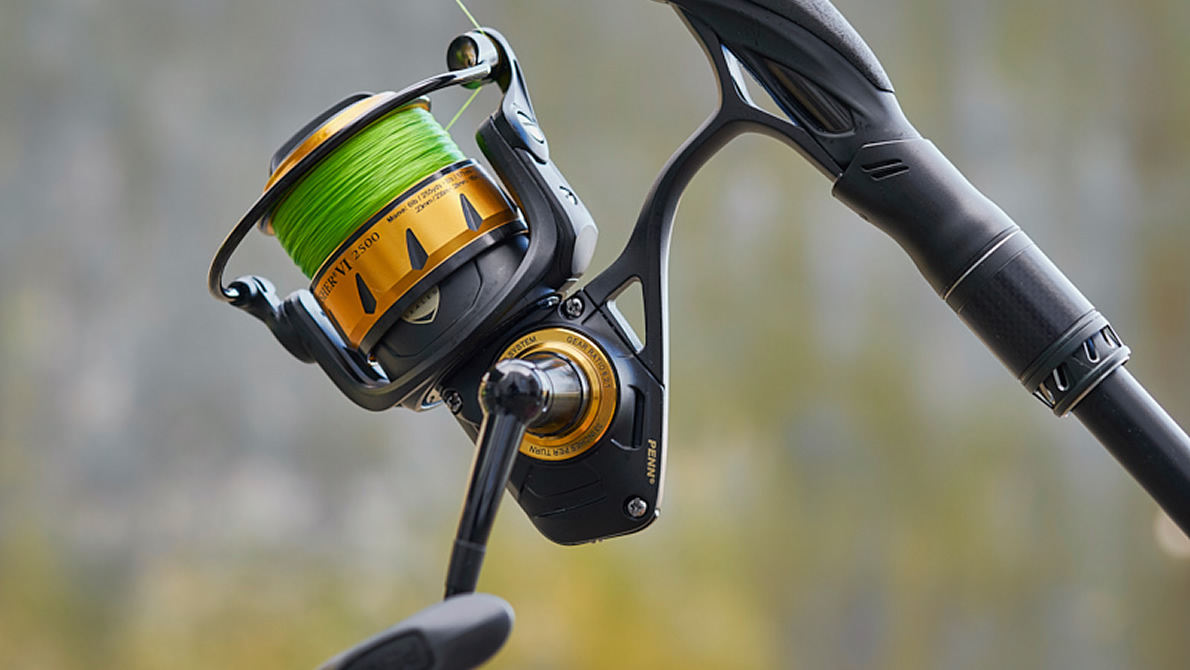
Braided line has boomed in popularity in recent years due to comparatively new improvements that have resulted in high abrasion resistance, excellent diameter per test, superb casting characteristics, and extended life use. Perhaps braid’s biggest asset is that it has virtually no stretch; thus, it’s exceptional sensitivity. It makes it a top choice for deep water and heavy cover fishing and “feeling” the slightest bite from fish. However, no stretch can be detrimental if anglers overplay fish, pulling out or straightening hooks, resulting in a loss.
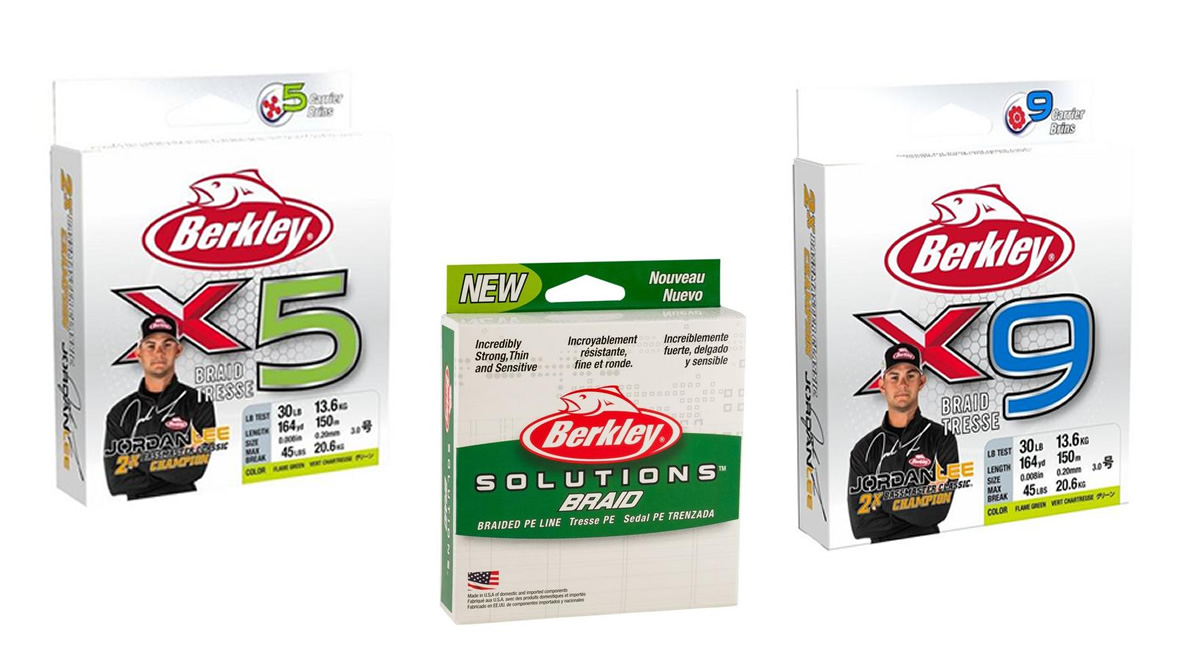
Pros of Braided Line
Its strength, clearly the #1 feature of the braid. Secondly, it would be the diameter, especially in the big sizes like 15, 30, 50, and 80 pounds. In very light tests, let’s say, under 10 pounds, it is extremely sensitive and still super strong. Most people use it for its casting distance, which outperforms all of its counterparts. The addition of adding a monofilament or fluorocarbon leader provides an exceptional advantage over the fish.
Cons of Braided Line
It’s the most expensive, more than monofilament, copolymer, fluorocarbon, and it can be tricky; even wind knots can tie in a ball of waste. It can be much harder to tie knots; if the proper knot is not connected, the braid tends to slip. Many stand monofilament knots that work great, such as the Clinch Knot and Blood Knot, do not hold well with braided lines. Not necessarily a negative, unless you don’t have them. With braid, it requires a pair of clippers or scissors to retie.
How And Why Anglers Use Braid
Well, respected multi-species angler and Lake Erie fishing guide Capt Mark Rose out of Erie, PA uses braid for finesse applications deep jigging for big smallmouth. “I use Berkley X9 braid attached to a fluorocarbon leader for most deep and clear water fishing applications I do.” Capt Mark says explicitly, “for drop shot fishing in the clear waters of the Northeast, I use 6- or 8-pound braid with an 8 to 10pound fluorocarbon leader.”
Mark adds that one of the primary reasons he uses braided lines is that it increases his customer’s sense of “feel” when fishing deep water. He says the benefits of supper thin diameter and lack of stretch are unbeatable.
Capt Tom Goodrick, Lake Erie Walleye expert, says, “braided line is his first choice when running moving baits to set hooks in fish like pike and walleye. Crankbait trolling for walleyes and other species is perfect for braid because I can ‘clear’ a lure of debris without reeling the bait back to the boat. Deep jigging with hyper-sensitive, no-stretch braided line makes for controlled solid hook-sets by customers.”
Fluorocarbon
The fluorocarbon fishing line is a relatively new product compared to its counterparts that have been around forever and improved dramatically over the years. Its price had also come down considerably from when it was introduced into the marketplace.
Pros of Fluorocarbon
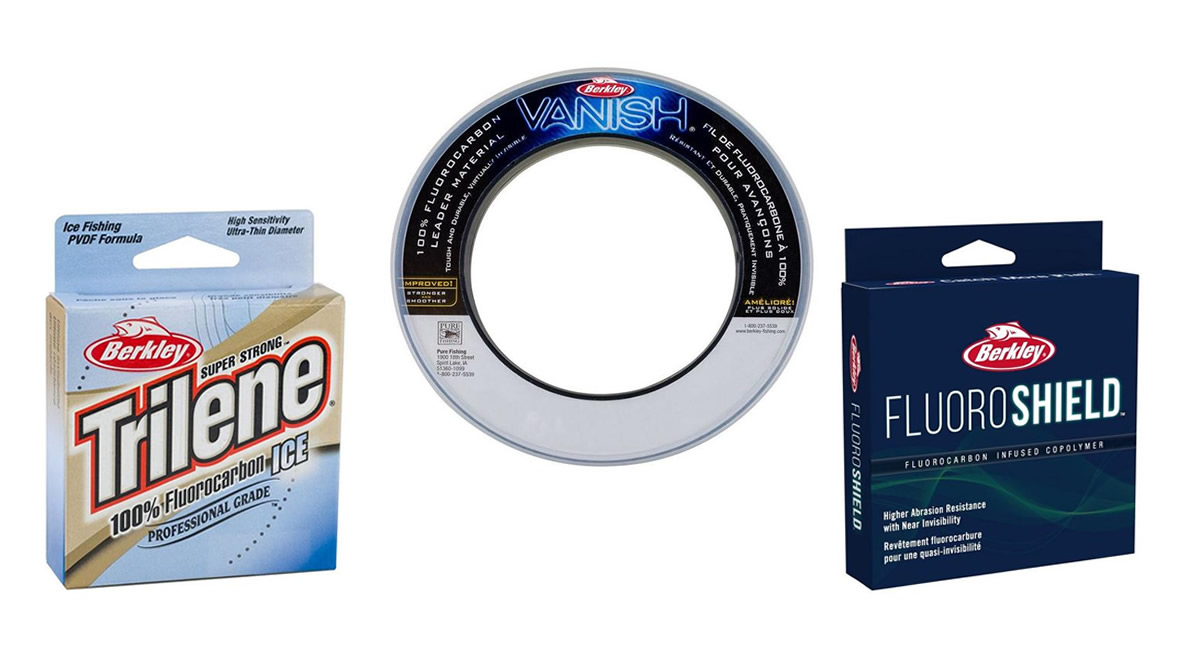
Visibly almost identical in design to monofilament in that it’s round and feels very similar. It’s virtually invisible, ultra-clear underwater because light passes through it. For this reason, anglers can use fluorocarbon in heavier pound tests than monofilament and copolymer lines that are more visible.
While fluorocarbon does stretch, it has much less bonce than monofilament, although it feels more elastic than braided line. It’s built with a hard casing, so it’s more rigid and more resistant to abrasion. Fluorocarbon is known as a stiffer line than all its counterparts, and it is. But technology and development have made many improvements in recent years. Cleary excepted by new era of anglers, fluorocarbon is quickly gaining lots of endorsements from top anglers.
Cons of Fluorocarbon
Fluorocarbon, because of its density, sinks faster than monofilament. So for topwater lures, it’s not the best choice of line. The bigger continued to complain from the weekend angler is the difficulty of tieing knots due to additional stiffness. It is most critical to wet your line when tying with fluorocarbon to help the line slip and tighten the knot.
How And Why Anglers Use Fluorocarbon Line
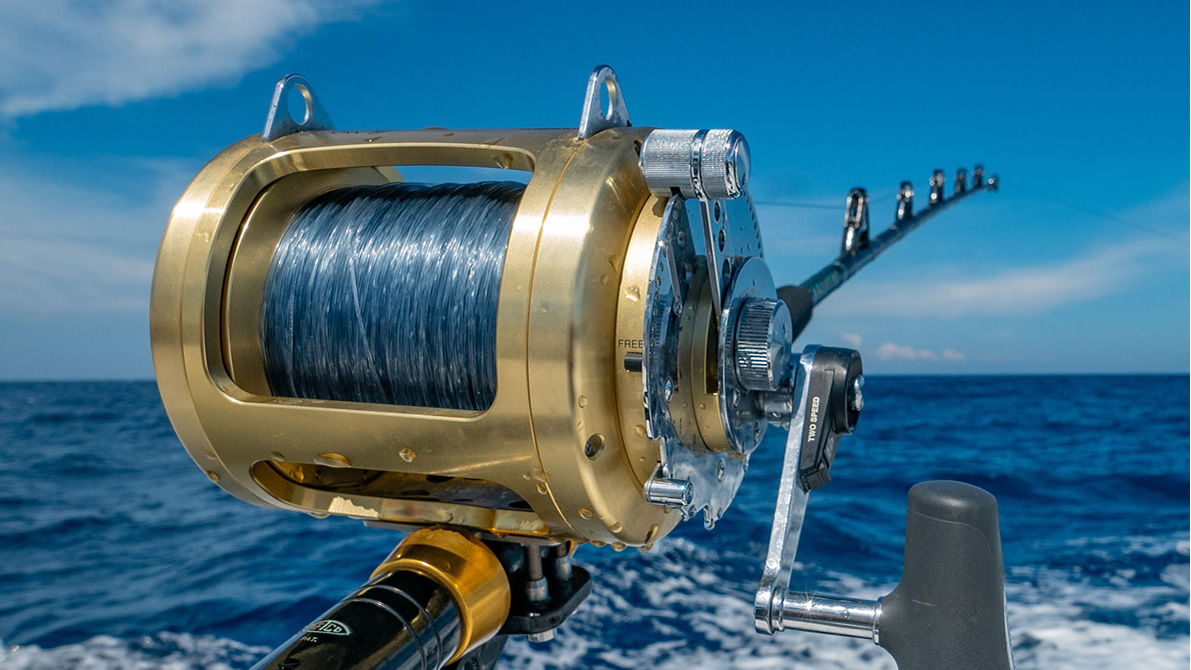
“Berkley FLUOROSHIELD Fluorocarbon has become my number one all-purpose line,” says Capt Mark Shepard. “It’s durable and castable on bait-casters while still maintaining lots of abrasion resistance. I mainly use it because it’s the most transparent line of all that is manufactured. That means it’s the closest to transparent of anything other than water.
Shepard says he uses it almost exclusively for throwing his WOW Factor Crankbaits. “It’s stronger than monofilament and abrasion-resistant, and fluorocarbon helps a bunch.” everything else.
In closing
Most anglers know that they have to change their fishing line regularly. However, most only do so when something happens to remind them of this. Choosing the correct one based on conditions and species will change how you fish and the results!
Daytona Beach Fishing, Fly Fishing, iOutdoors Blog, Redfish Fishing
FLY FISHING MOSQUITO LAGOON
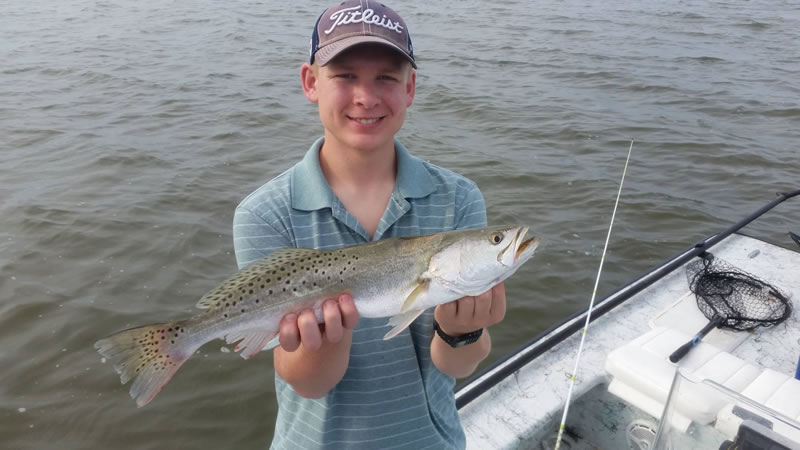
Mosquito Lagoon, along with Indian River Lagoon, is considered “The Redfish Capital of the World” because redfish are found there all year-round. Moreover, redfish caught in the lagoon are often larger so that you’d best prepare the fight of a lifetime. This can be done with spinning tackle, artificial lures, live-bait, or for the faint of hearts we challenge you to go Fly fishing Mosquito Lagoon for the maximum thrill.
Because the Mosquito Lagoon is home to Florida’s largest concentration of redfish, it is considered a premier fly-fishing destination. A lot of anglers, even those from far lands, travel to this side of the world to catch redfish. In fact, there are boats for rent on the lagoon. So that traveling anglers need not bring along their own boats and equipment. Because of is popularly and difficult to fish, there are also many guides offering their expertise.
EQUIPMENT TO GET THE JOB DONE
The Rod
A quality fly rod in 6, 7, and 9 weight, preferably a G-Loomis, Orvis, Hardy, Sage something that will help you cast and with accuracy. The average fish can be caught on a 6wt, but if you are less experienced the 7 is easier to cast into the wind, casting longer distances and fighting the fish. Majority of the anglers fish with a 7 or 8wt rod. It’s best to only use floating lines, definitely needed for fly fishing Mosquito Lagoon on the flats. We suggest anglers use 8′ to 10′ tapered leaders. Spooled with 14lb to 16lb test line.
The Fly
I would recommend using a #4 hooks, in the summer months. Use a #5 with topwater flies such as gurglers and poppers during the winter months. It’s common to use flies with weed guard when fishing the Mosquito Lagoon area. You truly can use any Fly bait that resembles flies, insects, which are becoming the most common baits to use. But other flies that mimic worms and minnows are also growing in popularity. There are plenty of different types of baits and lures available in the market. Just choose the one that is the most attractive or the one that resembles common bait.
Most days, the accuracy and speed of the cast are far more important than what rod type or color of a fly being used.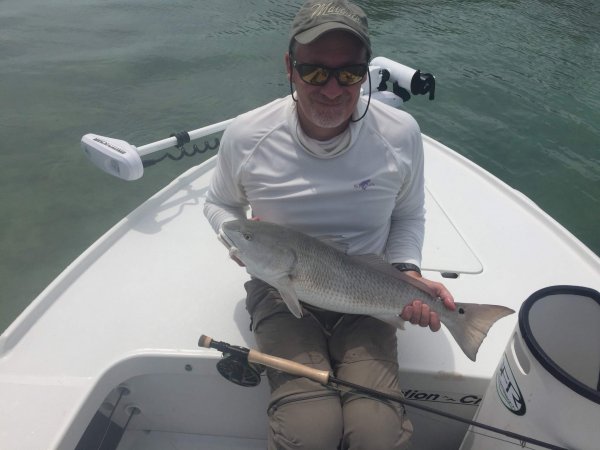
THE RIGHT CONDITIONS FOR FISHING
Finding clear water in the lagoon is of the utmost importance whenever fishing. But it is tremendously important when sight fishing for the obvious reason of increased visibility of the lure and fish. Most of these area lagoons have up and downs, meaning water shifts and causes a stain or off-color water.
The area also has numerous large algae blooms that occurred based on rain, water levels, and so on. This causes lack of sunlight to the submerged grass which then dies off no providing the natural seagrass beds for baitfish to feed. Lack of sunlight then creates algae, which then begins to deplete the up oxygen. Thankfully this is now being addressed and is happening less and less each year allow the fish to flourish again.
LOCATIONS TO TARGET FISH
The Lagoon is an all year round fishery, for all anglers. Fly fishing anglers can fish the majority of the year comfortably except in windy season. Which is only a couple of months a year. Common species caught in the Lagoon are redfish, black drum, and spotted seatrout in the Mosquito Lagoon and the Indian River. These fish are found all around the state of Florida and other states. But the grass flats of the lagoon are special in that you catch then in water less than two feet deep.
The standard method of fishing, either conventional tackle or fly fishing is sight fishing. For the best success, be in stealth mode and stand on the bow of the boat to get the closest position to the fish. Fish can be spotted by anyone, but local guides really know what to look for in the water. It is important to make your casts count, quality over quantity. Always present your bait to a specific target you can see.
WHEN AND WHAT TO TARGET
Other times of the year, like summer and fall you can see migrating species like tarpon, ladyfish, and super fun jack crevalle. Most of these fish are in the 5-20 pound range and are best targeted in the summer months. The fish are very active early and late in the day and respond well to flies during these times. Once hooked, all these species provide a great fight. The Fly fishing in Mosquito Lagoon, Indian River, and the Banana River are collectively the best saltwater area in Florida.
All three locations are excellent because they are very accessible by great destinations that surround them. Daytona Beach, New Smyrna Beach, Titusville, and Cocoa Beach area in the heart of the lagoons. But a plethora of traffic comes from nearby Orlando and Kissimmee. If you are in those areas, it should be something to consider.
WHY HIRE A FISHING CHARTER
If you have children or family-friendly members and you really want them to catch fish. If you’re looking to score a few points and entertain a client for business. We encourage you to seek a professional fishing chart captain for the best results. On a scale 1 to 10 on fishery difficulty the three lagoons are rated an 8+ for the difficulty to catch and navigate.
When bringing your kids and wanting to expose them to the wonders of nature and local fishing, you need results. Fishing the waters of the 3 Lagoons can be challenging, even for the experienced angler. Fishing guides, don’t guaranty results but it’s extremely better odds. When family or business clients are brought to on these fishing trips. They offer mixed bag fishing to keep the action fast and furious.
This can be done in the tidal waters of Ponce Inlet, New Smyrna Beach, and Edgewater, these areas provide a greater chance of catching fish as there is an abundance of fish. So risk it or not, a fishing charter is a great way to get consistent measurable results with the right captain.
THE LAGOON RULES
There are certain rules to follow when fishing in the Mosquito Lagoon. A federal permit or license is required before anyone can start to take their personal boat in these areas. Also, remember that there are certain areas where boating is not permitted. Such as in protected areas designated for manatees. It is important to know these specific areas plus where you’ll be able to get the most redfish catch. Most of these areas are posted well from the water sight.
It might take some time after you arrive at a certain portion of the lagoon to catch a redfish. Remember, the sound of the boat is key and scares them away. So be patient, and stealthy quiet while you fly fishing. And before you know it, the redfish will come out to play!
KNOW YOUR BOAT RAMPS
The Mosquito Lagoon and Indian River systems are filled with easy access points for both kayaks and skiffs. Knowing where these boat ramps are in relation to where you are hoping to fish. This will help you decrease the travel amount, and have more time fishing. Spend less time running over other potential fishing areas. Running 10 miles north over the same flats to fish later is not a good plan. Don’t be that guy!
Talking with locals, looking on google earth, and even reading a few road signs. This will drastically help you find the boat ramp best for you on that particular day.
In Conclusion

iOutdoors Blog, Bottom Fishing, Grouper Fishing, Redfish Fishing, Tuna Fishing
The Best Tasting fish
 Taste, of course, is a matter of personal preference. Something that tastes delicious to one person may not be tasty to another. Still, there are those that are thought delicious by most people. The following are some saltwater species that a lot of people think are the best-tasting fish. Let’s not forget the cleaning, which is equally a big part of the overall taste.
This fish is highly regarded by many gourmets. The Wahoo known by many has meat that is white and delicate, delicious no matter how it is cooked.
Mahi Mahi or Dolphin Fish
Fondly called the “chicken of the sea”, this fish can be cooked in many ways. A lot of people consider this a favorite.
This is another favorite – it can be raw wherein it is soft and juicy and can be cooked in several ways, such as fried or in soup, wherein the meat is flaky and delicious.
Monk Fish
With tail meat that tastes like lobster, this fish is considered the “poor man’s lobster”. Although the fish, itself, does not look appealing, its meat is so delicious that many people consider this a favorite.
Halibut has low-fat content and is so delicious that it still tastes wonderful even with a little seasoning. This fish is often broiled, grilled, or fried.
Cod
A common ingredient in “fish and chips”, the meat of this fish is moist and flaky. Its liver is also considered a delicacy.
Salmon
This is among the most popular fish – raw, smoked, or cooked. Aside from having delicious meat, this fish is also favored because of its high nutritional value.
Most of the tuna species have delicious meat, high nutritional value, and delicious even when canned.
Snook
While it is one of the more popular sport fish, it does have a harvest in a window in most locations. Despite the aggression of the Snook, the white flaky meat is one of a favorite for many anglers.
Flounder
Not only is it one of the weirdest looking fish in the ocean it’s also one of the tastiest. The flat body lends it perfectly too cooking, just prepare it with a little lemon butter and/or fry it up and you’re in business.

Inshore Fishing, iOutdoors Blog, New Smyrna Fishing, Redfish Fishing
March Inshore Fishing Charters
When traveling to Florida, most visitors enjoy the coastline and salty environments of this beautiful state. They spend time on the beaches, enjoy long walks on the boardwalks, stay in hotel resorts but never truly get the chance to experience everything that is out there. If you are looking to adventure out and spend a day in the outdoors, a saltwater fishing trip is worth discovering. Our action-packed March inshore fishing charters can have you addicted to fishing in no time. 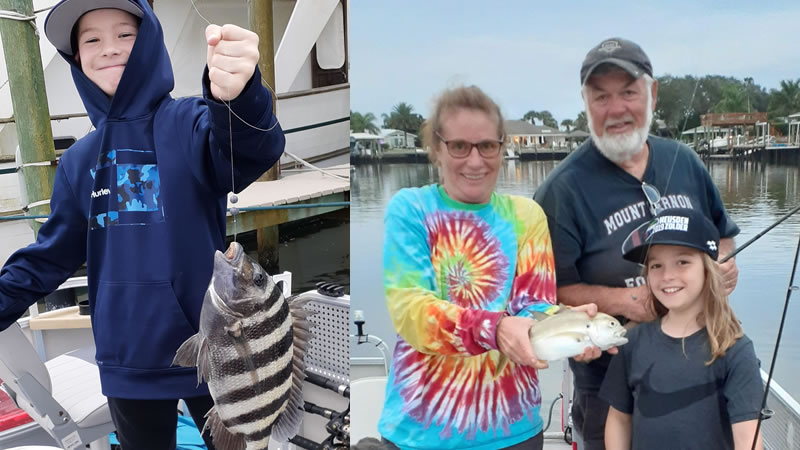
From small parties to large, our inshore trips are the perfect opportunity to soak in the outdoors. New Smyrna Beach, FL is a great location to catch a wide variety of species that Florida has to offer. This fishing adventure is a lot of fun and perfect for the family. Bring everyone on board and our local experts will show you a great time.
One of the best ways to explore New Smyrna Beach is with a local expert. Our local experts are knowledgeable and experienced in this destination from fishing to all things to do. You can ask them any questions you may have about the best places to eat, see, experience, and explore. If you are looking to hone in your fishing skills as well, they have all the knowledge you need.
Discover how our Inshore Fishing Charters near New Smyrna Beach, Florida has been:
 Weather and Conditions:
“The weather has been the ultimate roller coaster over the course of the last few months. This has the fish in a wide variety of areas making fishing more interesting. When the weather conditions vary, you have to use a wider range of techniques to help land more fish. Fish that are generally in shallow water have to relocate and search for more stable temperatures. Deepwater pockets and areas around the Intracoastal river near New Smyrna Beach have been the most productive.”
March Species:
“One of the best parts of New Smyrna Beach is that you have the opportunity to catch a variety of fish. Most of the anglers that will explore this destination in March will catch Sheepshead, Black Drum, Mangrove Snappers, Whiting, and the occasional Redfish. Every cast can yield something different making March Inshore Fishing Charters a ton of fun.”
Bait and Structure:
“The most successful and productive bait of choice is shrimp on a ½ ounce knocker rig. Cut dead bait can bring about some exciting fishing for anglers of all levels. When fishing this rig, you want to target areas with moving water. Dock pilings and bridges will draw in species looking to ambush prey. Water depths of 10-15 feet have been the most optimal.”
Fishing Vessel and Equipment:
“My 24ft pontoon fishing vessel has been handling the fishing conditions without an issue. A larger vessel will be able to maintain the position in windier conditions. As well, my Minn Kota trolling motor with spot lock has been holding us steady in the right positions.
Groups of all sizes are welcome to come fishing on this pontoon boat. We have been fishing with anglers from 2 to 6 people. Some fisherman enjoys the extra space and comfort. Anglers of all ages can come aboard too.”
March Night Fishing in New Smyrna Beach, FL:
“Night fishing is one of my favorite techniques to explore the inshore waters of New Smyrna Beach. Cooler weather has not stopped the Snook from biting at night. On average, we are catching up to 15 snook per trip with some nice quality ones in the boat. 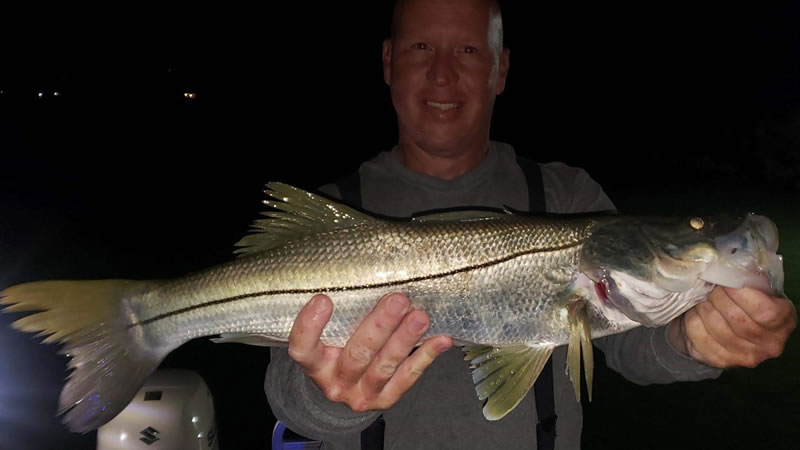
When it comes to March Night Fishing, these trips are suited best for 2-3 anglers with a higher level fishing capabilities. Night fishing requires accurate casting skills with light weight soft and hard plastic lures.
You can even get the occasional Dolphin come alongside the boat looking for an easy snack when you release your fish. Dock lights are the most productive area to land fish at Night. Even though summertime may be the best time to go fishing at night, March can show you a great time on the water!”
Explore all that New Smyrna Beach, Florida has to offer on your next vacation!
March is a busy month for travelers coming to Florida. New Smyrna Beach begins to come alive and draws in a wide variety of tourists. Spring break, bikers week, and fishing are all reasons to come visit. Now is the time to plan that next adventure on the water and create memories worth remembering.
Bring your whole family, friends, and loved ones along for a fishing charter of a lifetime. Our March inshore fishing charters are just getting started and you can have a blast exploring this outdoor activity this month! Hope to see you on the water next time on a New Smyrna Fishing Charter.
Your Adventure Starts Today while Visiting Florida.
[fusion_builder_row_inner][fusion_builder_column_inner type=”1_2″ layout=”1_2″ last=”no” min_height=”” hover_type=”none” link=”” border_position=”all”][fusion_button link=”https://ioutdoor.com/fishing/inshore-fishing/florida/new-smyrna-beach/” text_transform=”uppercase” title=”VIEW AVAILABILITY” target=”_self” link_attributes=”BOOKING” alignment=”center” modal=”” hide_on_mobile=”small-visibility,medium-visibility,large-visibility” class=”” id=”” color=”blue” button_gradient_top_color=”” button_gradient_bottom_color=”” button_gradient_top_color_hover=”” button_gradient_bottom_color_hover=”” accent_color=”green” accent_hover_color=”” type=”” bevel_color=”” border_width=”3px” size=”small” stretch=”yes” shape=”pill” icon=”fa-ticket-alt fas” icon_position=”left” icon_divider=”no” animation_type=”flash” animation_direction=”left” animation_speed=”0.3″ animation_offset=”top-mid-of-view”]VIEW AVAILABILITY[/fusion_button]

iOutdoors Blog, Amelia Island Fishing, Inshore Fishing, Redfish Fishing, Trout Fishing
February Amelia Island Fishing Report
Amelia Island is a destination tucked away in the north region of Florida where most travelers look over when visiting Florida. The salt air consumes this quiet, sheltered destination making it one of the top spots to visit. If you have never been to Amelia Island, it is one place to most certainly put on your travel list. When doing so, make sure to explore what the great outdoors has to offer. February Amelia Island Fishing is one of the greatest ways to adventure out and experience something magical.
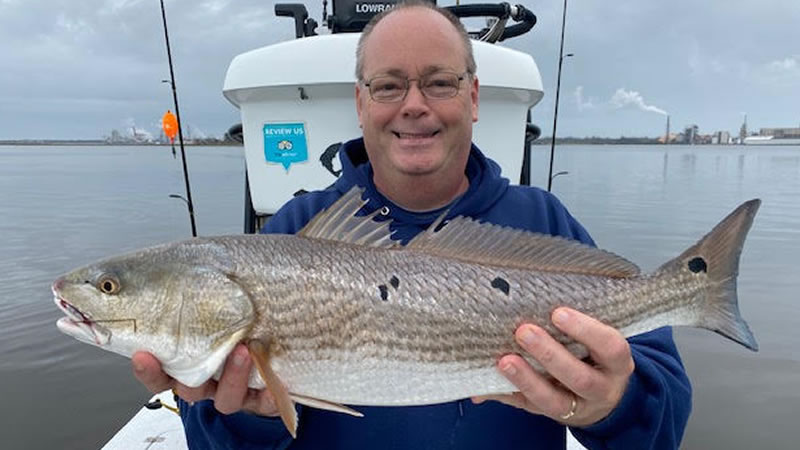 The cool weather of February really gets the inshore fishing fired up. Backwater and intercoastal canals are teeming with life and an abundance of fish. Take a cruise out on the water while soaking up the Florida sun. Cast a line and get hooked up into some quality inshore species with our local experts.
When it comes to Amelia Island Inshore Fishing, two species stick out the most: Redfish and Trout. These may be the top two species to catch but you can have a blast reeling in a wide variety of species on your fishing trip. If you are looking for a hard-fighting catch and non-stop action, now is the time to visit Amelia Island.
Our local experts have years of fishing experience to help land you some beautiful fish on your fishing trip. The backwaters are endless and you can easily get lost. When you embark on an adventure with one of our local experts, they can most certainly get you on the fish of a lifetime. Be sure to customize your trip to your fishing needs.
February Amelia Island Fishing has consisted of catching endless species in the main river, intercoastal, and inlet areas. During this time of year, the Amelia River is teaming with life. You can catch a lot of different species. The best species to catch during this month is Trout, Redfish, Black Drum, Flounder, and Sheepshead.
As mentioned above, Redfish and Trout are the best-targeted species to catch when looking to have success catching fish. Captain Brian Soucy put several of his clients on some beautiful fish all trip long. The best bait to use according to Captain Brian was live shrimp under a cork. If you want the best action and bite, live bait is generally the best way to go.
Float or drift some live shrimp around pilings near docks and hold on for a strong bite from a redfish that will fight endlessly on the other end of the line. Oyster bars and rocks are additional structures to focus your fishing on. Your local expert will take you right to where the fish are and be able to help you land that big fish you are looking for.
Captain Brian Soucy is an exceptional guide in Amelia Island with years of a great experience. As a result, you can get the full experience when visiting this breathtaking destination in North Florida. You never know what you will catch and every trip is truly unique!
We hope to get the chance to explore this beautiful destination on your next visit to Florida. Bring your whole family for an unforgettable tour of what Amelia Island is all about. You never know what you will hook into and every trip is exciting for all those aboard.
Quick Summary: 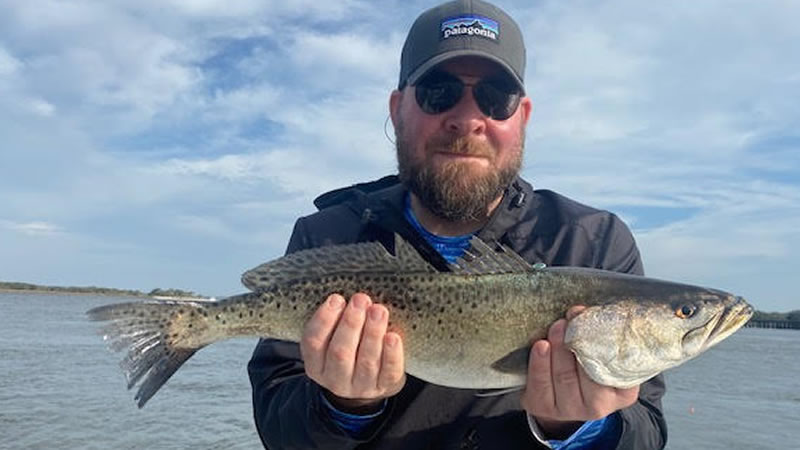
Species Caught: Redfish, Trout, Flounder, Black Drum, Sheepshead
Location: Amelia Island
Areas to Fish: Main River, Intercoastal, Inlet
Bait choice: Live Shrimp under a cork
Structure to Focus on: Oyster Bars, Rocks, Pilings, Docks
Captain Brian Soucy
Your Adventure Starts Today while Visiting Florida.
If you enjoyed this post about Florida Fishing, you might also enjoy our Fishing Blogs.
Don’t forget to follow us on Facebook, YouTube, Twitter and Instagram.
[fusion_builder_row_inner][fusion_builder_column_inner type=”1_2″ layout=”1_2″ last=”no” min_height=”” hover_type=”none” link=”” border_position=”all”][fusion_button link=”#BOOKING” text_transform=”uppercase” title=”VIEW AVAILABILITY” target=”_self” link_attributes=”BOOKING” alignment=”center” modal=”” hide_on_mobile=”small-visibility,medium-visibility,large-visibility” class=”” id=”” color=”blue” button_gradient_top_color=”” button_gradient_bottom_color=”” button_gradient_top_color_hover=”” button_gradient_bottom_color_hover=”” accent_color=”green” accent_hover_color=”” type=”” bevel_color=”” border_width=”3px” size=”small” stretch=”yes” shape=”pill” icon=”fa-ticket-alt fas” icon_position=”left” icon_divider=”no” animation_type=”flash” animation_direction=”left” animation_speed=”0.3″ animation_offset=”top-mid-of-view”]VIEW AVAILABILITY[/fusion_button]
