
Air to Ground, Animal Park Experience, Eco Tours, Hiking, Horseback Riding, Hunting Fl, iOutdoors Blog, Nature Adventures
Florida Venomous Snakes
Don’t Pet the Snakes!
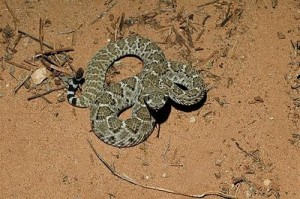
There are about 50 species of snakes in Florida but only 6 of these are venomous. Most snakes, venomous or not, generally slither away from humans unless it is provoked or feels trapped. Florida venomous snakes are all over the state. Keep away from one and do not attempt to catch or kill it, when you are hiking, especially if you are not sure if it is poisonous.
Southern copperhead
This snake is also known as the Highland moccasin, Chunkhead, and, simply, Copperhead. It can grow up to 36 inches long but some individuals have been recorded to be more than 50 inches long. Its body has crossbands that alternate reddish-brown to dark brown and light brown to grey bands. The darker bands have an hourglass shape while the head has plate-like scales.
Eastern coral snake
Also known simply as a Coral snake, this species has a body that is ringed alternately with wide black and red rings that are separated by narrow yellow rings. Most adults do not grow more than 30 inches long but some can grow to almost 50 inches.
Cottonmouth
Sometimes called Water moccasin, it is found near water bodies, especially near swamps, marshes, and lakes. It has broad, dark cheek stripes all over its body. It has a wide mouth with a whitish interior lining. It can grow up to 48 inches but the record holder is 74.5 inches long.
Eastern diamond-backed rattlesnake
This snake species grows to 72 inches (the record is 96 inches). It is the largest and most dangerous of all the venomous species in Florida. It has several rows of large, dark diamonds that have brown centers and light cream borders. Its tail ends with a rattle.
Dusky pygmy rattlesnake
This rattlesnake grows to only about 24 inches long (the record is 31 inches). It has dark blotches that are separated by reddish spots. It has a tiny rattle that produces a buzzing sound.
Timber rattlesnake
It can grow about 60 inches long but the record is at 74.5 inches. It has a pinkish-grey to brown back that contains chevron-like black crossbands. It also has a distinct reddish stripe running on its back.
Hunting Fl, iOutdoors Blog, Quail Hunting
Old Yeller and Quails
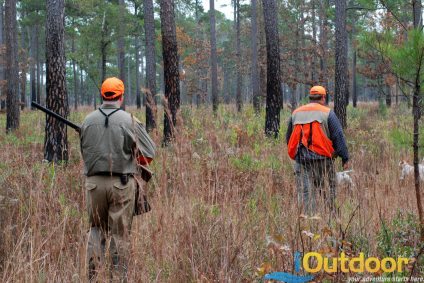
Quail hunting takes practice and skill. With the added benefit of using dogs, the odds of finding and catching quail become higher. Using dogs to hunt quail is common and has been done for many years. These dogs, often called bird dogs, are not the ordinary house dogs but those that have been trained particularly in hunting game birds. Commonly used breeds for bird hunting include the English setter, Red setter, German shorthair pointer, Nova Scotia Duck-Tolling Retriever, Britanny and other pointing breeds duly trained.
Quail Hunting
Quail hunting has become particularly difficult because of the decline of quails over the past few decades. This makes hunting for quail in public lands a lot more difficult. The best alternative is to get permission to hunt on private lands including private property, state approved property, or ranches.
Knowing where Quails are located increases the chances of a successful hunt. Quails often found on a combination of open land and woody cover. Look for fields that contain diverse vegetation wherein seeds that Quails feed upon are numerous. Knowing the habits of a Quail is also a factor in successful hunting. It is good to know that Quails feed on seeds in fields during the day, rest under woody cover by mid-day, are back in the weedy field areas in the late afternoon, and often sleep in weedy, grassy areas at night.
Quail Hunting with Dogs
There are many things to consider when bringing a bird dog to a hunt, both for the hunter’s success and the dog’s safety. First of all, only good bird dogs should be brought with the hunter on a hunt. Most hunters bring along two dogs to effectively flush out the Quail into the air instead of allowing it to run on the ground. These dogs should be bought from a reputable bird dog breeder and should be trained by a hired professional. Lastly, hunters should never take a shot at a low flying Quail because this would mean that the hunter lower his or her muzzle below a horizontal plane with the ground. This type of shot can be dangerous because it will likely hit the dogs instead of the Quail.
Bringing along a bird dog can be extremely helpful. Many hunters have testified that they weren’t able to find that many birds without bringing along their dogs.

Nature Adventures, Air to Ground, Hunting Fl, iOutdoors Blog, Water Sports
Early Detection of Limes Disease
Lyme Disease or Limes Disease is an infectious disease caused by at least 3 species of bacteria that are transmitted to humans by some tick species. If left untreated or if treatment is delayed, it can cause serious damage to the central nervous system, heart, and joints. Also, as the disease progresses, the bacteria can develop immunity or resistance to antibiotics. Thus, it is important to detect the illness as early as possible.
The following are some of the symptoms that help in the early detection of limes disease.
Bull’s eye rash
If you develop a rash that resembles a bull’s eye target – a large outer ring and a circle in the middle – consult a doctor immediately because this is among the surest signs of the disease. It is possible for the rash to disappear or be located in any part of your body. Try to take a picture to show your doctor before the rash fades. However, most of the time, the rash will grow slowly, with some reported to grow to as much as 12 inches in diameter.
Numbness and arthritis
If you experience unusual stiff neck or development of arthritis, check with your doctor as this can be a symptom of Lyme Disease.
Hearing and sight problems
This disease can cause blurred vision, dry eyes, and sensitivity to light. You may also experience pain, itchiness, and a burning sensation in your ears.
Malaise and irregular weight gain or loss
The disease can also cause sudden weight gain or loss. Most patients report a general feeling of tiredness and lack of energy.
This disease can be fatal – if you experience one or more of the abovementioned symptoms, consult a doctor immediately.
Also to worry about our friend the Jelly Fish
The failure of early diagnosis
The failure to diagnose early is avoidable. The harm to patients long term is preventable with early diagnosis. Patients report that diagnostic delays are associated with false-negative test results 57% of the time. Positive test results are dismissed by their clinicians as “false positives” 13% of the time. Patients quite often are not evaluated properly, because their physicians are uneducated on the disease symptoms and incorrectly diagnose leaving patients with there is “no Lyme here.”
![Duck Hunting the Sunshine State – Florida]()
Duck Hunting Fl, Hunting Fl, iOutdoors Blog
Duck Hunting the Sunshine State
Hunting is an enjoyable sport not just in Florida but in other parts of the world as well. What makes Florida so special when it comes to hunting ducks is because of its geographical factor. Much of Florida is covered by wetland habitat. Much of this habitat is also open an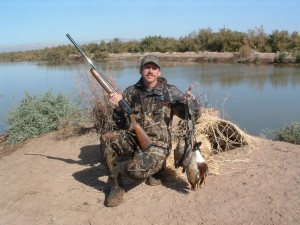 d available for public hunting. These reasons make the state of Florida extremely popular when it comes to duck hunting.
Duck Hunting Regulations
Generally, duck or waterfowl hunting is permitted in Florida only if the water body has public access. Waterfowl or duck hunting is prohibited if the water body is closed for a specific reason or if the area does not allow the discharge of firearms. Regulating bodies for duck hunting include the Wildlife Management Areas or WMAs, Water Management District lands or WMD, and National Wildlife Refuges or NWRs. Other agencies that may regulate duck hunting include the Florida Fish and Wildlife Conservation Commission or FWC or the local law enforcement agency.
Duck Hunting
Experienced duck hunters say that the best place to hunt for these waterfowls is on Lake Okeechobee. This lake has always been an excellent site for duck hunting even when duck migrations are poor. Lake Okeechobee attracts many migratory ducks because of its vast size measuring 750 square miles and its shallow depth and vast array of water plants available.
Duck hunting cannot be done just on any time of the year. There are duck hunting seasons that need to be followed and these seasons vary. Duck hunters must keep posted prior to proceeding on a hunt. Another regulation that needs to be followed when out duck hunting is the observance of bag limits. This refers to the number of ducks a hunter can take on a hunt. The type of duck a hunter can shoot must also be observed. Bag limits and type of ducks to be hunted vary during different duck hunting seasons.
For first time duck hunters, there are guided duck hunting which can provide an extensive outlook and first on-hand peak at duck hunting.
![Duck Hunting the Sunshine State – Florida]()
Dove hunting Fl, Hunting Fl, iOutdoors Blog
When Doves Cry in Florida
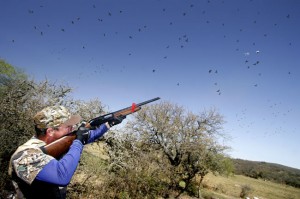
One of the favorite small game bird to hunt in Florida is the dove. Doves can be found in an area that covers Mexico, across the United States and into Canada. This small game bird is the most abundant in the continent and is also the most widespread.
Protected Game Birds
While the Mourning dove (Zenaida Macroura) is perhaps the easiest game bird and the most hunted in North America, it just also happens to be the most protected. The Mourning dove is protected under the Migratory Bird Treaty Act. So before shooting any dove that can be seen in the area, it is best to be informed regarding the legalities of dove hunting in Florida.
Florida Dove Hunting Fields
Dove hunting fields are specially marked areas on which the hunting of the Mourning dove is allowed. Marking and selection of the dove hunting fields is a special effort by the FWC in order to deliver great dove hunting opportunities throughout the state. These fields also have a social atmosphere which makes it perfect for bringing along families and friends, and go hunting together. These dove hunting fields are scattered throughout the state. Access to these fields is usually done on a membership and payment basis.
Free and legal hunting fields can also be established as long as it follows the rules and regulations of dove hunting set forth by the state and its legal bodies.
Tips for Successful Dove Hunting
The increased demand for dove hunting has caused an increase in the number of hunters and hence a greater number of competition. The most common scenario some hunters end up with is that they can hardly bag a dove without someone getting to it first.
All it takes to bag that dove effectively is to follow a few, useful tips below
- It is essential that a hunter arrive early to the hunting field. This will enable the hunter to familiarize him/herself with the field.
- Another tip is to manage the light once on a dove field. The sun should be to the back of the hunter as much as possible so that hunting will not be affected by the glare of the morning or afternoon sun.
- A third tip is to know which geographical or topographical areas a dove is usually attracted to and settle there for the hunt.
- Fourth tip, aside from wearing camouflage, it is important to sit still. A camouflage won’t do a hunter any good if he or she keeps fidgeting in place.
- Fifth, while bringing along a dog may seem like a good idea when out on a dove hunt, if the dog can’t sit still, it will continue to attract the notice of the dove.
- Sixth, look for water holes as these are areas that doves usually flock to at times of the day.
- Lastly, take into consideration the terrain. If hunting from a raised position, the hunter will stand out, not unless he or she uses a screen in order not to give away his or her location.
With these basic tips, a hunter will have an even more successful rate of shooting and bagging doves.
![Duck Hunting the Sunshine State – Florida]()
Air to Ground, Hunting Fl, iOutdoors Blog, Nature Adventures, Water Sports
No UV Please
Staying out under the sun can be fun but does have its consequences – sun burns, eye damage, dehydration, premature aging, immune system suppression, and certain skin illnesses. Thus, it is advisable to find ways to shield your body from the sun and its harmful rays.
Applying sunscreen and sun block is among the most effective ways to protect your body. Look for a product with high Sun Protection Factor (SPF) and have ingredients that will not harm your skin. Products that indicate “broad-spectrum” at the label is usually better because it can filter different types of ultraviolet rays – UVA, UVB, and UVC.
Remember, sunscreen contains chemicals that absorb the sun’s rays before it penetrates the skin, thereby, just “screening” the rays. On the other hand, sun block does not allow the sun to penetrate the skin at all. Thus, it is often preferable to use sun block over sunscreen.
Another way to protect your body is to wear cool, light clothing that cover most parts of the body. Then, you can use a cap or hat to protect your head but you can also use an umbrella which offers a larger coverage.
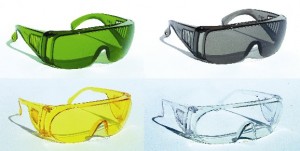
Sun glasses, especially those with UV filters, add protection to your eyes. Wrap-around sunglasses also provide more protection. Remember that the eye and the skin around it are sensitive to the sun’s rays and can be damaged easily.
There are also lipsticks and lip balms that provide protection from UV rays.
When it comes to finding the best way to shield your body from the sun, it pays to be on the side of caution – use as many shields as you can.
