Hunt Whitetail Deer
[fusion_builder_container type=”flex” hundred_percent=”no” equal_height_columns=”no” menu_anchor=”” hide_on_mobile=”small-visibility,medium-visibility,large-visibility” class=”” id=”” background_color=”” background_image=”” background_position=”center center” background_repeat=”no-repeat” fade=”no” background_parallax=”none” parallax_speed=”0.3″ video_mp4=”” video_webm=”” video_ogv=”” video_url=”” video_aspect_ratio=”16:9″ video_loop=”yes” video_mute=”yes” overlay_color=”” video_preview_image=”” border_color=”” border_style=”solid” padding_top=”” padding_bottom=”” padding_left=”” padding_right=””][fusion_builder_row][fusion_builder_column type=”1_1″ layout=”1_1″ background_position=”left top” background_color=”” border_color=”” border_style=”solid” border_position=”all” spacing=”yes” background_image=”” background_repeat=”no-repeat” padding_top=”” padding_right=”” padding_bottom=”” padding_left=”” margin_top=”0px” margin_bottom=”0px” class=”” id=”” animation_type=”” animation_speed=”0.3″ animation_direction=”left” hide_on_mobile=”small-visibility,medium-visibility,large-visibility” center_content=”no” last=”true” min_height=”” hover_type=”none” link=”” border_sizes_top=”” border_sizes_bottom=”” border_sizes_left=”” border_sizes_right=”” first=”true”][fusion_text]
Whitetail deer are some of the most sought-after quarries in North America. Ranging as far south as the Texan border, and as far north as portions of Montana. Hunting for Whitetail deer predates America itself.
Outdoorsmen love to hunt whitetails because of their delicious meat and wild demeanor. Making them excellent quarry in the great outdoors. In feeding areas across the US, these deer can be found from big woods to creek bottoms, and from high desert plains to brushed-up bedding areas.
Whitetail deer description:
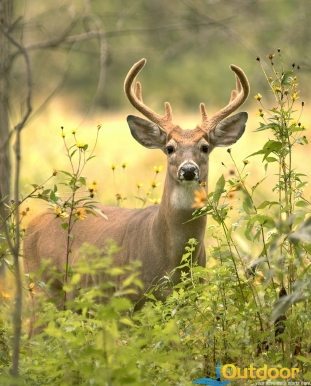
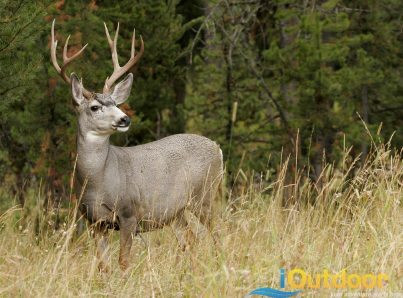
The coat of a Whitetail deer ranges from reddish brown during the spring and summer months. To gray-brown during the fall and winter. With a stark white underside that makes its way from its lower abdomen to its tail. This Deers age can be distinguished by both the color of the coat and the length of the snout.
(The older the deer, the longer the snow and higher concentration of gray in the coat.)
Whitetail deer vary in size based on location, gender, and season. The males of the species known as the box can weigh anywhere from 150 pounds to 400 pounds. The heavier deer are usually found further from the equator. Similarly, they range from 88 pounds to 200 pounds, I guess depending on geographic location.
Seasonally, the deer will reach their peak weights during the summer and early fall months. As they stock up for the oncoming winter. The deer will reach their lowest weights during the rut and tail end of winter. This is when food is scarcest, and the hunting season is coming to a close.
The males of the species have antlers with a few exceptions. Bucks with single antlers that do not branch off are referred to as spikes. While older bucks without branching horns/tines are often assumed to have genetic defects. Much of the Deers antler size is dependent on nutritional availability in the environment. For instance, environments, where a black food source is rich in calcium and protein, tend to have bucks with smaller, less prominent, or defective horns.
Many hunters associate the rack, a number of times, and the size of horns with age, assuming that the larger the rack, the older the buck. however, this is often untrue as previously referenced, the nutritional availability in the environment plays a massive factor in the size of a rack.
However, for the most part, healthy deer increase in both size and antler number as they grow older. Genetics plays a smaller role in Whitetail Deers antlers.
Habitat:
Whitetail deer can be found in a variety of habitats, from grasslands to northern woodlands, and high deserts to southern temperate forests.
Usually a forest-dwelling creature, Whitetail deer have been found throughout the United States ranging from the Florida Keys to the Canadian Rocky Mountains.
Whitetail deer prefer a combination of oak and coniferous forest. Though they have been found in a variety of other terrains such as prairies, mountainous regions, and swamps.
Usually avoiding wide open spaces. The Whitetail deer is much more cautious than many other four-legged herbivores hunted throughout the United States. Preferring small gaps in the wood line, meadows, and forests. These creatures are far shyer than many species they share a habitat with including elk, mule deer, and the occasional moose.
Food:
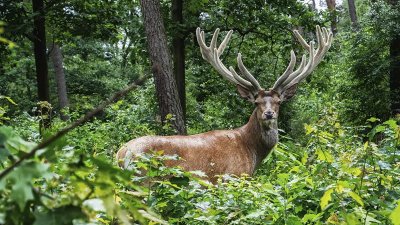
Whitetail deer have a variety of food sources. Plants including grass, leaves, cactus and legumes, clover, and even hay make up most of their diet.
They have been observed to eat some species of plants and fungi that humans cannot including poison ivy and mushrooms.
Though rare, Whitetail deer have been observed consuming field mice and baby birds, and will even cannibalize the bones of their own dead to consume the necessary calcium they are not receiving in their usual diet.
Hunting Season:
for the vast majority of the United States, hunting season with a bow for Whitetail deer begins sometime in mid-September and will run through late January to early February.
Rifle season usually begins sometime in October (primitive weapons) and runs through early to mid-January with modern rifles beginning sometime in November.
The Rut:
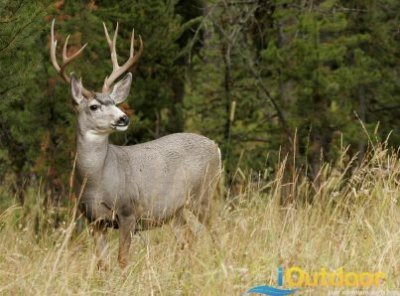
Throughout the deer hunting season, the most talked about time is referred to as the rut. During this time, female deer go into heat (estrous doe) meaning they are ready to mate. Hot doe urine will attract a mature buck Via the hormones in it, signaling to other deer she is ready to mate.
Most Whitetail hunters will use either a synthetic or harvested version of this estrous on rags or other cloth to lure a big buck in during the peak rut. Other hunters will spot and stalk females, using the female deer activity as a lure while waiting for a whitetail buck to come out.
Female deer can reach sexual maturity at ages as young as six months, however much of this is dependent upon nutritional availability in the habitat as well as a population of deer.
The Whitetail rut can start as early as September, however, it usually begins somewhere between October and November and can run as long as the entirety of hunting season.
Before the rut, bucks will shed the velvet on their antlers. Caused by sparring with other bucks, clashing over territory, does, and food. A buck will mark its territory by scraping a tree. Using its antlers and creating a gouge in the wood known as a rub.
Additionally, they will often scrape the ground beneath this rub referred to as a scrape, and urinate inside of it, marking their territory.
During the height of the rut, Bucks will begin to battle in a much more aggressive fashion, often resulting in injuries and occasional deaths.
During this time, between chasing does and fighting for dominance, big bucks can lose over 20% of their body weight.
Broken down:
The beginning:
The initial part of any hunting season just after opening day can yield excellent results but does come with its own set of challenges.
Earlier in the year is usually limited to primitive weapons and bow hunting. During this time, the weather conditions have usually not begun to turn cold, and this is usually pre-rut.
Particularly in the southern portions of the United States, hunters will deal with insects, reptiles, and warm weather making time in a tree or box stand or ground blindly uncomfortable.
In northern portions of the United States, the temperate weather and lower insect population often make for betting hunting earlier in the year though all of the annoyances can still be found in thick cover.
though only conjecture, some hunters speculate that during this time, the lack of individuals who exclusively rifle hunt in the woods combined with the lack of gunshots lends itself to the animals being less spooked and providing a higher chance of success.
Whatever the case may be, it doesn’t take long for the deer to recognize that humans are back in the woods and stocking them. This brings us to the middle portion of deer season.
Middle:
During this portion of hunting season, the weather begins to turn cold, the leaves drop from the trees and fall is in full swing, transitioning closer to winter. The rut begins to kick it into high gear, with fighting and breeding activity occurring on a daily basis.
During this time, where Whitetail deer may have often been spotted in daylight, moving through open spaces and often spotted in open fields, they are gone.
It is as if a switch has been flipped, and the deer begin a different cycle, becoming more nocturnal and venturing out in daylight mostly around the dawn and dusk hours.
This is when the bucks begin to lose weight and their feeding schedule takes a back seat to mate.
Late:
Late in the hunting season, the weather is usually coldest, the rut is coming to an end, and food is scarce.
Oftentimes, deer can be found in the earnest parts of the day as opposed to morning or dusk due to the cold temperatures. They will also take a higher level of risk venturing into open spaces due to the lack of food if fields are stocked or bait is placed out for them.
Additionally, salt licks are excellent tools for hunters to use, placing is near crossroads or fields can yield excellent.
Those still hunting should focus on the moon cycle during this time of year. They will have better luck when selecting times to hit the stand or blind.
Moonless nights with low temperatures make it virtually impossible for deer to navigate at night. Forcing them to feed during daylight hours while high Illum and warmer nights mean the deer are probably active at night and bedding down during the day.
Methods of hunting:
Tree stand hunting:
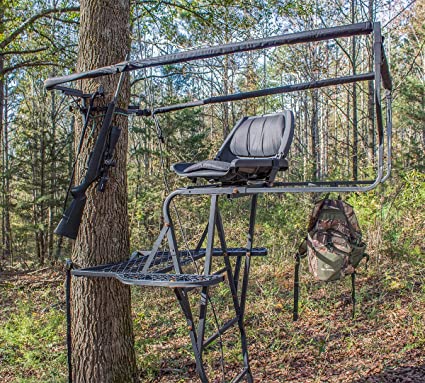
Open, elevated platforms usually involve a metal bench seat secured to a tree that allows hunters an overlook of the designated hunting area.
Styles: Climber, Lockon, Ladder Stand
Ground blind hunting:
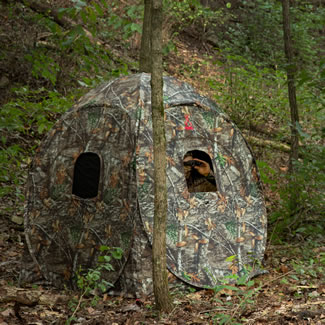
A structure placed on the ground level conceals the hunter with a view of the designated hunting area. Most hunters in the south prefer pop-up blinds, but in some northern and western states where Coues whitetails can be found, fixed ground blinds are used to keep hunters’ feet warm in the cold while ambush hunting white-tailed deer.
Styles: Box Stand, Mesh wrap
Freestanding Stand hunting:
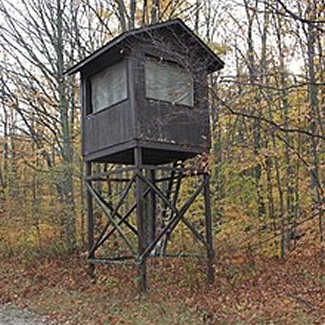
A freestanding structure that elevates the hunter over the hunting area not attached to trees.
Styles: Box Stand, Tripod
Stalking:
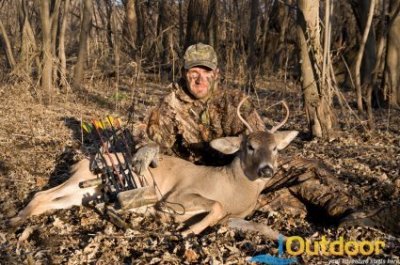
Often done in less wooded terrain, stalking white tail is a viable option in the back or open country. However, due to the skittish and shy nature of Whitetailed deer, hunters must pay close attention to winds and concealment, focusing on the efficiency of movement and line of sight.
If you hear the snort or wheeze of a deer before seeing them or can see their body language change, it probably means they scented to you and are spooked, quickly vacating the premises.
One hunting skill most is fine-tuned when hunting whitetails on foot as the slightest change in wind direction or wrong movement can spook deer.
Deer Drives:
This method has hunters set up along ridges or wood lines with other hunters or dogs heading into the deer’s home range to flush them towards the waiting hunters.
Weapons:
Rifle:
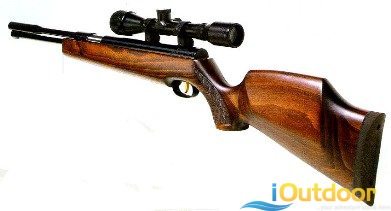
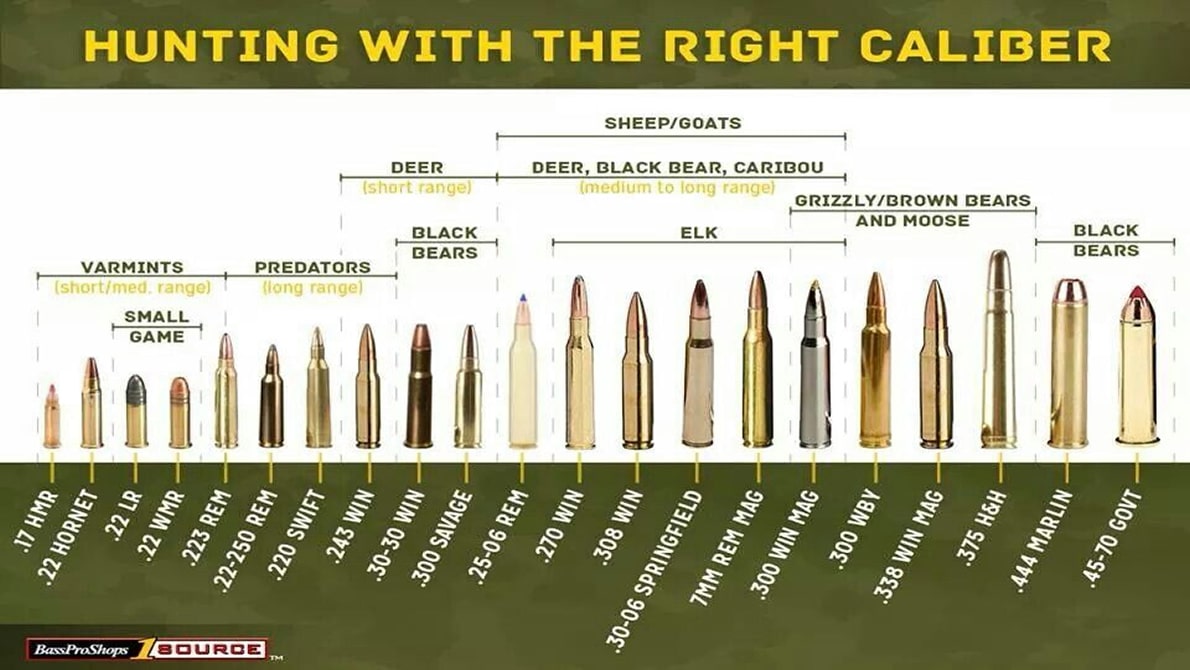
Rifles are probably the most popular method of hunting Whitetail deer. With a variety of calibers out there, it’s important to know which one is best for you.
.30-06 Springfield
Probably the most popular cartridge for deer hunting, the .30-06 uses between a 150-200 grain bullet to safely and humanely take an animal with a good shot inside of 300 yards.
Though effective shots have been taken with this round at further distances. This round is best used inside of 300 yards and is great for any novice Hunter. Has the perfect blend of power and recoil on an ergonomic-friendly platform.
.243 Winchester
Often the introductory gun is for children hunting Whitetail deer. This meets the minimum standards for most state legislation on rounds designed for a big game. An ideal rifle for beginners, this round is recoil friendly. Yet can easily take a deer at 200 yards with an 80-grain round.
6.5 Creedmore:
The 6.5 Creedmoor blends accuracy, distance, and shoot ability into a round that punches well above its sleek design. Capable of knocking down deer at well over 600 yards, the 6.5 Creedmoor is a flat shooting cartridge great for intermediate-level shooters.
.308 Winchester
A perennial favorite of deer hunters. The 308 is a tried and true round that has put more than a few trophy Whitetails in the ground.
A 150 to 180 brain 308 round is perfect to knock down deer in excess of 500 yards. While being heavy enough to handle light foliage and winds that may knock other rounds off trajectory.
7 Remington Magnum
Great for nailing Whitetail out to 500 yards, the 7 mm has little difference in point of aim/ point of impact from 100yds out to 365ds. Another flat shooting cartridge, 175 grain is the sweet spot for knocking down whitetail at distance.
300 Winchester Magnum
Some might call it to overkill, but my personal favorite cartridge is the .300 Win Mag. Pushing past 500yds, this hard-hitting round still brings with it 2,000fps, more than enough to knock down a trophy buck in stiff winds and some brush.
At distance, the 200-grain 300 Win mag can push lethality on a whitetail out to 1,000 yards. Although it takes a skilled marksman with a tough shoulder to take shots like that. An excellent gun for backcountry hunting, the 300 win mag is the perfect gun for experienced hunters looking to take longer shots.
Bow:
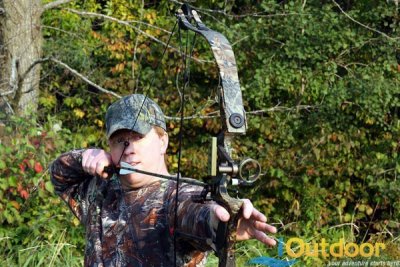
The bow is a traditional method for hunting Whitetail that predates firearms by millennia. Silent with a higher emphasis on the skill of the hunter. Now hunting requires closing the distance with whitetail to inside 50yds for bow range.
The minimum draw weight when bow hunting for Whitetail sits at about 40lbs. Which is a great starting point for novice archers. Many bow hunters I know prefer draw strength between 50-60lbs when hunting Whitetail with longer shots requiring an even heavier draw.
While some hunters may prefer 100-grain heads, it’s recommended to use 125-grain or above.
Two types of heads:
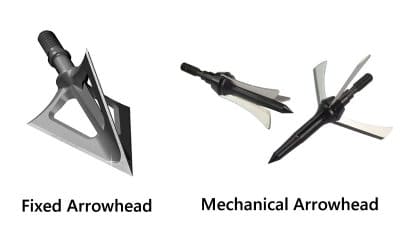
Fixed head
A fixed broadhead with no moving parts, the head screws into the shaft. It remains in the same shape shot through impact.
Pro: Better at punching through bone and tissue.
Downside: Risk of over-penetration.
Mechanical Head
A broadhead with blades that widen on impact, creates a larger entry and exit wound, causing greater damage on impact.
Pro: Creates more tissue damage on impact.
Downside: Can damage the meat and create severe organ damage.
Shotgun:
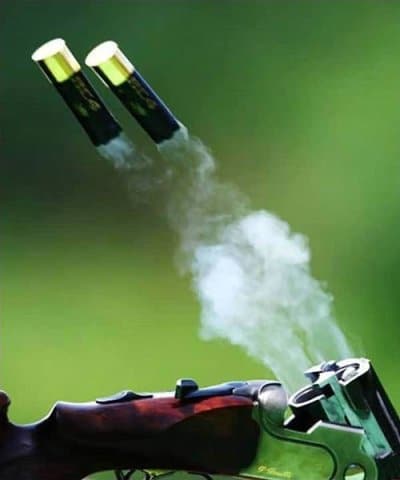
The shotgun is another popular weapon used when hunting whitetail deer. With a limited effective range that tops out around 100yds (slug) and 50 yds (buckshot), it is a great introductory weapon for hunters just getting started.
Popular gauges for shooting Whitetail include 20 Gauge, 12 Gauge, and 10 Gauge.
The two most effective shells for hunting deer are Buckshot which shoots a spread of large pellets. And the Slug which is a large unrifled round.
Target locations:
Whitetailed deer like all other animals require three things.
- Food: A food source can be a grassy field, a feeder filled with corn, or a tree dropping lots of acorns.
- Water: Stagnant water doesn’t count, fresh water easy to access such as a pond, stream, small river, or lake are common watering holes.
- Shelter: Deers need a bedding area, oftentimes this is in thickets and dense brush that provides concealment from predators and some respite from the elements.
Because these three things are almost never in the same place, there are two methods hunters can go about targeting whitetail using this information.
-
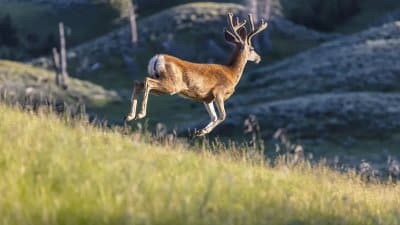
- Target travel routes: Deers are creatures of habit and will often take the same route to and from these three necessities. Using trail cameras, hunters can locate a travel corridor and set up a blind or tree stand location overlooking pinch points to target deer traveling to their next stop.
- Oftentimes, food and water will be in close proximity to one another, and hunters can set up a blind or stand overlooking these necessities and kill a Whitetail as they head to feed or drink from the watering hole.
Note: Each state has its own regulations about hunting over food plots or bait introduced into the environment via feeder or manual placement. Make sure to check your local regulations before setting out any bait.
Best states for hunting Whitetailed Deer
While there are a variety of locations throughout the United States you can hunt Whitetail. Here are 10 of the best states for hunters to visit for this species.
Texas:
with an estimated population of 40 million Whitetail, the deer here hold true to the adage that everything is bigger in Texas. A vast majority of all trophy hunting for Whitetail deer occurs on private ranches in Texas. Expensive and exclusive, these can be difficult for out-of-state hunters or those on a budget to visit.
However, there is a large amount of public land with a solid Whitetail deer population. Readily available for both resident and nonresident hunters in the state of Texas. Make sure to check the local regulations and do research before visiting the great state of Texas to hunt Whitetail deer.
Wisconsin:
With an estimated population of Whitetail deer of 1.2 million. Wisconsin produces the most Cover of magazine-worthy dear, on both public and private land. With a little research, some resident expert guidance, and a healthy dose of patience. Hunters can easily bring home a massive rack of Whitetail deer from Wisconsin public or private land.
Kentucky:
Kentucky has an estimated population of 900,000 Whitetail deer within its borders, but a limit of one buck per year. With that said, some incredible bucks have been logged within this state, with over 345 bucks killed since 2010 making the Boone & Crockett record book.
Indiana:
Within the 55,000 acres of public land available to resident hunters of Indiana. There is an estimated population of 1 million Whitetail deer. With some of the most active deer during the rut throughout the country. Indiana holds three of the top counties in the nation to consistently produce trophy-level Whitetail bucks.
Minnesota:
Thought to have a Whitetail population of 1 million throughout the entire day of the state. The majority of Minnesota’s public hunting land sits in its northern region, remote and more difficult to access. With that said, the majority of the trophy-level box killed within the state can be found in a small quadrant of southeast Minnesota. Hunters to find a solid crop of Whitetail throughout the entire state. However, publicly accessible land is the best bet for out-of-state and non-land holders.
Kansas:
With an estimated population of 650,000 Whitetail deer. The state of Kansas may have a lower number than other states on this list. However, in the past 10 years, it has produced 239 trophy Whitetail that had made it into the Boone and Crocket record book. With miles of publicly available hunting land and land access programs granted by landowners and farmers. There’s no shortage of opportunities to hit tumbleweed central and take down a trophy Whitetail.
Missouri:
The Whitetail population of Missouri is estimated to sit at around 1.3 million deer. And a decent percentage of those are trophy bucks. With an unusually low population of hunters despite the prevalence of Whitetail. This two-buck per-season state has a handful of restrictions including (one buck taken by now and antler specs). It is one of the easiest states for non-residents to hunt as it does not require a lottery or tag drawing process for you to head out in search of a trophy Whitetail.
Illinois:
Illinois has an estimated population of 850,000 Whitetail within its borders. Renowned for its golden triangle, this conglomeration of three counties has produced some of the most beautiful deer ever harvested.
Receiving national recognition for the trophy Whitetail produced from this small area. The remainder of Illinois still produces great Whitetail hunting throughout the entire year, particularly during primitive weapon season.
Iowa:
With an estimated population of 400,000 Whitetail deer. Iowa is often overlooked despite its production of some of the largest bucks throughout the United States. The 300,000 acres of publicly available hunting land make for plenty of chances to track down a trophy. The only downside to hunting in Iowa is the high demand for buck. Tags which take nearly 3 to 4 years for nonresident hunters to acquire.
Ohio:
The Whitetail population of Ohio is estimated to be 800,000, Add hunting has only improved in the past decade. 370 bucks since 2010 have made their way into the Boone and Crocket record book. The state provides a bow hunters paradise, with primitive weapon season beginning early in the year and running through the rut.
Whitetailed deer are a popular species amongst hunters throughout North America. Delicious and wily, they make excellent quarries and provide a great species for anyone starting their big game hunting journey.
Make sure to check your local regulations and complete your hunter safety course. And purchase a hunting license and/or tags before heading out on your Whitetailed deer hunt.
[/fusion_text][/fusion_builder_column][/fusion_builder_row][/fusion_builder_container]



 Bees may look cute but they can be deadly or can cause you much pain. The best piece of advice when it comes to dealing with bees is to get away from them as fast and as soon as possible while