
iOutdoors Blog, Deer Hunting Fl, Dove hunting Fl, Duck Hunting Fl, Hog Hunting Fl, Hunting Fl, Quail Hunting, Turkey Hunting
A Hunter’s Guide to The Best Waterfowl Shotguns
We tested three waterfowl shotguns at different price points and found the Franchi Affinity 3 to be the best overall value.
As a life-long hunter, I know the importance of picking out the right gear. Once you’re in your blind, you want to have confidence in the tools you’ve surrounded yourself with. That’s why I’ve compiled this waterfowl hunting shotgun buyer’s guide.
My favorite – the Affinity 3 – is inertia-operated, helping it shoot clean for more extended periods. The shotgun is a great shooter that’s easy to aim and always ready to go.
Of course, each hunter has their preferences. We’ve considered all these and compiled this waterfowl hunting shotgun buyer’s guide. Keep reading to learn more!

Waterfowl Hunting Shotgun Buyer’s Guide
When choosing the right waterfowl shotgun, a buyer must consider multiple aspects. While some features are simply a preference, some will significantly impact the performance of your shotgun.
Let’s take a look at some of these features.
Gas vs. Inertia: What are the Advantages?
This hotly debated topic has raged in gun circles for years. Let’s start by looking at how the two systems operate.
Gas-operated shotguns bleed off gas after your shot, moving the bolt toward the back of the gun and ejecting the spent shell. The following shell is loaded when the bolt returns forward.
Inertia-driven guns hold their bolt place by a spring. When you pull the trigger, the charge from the shotshell overwhelms that spring, forcing the bolt backward. The shell is then ejected, and the bolt returns forward, loading the next shell.
Gas-operated shotguns can outperform inertia guns at lower temperatures. Bulky winter layers can keep the buttstock of inertia-operated guns from properly recoiling, which is needed to cycle the shell.
Alternatively, inertia-operated guns require less maintenance as they do not give off gas upon firing. In many cases, inertia guns can go a year or longer without cleaning.
How to Choose Your Shotgun Gauge
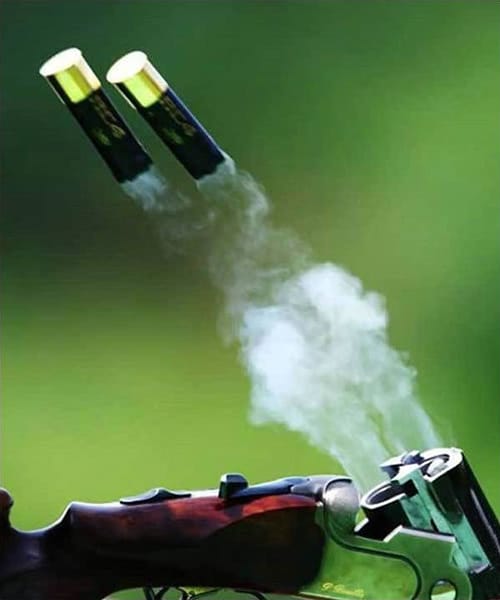
The most common shotgun gauges are 12 and 20-gauge. The smaller the gauge number, the larger the shotgun bore. A 12-gauge shotgun is traditionally for hunting as it gives you the most power from the furthest distance, which is a crucial factor when hunting waterfowl.
There are times when a smaller gauge is desirable. That’s due to their corresponding shotguns being lighter in weight and providing less recoil. If you’re strictly shooting clays, a younger shooter just starting, or an experienced hunter dealing with poor shoulders, a smaller gauge could be your best option.
Gauge sizes are not interchangeable in the same shotgun.
Your Choke Options
Chokes are interchangeable tubes threaded into a shotgun’s barrel. These are popular with fowl hunters and competitive shooters because the size of the choke can improve the range and accuracy of a gun.
The three most common choke sizes are improved cylinder, modified, and full. For waterfowl, a modified choke performs best as an all-around choice, while an improved cylinder is best for closer range, and full is most effective for pass shooting.
The Importance of Weight and Barrel Length
You’ll be shooting at waterfowl from longer distances. Longer barrels, generally 28 inches, will help even your swing. A smooth swing can be the difference between your limit and coming home empty-handed.
Most waterfowl shotguns will have 28 or 30-inch barrels. Some manufactures produce smaller barrels, but 26-inch is as small as you’ll want. Anything less will render your muzzle too light. Additionally, shorter barrels are extremely loud.
Extra weight from your shotgun can help absorb the recoil from the action. Considering that you’ll generally have the shotgun stowed or over your shoulder, the excess weight shouldn’t bog down your hunt. The optimal weight for waterfowl shotguns is between seven and eight pounds.
Function Over Fashion: Consider the Stock and Finish
Synthetic stocks are the best option for waterfowl shotguns. Your gun will be exposed to all the elements, and this will be messy. Between mud, rocks, and all your modes of transportation, you want your shotgun to quickly clean up. Wood isn’t going to hold up to these conditions. Instead, synthetic stocks will always be an easy-to-clean option.
Though the bluing finish has a long tradition in waterfowl shotguns, matte and camo finishes are now easy to find and beneficial to the hunter. You want every edge possible while hunting and nothing should catch the eye of ducks you’re working. Stick to flat, neutral finishes.
Waterfowl Shotgun Reviews
We tried three different models of waterfowl shotguns to find the best guns for any hunter.
This versatile, inertia-operated shotgun shoots well, swings with ease, and feels perfect on your shoulder. With a 50% recoil reduction, you get all the inertia benefits without the sore shoulders because the Franchi Affinity is built with parent company Benelli’s high-performance action.
The Affinity is a 12-gauge and has a 28-inch barrel along with a 3-inch chamber. It comes with three standard chokes and has an oversized bolt handle and bolt release. Stock adjustment shims come with the shotgun to customize your length of pull. Those interested in using slugs will enjoy the gun’s capacity to attach scope mounts.
The lightweight synthetic body and slim frame make for an easy point of aim. Additionally, the gun has a red fiber-optic front bead near the vent rib barrel. Its aluminum receiver is drilled and tapped.
Franchi has been a trusted name in firearms for years, but now that their parent company is high-end gun manufacturer Benelli, the value in craftsmanship makes the Affinity 3 a steal based on the price. Some guns do certain things better, but you’d be hard-pressed to find one that does everything as well as the Affinity.
Pros
- Ideal weight and length of the barrel
- Great fit on the shoulder
- Fifty percent recoil reduction
Cons
- Not the best option for light target loads
- Initially stiff trigger
On the cheaper end of the inertia-operated spectrum is the CZ-USA 1012. This shotgun has been put through its paces and revealed itself to be a sturdy workhorse. The 1012 was put through 5,000 rounds without oil or cleaning during testing and experienced no malfunctions.
All 1012 models come in 12-gauge with 3-inch chambers. The barrel is 28-inch with 8mm flat ribs, and the shotgun has a single white bead and five extended choke tubes. The layout features a bolt release button on the right side, a shell drop lever on the right front of the trigger guard, and cross-bolt safety.
The shotgun also features an hourglass-shaped bolt handle. Unlike inertia guns with a C-shaped bolt handle, the CZ design is lighter and easier to grasp and control. It also pulls free from the bolt easier during disassembly.
From low recoil target rounds to 3-inch magnum loads, the CZ-USA can handle your needs from the shooting range to the blinds. This reliability is made all the more enticing by the agreeable price tag. You won’t find any more bang for your buck than with the CZ-USA 1012.
Pros
- Approachable price point for an inertia-operated shotgun
- Quick, predictable trigger
- Durable and can take a beating
Cons
- Extremely lightweight
- Chokes from a third-party manufacturer
Beretta A400 Xtreme Plus – Best Gas-Operated Shotgun
As the priciest shotgun we tested, the Beretta A400 Xtreme Plus is our “buy once cry once” option. The initial price tag should be tempered by the expectation that this gun will last a lifetime – and might be something you pass down through your family one day.
The A400 is a 3 ½ inch chamber, 12-gauge, gas-operated waterfowl hunter’s dream. Just one shot reveals that this is one of the softest 12-gauges you’ll ever experience. The softness is partly due to their Kick-Off3 system, which offers a spring-loaded steel rod in the grip of the stock, which helps to buffer the bolt movement. That, coupled with rubber recoil pads on the buttstock, helps mitigate the action.
Though gas-operated Beretta’s have taken a hit in the past for being difficult to clean, the A400 line is much easier to maintain. The barrel and gas pistons easily slide out, and the bolt assembly disassembles by depressing the rotating bolt head.
The A400 has a three-spring hydraulic system in its stock that softens its recoil. With a cycling time clocking in 36% faster than competitors and highly accurate patterning, this waterfowl hunting shotgun is a great shooter. With this type of accuracy, there are no holes for fowl to maneuver through. Covering your target all but guarantees a kill.
Pros
- Three-spring hydraulic system softens recoil
- High level of accuracy
- Fast cycling
Cons
- Cycle issues with lighter loads
- High price point
Parting Shot
The Franchi Affinity 3 comes out on top of our waterfowl hunting shotgun shopper’s guide. This Italian-crafted shotgun is a versatile and rugged option that shoots cleanly and accurately.
The Franchi Affinity 3 comes from a company that values quality and craftsmanship. There is no overstating the importance of how a gun feels. You feel that quality the moment it hits your shoulder.
Hunting Fl, iOutdoors Blog, Turkey Hunting
The Meanest, Nastiest Bird in the South
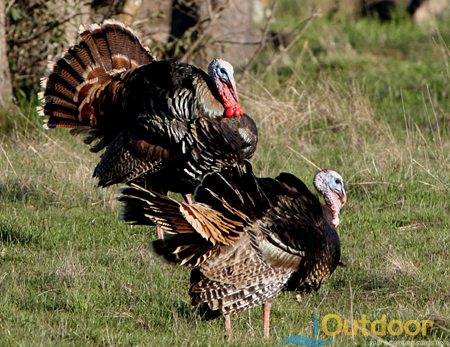
Hunting season for the Florida Osceola turkey or the Florida Wild Turkey begins in the third Saturday of March up to the third Sunday of April. Thus, if you are planning on bagging a gobbler, schedule your hunt within the season and come prepared. Hunting this species requires patience and skill. Because it is the smallest turkey species and is one of the most challenging to hunt.
What to bring
Obviously, you will have to bring a rifle or gun to shoot the turkeys with; a bow and arrow would also be good. Still, with only a gun, your chances of tracking a turkey can be slim. It is best to bring at least one turkey calling device and a pair of binoculars. You might also consider using an inflatable decoy.
The Osceola turkey is quite clever and elusive; thus, try to be less conspicuous. It is best to wear clothing with forest colors – brown and green – to blend in with the surroundings. Also, try to be as quiet as possible, with only the occasional turkey call from your device making a sound to signal to the gobbler.
Calling and hunting
When calling for turkey, don’t be too excited and produce a lot of sounds – that is not how turkeys sound in the wild. Remember they are considered the Nastiest Bird in the South. So rather, wait about 5 minutes before making another call. Also, it might be good to walk a few paces away from the turkey before making the call to give off an illusion that the hen is walking away – a challenge that most males won’t want to miss.
A rule of thumb: don’t shoot if the turkey is well out of the range of the rifle or bow and arrow – that will only scare the turkeys and leave you empty-handed.
Hunting Fl, iOutdoors Blog, Turkey Hunting
Best Turkey Calls 2020
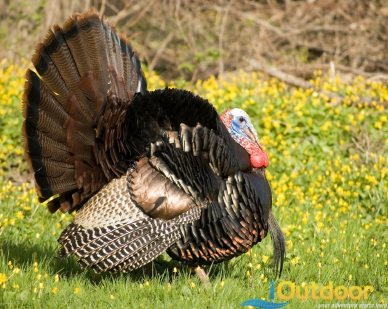
Springtime is the best time of the year to hunt wild turkey. Then, most turkey hunters’ preparation focuses on weapons like rifles and bow. Equally important, the decoys to use in sparse woods or open meadows. They would normally bypass one important single factor – turkey calls.

Best Turkey Calls 2020
Turkey calling, compared to stalking, is the better method of hunting wild turkey. It may be simple as it sounds but making turkey calls can be quite tricky. The idea is to make a hen turkey sound to attract a male turkey. In some cases, gobbling sounds to lure in the inhabiting turkey by making it appear that another male turkey is trespassing its territory.
There are different kinds of turkey calls that can be used from clucks to gobbles, cackles, purrs, cuts, yelps, clucks, kee-kees, and a whole lot more. The question is – what is the best turkey call to use? Truth is, there is no single and generic turkey call that can be deemed the most effective. Since turkeys are unpredictable, always differing in response when they hear a specific call. A good turkey hunter then has a mastery of several types of turkey calls and knows which to use given a particular hunting condition.
Here are some of the best turkey calls used by wild turkey hunters:
Reviews and Comparison
- Mouth calls. It is basic for wild turkey hunters to learn how to make mouth calls. Although they are the most difficult to master, mouth calls are the most affordable and adaptable. They are best used when the turkey is so near to the hunter, making him or her unable to make box or friction calls, which may cause movement that may scare the turkey away. Mouth calls are also perfect during rainy conditions when box and friction call dripping wet would be useless.
- Box Calls. Box calls are the most reliable type of calling as they produce more volume and are quite simple to use, making it easier for wild turkey hunters especially beginners. To use box calls, hunters slide the lid across the box’s surface to make turkey sounds. Box calls are best used during windy and rainy days.
- Friction calls. Friction calls, on the other hand, create lifelike turkey sounds. They are used by scratching the bottom of a peg across a round surface, which can be made of wood, aluminum, slate, or carbon striker. Just like box calls, friction calls are best used during windy days and rainy days.
- Diaphragm calls. These calls are used by directly inserting it inside the mouth, producing sound by inhalation and exhalation.
- Push-pull calls. Push-pull calls create lifelike turkey sounds by pushing a button on its end that forces a surface across a peg
- Tube calls. These are made up of a hollow barrel while latex is attached to its upper part with an elastic material. Tube calls are a favorite among seasoned hunters as they are versatile, being able to create several sounds.
- Turkey locator calls. As tom turkeys make gobbling sounds at loud noises, turkey locator calls force a tom turkey to sound off, thereby giving away its exact location.
In Conclusion
It takes quite constant practice and experience to choose the turkey calls that suit you best. If you are a beginner wild turkey hunter, be patient to learn the best turkey calls that best match your hunting style. You can try to ask experienced wild turkey hunters or explore the internet for videos about tips about turkey calls, but this is one of the reasons we wrote established the best Turkey calls 2020.
Hunting Fl, iOutdoors Blog, Turkey Hunting
Gobble, Gobble- The Turkey’s Gotta Eat
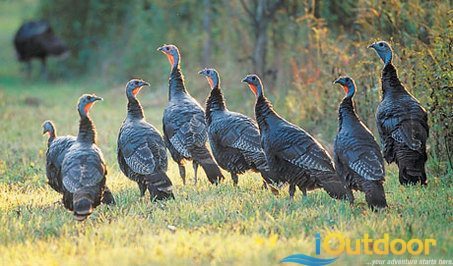
Before a hunt, most wild turkey hunters concentrate on their weapons, decoys and turkey calls. Little do they know that learning more about how turkeys behave in the wild will lead to better chances of finding them! Their feeding habits, along with their social and mating behaviors, will definitely give away clues on the best time of the day to find them and their locations as well.
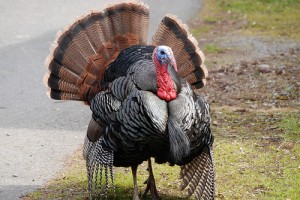
Wild turkeys feed more commonly during early mornings and late afternoons, thus, making these times the best period to hunt them. Also take note that they prefer wide open areas as their feeding grounds. Majority of their food sources can be found in theses open places especially during the summer months. Therefore, it would not be amiss to determine these places in your hunting grounds before the actual hunt.
Wild turkeys are omnivores, being able to feed on both plants and animals. They can be found either foraging the ground or mounting small trees and shrubs to find food. Among their desired foods include nuts, acorns, berries, roots, grasses and seeds. They also feed on small insects and occasionally, small amphibians and reptiles like newts. Because of their ability to feed on different kinds of foods, they can reach quite a considerable number even in small areas. Know when and where these food sources are rich in your hunting grounds as they may be the perfect location for the hunt.
Other than knowing when and where best to find them, learning about their feeding pattern will also help one to prepare more effective gear and equipments for the turkey hunt. For instance, knowing their feeding grounds will allow the hunter to wear attires and use gears that are aptly camouflaged to conceal them.
Never ignore the importance of knowing turkey eating habits since they could serve as clues to you. Although most hunters think that in hunting, only brawns rule, it wouldn’t hurt to use the brain sometimes. Knowing more about turkeys’ habits will allow you to understand your prey them and thus allow you to predict their behavior better. Strategize your hunt with research, and soon you’ll make wild turkey hunting an easy chore.

Alligator Hunting Fl, Deer Hunting Fl, Hog Hunting Fl, Hunting Fl, iOutdoors Blog, Quail Hunting, Turkey Hunting
Safety in the Field
Safety is extremely imperative during outdoor activities such as hunting. Those who love hunting frequently are known to spend their time with dangerous weapons, but they are nevertheless included when practicing safety measures. Hunters should always be a step ahead with their actions, as a result, those who are well experienced are encouraged to introduce safety trips to new hunters, who are coming along for the hunt. Here are a few basic rules that hunters should follow at all times.
 First of all, hunters should treat their disarmed gun or bow with the same respect that they would with those which are loaded. In addition, hunters should assume that their weapon is always armed. Keeping this in mind can help prevent accidental shooting accidents. Next, hunters should never point their crosshairs at anyone when unloading their weapons. This is simply because accidents can happen anytime and anywhere.
Never to Safe
The third rule applies to the actual hunt. It is important to have the presence of mind and keep an eye on the target. That is not the time to be jittery and unsure when handling the weapon. Fourth, hunters should clearly identify their target before taking it down. This is important since there are a large number of individuals and animals that are mistakenly shot by game hunters every year.
The fifth thing you should think about is ear safety. Many hunters will sacrifice their hearing just to hear animals coming. Hunters should put a soft protective earplug in the ear which is closest to the hunter’s weapon.
Lastly, always keep your gun clean and well maintained. When unloading the weapon make sure to leave the chamber open. Then, check for any foreign materials inside the barrel. In the event that the weapon is accidentally dropped, automatically dismantle, clean, and put it back together to prevent mishaps from happening. As with any piece of hunting gear, a clean weapon is a functional weapon.
Hunting Fl, iOutdoors Blog, Turkey Hunting
How to Hide From a Turkey
One popular hunting pass time in the United States is wild turkey hunting. Those who love to hunt these big fowls would benefit from knowing not only the specific habits of turkeys and the best ambush sites. It would not also be amiss to know the right camouflage.
Properly camouflaging yourself in your surroundings can help you succeed in your wild turkey hunting endeavors. Turkeys have sharp eyesight comparable to an eagle’s that concealing yourself from their vision can be quite tricky. Thus, it is necessary to learn how to properly camouflage yourself for the hunt.
When going turkey hunting, it is very important to wear camouflage from head to toe, and that includes concealment of the hands and part of your face. Color is important in camouflaging; the closer the color to the hunting surroundings, the better. Hunters who usually lean on tall trees or sit on the grass should wear an earth toned camouflage pattern. Your gears, especially tour weapon of choice must also be disguised well so as not to attract the attention of your prey.
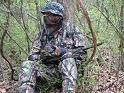
If you have no idea about the area in which you will hunt, it may be necessary for you to bring along several camouflages so that you may choose the best one that suits your hunting surrounding.
If you are not up to having several camouflage suits in your arsenal, you can go for a product called ASAT. ‘ASAT’, which stands for “All Season, All Terrain”, is a revolutionary camouflage pattern. This type of camouflage pattern can be worn in any type of season and in all terrains. It works so well that it will give hunters the ability to be invisible while hunting for large prey items. ASAT’s camouflage pattern is highly based on nature and how animals see things. It also has two main distinctive patterns – the light-shadow pattern and the open-light pattern. When these two camouflages are combined it automatically blend with its surroundings.
