
iOutdoors Blog, Deer Hunting Fl, Dove hunting Fl, Duck Hunting Fl, Hog Hunting Fl, Hunting Fl, Quail Hunting, Turkey Hunting
A Hunter’s Guide to The Best Waterfowl Shotguns
We tested three waterfowl shotguns at different price points and found the Franchi Affinity 3 to be the best overall value.
As a life-long hunter, I know the importance of picking out the right gear. Once you’re in your blind, you want to have confidence in the tools you’ve surrounded yourself with. That’s why I’ve compiled this waterfowl hunting shotgun buyer’s guide.
My favorite – the Affinity 3 – is inertia-operated, helping it shoot clean for more extended periods. The shotgun is a great shooter that’s easy to aim and always ready to go.
Of course, each hunter has their preferences. We’ve considered all these and compiled this waterfowl hunting shotgun buyer’s guide. Keep reading to learn more!

Waterfowl Hunting Shotgun Buyer’s Guide
When choosing the right waterfowl shotgun, a buyer must consider multiple aspects. While some features are simply a preference, some will significantly impact the performance of your shotgun.
Let’s take a look at some of these features.
Gas vs. Inertia: What are the Advantages?
This hotly debated topic has raged in gun circles for years. Let’s start by looking at how the two systems operate.
Gas-operated shotguns bleed off gas after your shot, moving the bolt toward the back of the gun and ejecting the spent shell. The following shell is loaded when the bolt returns forward.
Inertia-driven guns hold their bolt place by a spring. When you pull the trigger, the charge from the shotshell overwhelms that spring, forcing the bolt backward. The shell is then ejected, and the bolt returns forward, loading the next shell.
Gas-operated shotguns can outperform inertia guns at lower temperatures. Bulky winter layers can keep the buttstock of inertia-operated guns from properly recoiling, which is needed to cycle the shell.
Alternatively, inertia-operated guns require less maintenance as they do not give off gas upon firing. In many cases, inertia guns can go a year or longer without cleaning.
How to Choose Your Shotgun Gauge
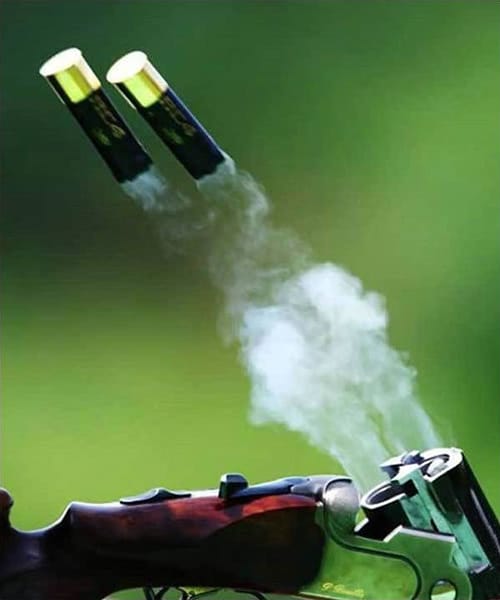
The most common shotgun gauges are 12 and 20-gauge. The smaller the gauge number, the larger the shotgun bore. A 12-gauge shotgun is traditionally for hunting as it gives you the most power from the furthest distance, which is a crucial factor when hunting waterfowl.
There are times when a smaller gauge is desirable. That’s due to their corresponding shotguns being lighter in weight and providing less recoil. If you’re strictly shooting clays, a younger shooter just starting, or an experienced hunter dealing with poor shoulders, a smaller gauge could be your best option.
Gauge sizes are not interchangeable in the same shotgun.
Your Choke Options
Chokes are interchangeable tubes threaded into a shotgun’s barrel. These are popular with fowl hunters and competitive shooters because the size of the choke can improve the range and accuracy of a gun.
The three most common choke sizes are improved cylinder, modified, and full. For waterfowl, a modified choke performs best as an all-around choice, while an improved cylinder is best for closer range, and full is most effective for pass shooting.
The Importance of Weight and Barrel Length
You’ll be shooting at waterfowl from longer distances. Longer barrels, generally 28 inches, will help even your swing. A smooth swing can be the difference between your limit and coming home empty-handed.
Most waterfowl shotguns will have 28 or 30-inch barrels. Some manufactures produce smaller barrels, but 26-inch is as small as you’ll want. Anything less will render your muzzle too light. Additionally, shorter barrels are extremely loud.
Extra weight from your shotgun can help absorb the recoil from the action. Considering that you’ll generally have the shotgun stowed or over your shoulder, the excess weight shouldn’t bog down your hunt. The optimal weight for waterfowl shotguns is between seven and eight pounds.
Function Over Fashion: Consider the Stock and Finish
Synthetic stocks are the best option for waterfowl shotguns. Your gun will be exposed to all the elements, and this will be messy. Between mud, rocks, and all your modes of transportation, you want your shotgun to quickly clean up. Wood isn’t going to hold up to these conditions. Instead, synthetic stocks will always be an easy-to-clean option.
Though the bluing finish has a long tradition in waterfowl shotguns, matte and camo finishes are now easy to find and beneficial to the hunter. You want every edge possible while hunting and nothing should catch the eye of ducks you’re working. Stick to flat, neutral finishes.
Waterfowl Shotgun Reviews
We tried three different models of waterfowl shotguns to find the best guns for any hunter.
This versatile, inertia-operated shotgun shoots well, swings with ease, and feels perfect on your shoulder. With a 50% recoil reduction, you get all the inertia benefits without the sore shoulders because the Franchi Affinity is built with parent company Benelli’s high-performance action.
The Affinity is a 12-gauge and has a 28-inch barrel along with a 3-inch chamber. It comes with three standard chokes and has an oversized bolt handle and bolt release. Stock adjustment shims come with the shotgun to customize your length of pull. Those interested in using slugs will enjoy the gun’s capacity to attach scope mounts.
The lightweight synthetic body and slim frame make for an easy point of aim. Additionally, the gun has a red fiber-optic front bead near the vent rib barrel. Its aluminum receiver is drilled and tapped.
Franchi has been a trusted name in firearms for years, but now that their parent company is high-end gun manufacturer Benelli, the value in craftsmanship makes the Affinity 3 a steal based on the price. Some guns do certain things better, but you’d be hard-pressed to find one that does everything as well as the Affinity.
Pros
- Ideal weight and length of the barrel
- Great fit on the shoulder
- Fifty percent recoil reduction
Cons
- Not the best option for light target loads
- Initially stiff trigger
On the cheaper end of the inertia-operated spectrum is the CZ-USA 1012. This shotgun has been put through its paces and revealed itself to be a sturdy workhorse. The 1012 was put through 5,000 rounds without oil or cleaning during testing and experienced no malfunctions.
All 1012 models come in 12-gauge with 3-inch chambers. The barrel is 28-inch with 8mm flat ribs, and the shotgun has a single white bead and five extended choke tubes. The layout features a bolt release button on the right side, a shell drop lever on the right front of the trigger guard, and cross-bolt safety.
The shotgun also features an hourglass-shaped bolt handle. Unlike inertia guns with a C-shaped bolt handle, the CZ design is lighter and easier to grasp and control. It also pulls free from the bolt easier during disassembly.
From low recoil target rounds to 3-inch magnum loads, the CZ-USA can handle your needs from the shooting range to the blinds. This reliability is made all the more enticing by the agreeable price tag. You won’t find any more bang for your buck than with the CZ-USA 1012.
Pros
- Approachable price point for an inertia-operated shotgun
- Quick, predictable trigger
- Durable and can take a beating
Cons
- Extremely lightweight
- Chokes from a third-party manufacturer
Beretta A400 Xtreme Plus – Best Gas-Operated Shotgun
As the priciest shotgun we tested, the Beretta A400 Xtreme Plus is our “buy once cry once” option. The initial price tag should be tempered by the expectation that this gun will last a lifetime – and might be something you pass down through your family one day.
The A400 is a 3 ½ inch chamber, 12-gauge, gas-operated waterfowl hunter’s dream. Just one shot reveals that this is one of the softest 12-gauges you’ll ever experience. The softness is partly due to their Kick-Off3 system, which offers a spring-loaded steel rod in the grip of the stock, which helps to buffer the bolt movement. That, coupled with rubber recoil pads on the buttstock, helps mitigate the action.
Though gas-operated Beretta’s have taken a hit in the past for being difficult to clean, the A400 line is much easier to maintain. The barrel and gas pistons easily slide out, and the bolt assembly disassembles by depressing the rotating bolt head.
The A400 has a three-spring hydraulic system in its stock that softens its recoil. With a cycling time clocking in 36% faster than competitors and highly accurate patterning, this waterfowl hunting shotgun is a great shooter. With this type of accuracy, there are no holes for fowl to maneuver through. Covering your target all but guarantees a kill.
Pros
- Three-spring hydraulic system softens recoil
- High level of accuracy
- Fast cycling
Cons
- Cycle issues with lighter loads
- High price point
Parting Shot
The Franchi Affinity 3 comes out on top of our waterfowl hunting shotgun shopper’s guide. This Italian-crafted shotgun is a versatile and rugged option that shoots cleanly and accurately.
The Franchi Affinity 3 comes from a company that values quality and craftsmanship. There is no overstating the importance of how a gun feels. You feel that quality the moment it hits your shoulder.

Hunting Fl, Hog Hunting Fl, iOutdoors Blog
Hog Hunting in Florida!
There is open season on hog hunting in Florida during all daylight hours, seven days a week, 365 days a year! Hogs are not native to Florida and do tremendous damage to pasture lands and crops. The control of wild hogs is a serious business, they have invaded nearly every corner of the state. European pigs arrived in the country with some of the earliest settlers, and they either escaped or were released into the wild nearly 500 years ago. pigs were probably brought to this country by Hernando DeSoto, the Spanish explorer, who landed in Florida at Charlotte Harbor in 1539.
There are about 4-5 million wild hogs in the US. Wild hogs are the most destructive invasive species in the United States. An estimated 500,000 wild pigs now roam through the dense vegetation of Florida. Female hogs can bread at 8 months and A pig can produce two, and sometimes more, litters a year, especially in southern Florida where conditions are perfect, a litter can number a dozen, that’s a lot of pigs.
Hogs can weigh more than 300 pounds, are extremely intelligent and aggressive, and can be very aggressive when it comes to foraging for food. They have been known to attack domestic calves and lambs. Hogs can also carry diseases that can be transmitted to livestock, making them enemy #1 to farmers and cattlemen alike.
Florida Hunting!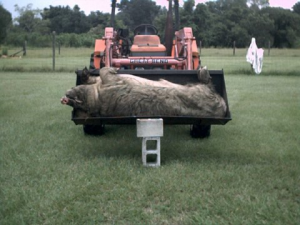
Florida Hog Hunting is a booming industry and can be hunted year-round. The only exception is on public lands according to FWC: “On wildlife management areas, hogs may be taken during most hunting seasons, except spring turkey. But, if it’s during archery season, you must use a bow – during muzzleloading gun season, you can only use a muzzleloader.
Licenses
You do need a hunting license as well as management area permit and any other necessary permits to hunt wild pigs on WMAs – where on some, daily bag limits on wild pigs do apply, and on a few, there’s even a minimum size limit on what you can take.” Hogs can be hunted in Florida using a rifle, handgun, spear, crossbow, dogs, knife, bow and arrow, and muzzleloader.
Method of Hunting
Hogs can be hunted on foot, horseback, ATV, or from a swamp buggy or still hunted from ground or tree blind. Unusually large, trophy-sized feral pigs have been taken that reach three feet tall, six feet long, and over 500 pounds. Trophy Boars have four continually growing tusks that can be extremely sharp. The upper tusks are often 3 to 5 inches long but have sometimes been recorded at 9 inches in length. These tusks can be deadly to animals like catch dogs and humans.
Hog Habits
Hogs can run up to 30 miles per hour and are good swimmers. Hogs feed most heavily at dawn and dusk, spending the majority of the day either wallowing in mud holes or resting in dense vegetation. Wild boar in Florida is considered a dangerous game and a charging boar is considered exceptionally dangerous quarry, due to its thick hide and dense bones, making anything less than a “kill shot” a potentially deadly mistake. Wild boar hunting is neither for the faint of heart nor for solo hunters, the boar can prove to be a vicious opponent that never surrenders without a fight.
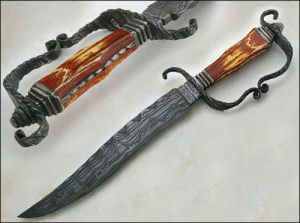
Hunting Knife
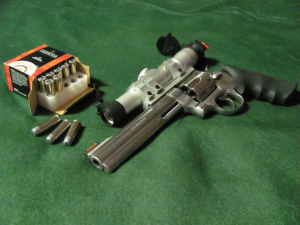
Hunting Pistols
Cooking & Preparing Wild Hog
Going Whole Hog
Feed an Army the Old Fashioned Way
So the army’s coming over for dinner and you need to come up with something to feed them. How about cooking up a whole hog. It’ll serve nearly 40-50 people so it’s a great choice for that church social or the family reunion.
The first thing you’ll need is a place to do the cooking. You can run out and spend $1000 or so on a good high-quality smoker or you can put one together in the backyard. Depending on how industrious you are you could buy some plans or you could rig one up.
Pit Building:
One way of building a pig cooker is to get some 8 inch stone blocks a few metal rods and a wire screen. Build a rectangle with the blocks so it’s inside measurements are about 42″ wide 50″ long and 18″ deep. Set the metal rods on top of the blocks to support the hog and place the wire screen over the rods. Then you can place the hog right on top and let it cook.
Preparing the Pig:
Once you know how and where you are going to cook the hog you need to get the pig. Try to find a skinned and trimmed carcass around 60 to 100 pounds. You want it to be lean so that you don’t start any grease fires. The carcass should be butterflied so it can lay it out relatively flat. To get a whole hog, call around to some local butchers and see if they can help you out.
If you can refrigerator a whole hog get it a day in advance and season it up with a good rub then let it sit for a good day. If you don’t have a place to store it then get everything ready so you can get the hog on the fire as soon as you get it home. Season it as you cook.
Building the Fire:
Now you’re ready to build a fire. If you are using charcoal briquettes you need about 60 pounds you can also use hardwood logs burned down to coals. For use of professional smokers, follow the instructions on building a fire. If you are using a backyard pit, I suggest building a fire ring next to the pit so you can build up the fire there and then move the coals to the pit.
You’ll want to keep adding coals to the pit throughout the day. Start with about 20 pounds of coals. Load them all along the bottom of the pit with more coals on the ends under the hams and the shoulders so the hog will cook evenly.
Cooking: The plan is to cook the hog for about 10 hours. Start in the morning. Build up the heat throughout the day and watch the temperature carefully. Use a good meat thermometer placed deep into one of the hams. When you hit about 170 degrees F. (no less) the hog is done. Cook skin side up for 4-8 hours and then flip. Cook an additional 1-2 hours and turn again. Finish cooking skin side up. Make up a good mop and baste the hog about every hour or so. Apply whatever sauce you want at the end.
Pulling:
Once the pig is cooked remove it from the fire and let it sit for about an hour, wrapped up tightly. This will let it cool down a bit, but also let the heat even out and the juices flow back into the meat. Now you are ready to start pulling the meat. The meat should pull free from the bones. You should start by cutting or breaking the pig up into large pieces about 5 to 10 pounds each.
From these large sections shred the meat into small pieces or strips. You do not want to crush the meat but gently pull it apart. A good pair of insulative, latex cooking gloves are a must. You will want to put the shredded meat into a large pot to keep warm and to mix up. A perfect pile of pulled pork should have meat from every part of the pig.
Hog Recipes
Native American Wild Hog Roast Recipe
Ingredients
1/4 cup vegetable oil
1 1/2 cups chopped onion
3 garlic cloves, minced
4 dried juniper berries, crushed
1/2 tsp. crushed coriander seed
1 bay leaf
4 lg. ripe tomatoes, quartered, seeded
1 1/4 cups water
2/3 cup cider vinegar
1/2 cup honey
1 Tbl. ground red chile
1 dried medium-hot red chile, crushed
2 tsp. salt
1 oz. square unsweetened chocolate, grated
4 lb. or 5 lb. wild hog / wild bore rib roast
Heat oil in a large heavy saucepan and saute onions in it over medium heat until soft. Add garlic, juniper berries, coriander seed, and bay leaf and saute for 2 to 3 minutes longer. Add tomatoes, water, vinegar, honey, ground, and crushed chile and salt. Simmer, covered, 30 minutes. Add chocolate and simmer, uncovered, for 20 to 30 minutes, until fairly thick. Preheat oven to 350 degrees F.
Place roast fat side up in a roasting pan and baste generously with the sauce. Roast for about 3 hours, basting occasionally with sauce and pan drippings. Let roast sit for 10 minutes in a warm place before carving. Slice and spoon additional sauce over each portion.
Super Tasty Wild Boar Summer Sausage
Wonderful and super easy Wild Boar Hog
summer sausage recipe here:
2 pounds ground boar meat
1 cup of water
2 tbsp tender quick salt
1/2 tbsp cayenne pepper
1 tsp nutmeg
1/2 tsp liquid smoke (if baked in the oven)
1/8 tsp garlic powder
1/2 tsp black pepper
Mix well and refrigerate for 24 hours. Form into logs. Bake at 300 degrees for
1-1/2 hours, or till the internal temperature reaches 160 degrees or smoke until
internal temp reaches 160 degrees.
Plan your next adventure today will Hog hunting in Florida. You can explore so many destinations and add some additional activities including fishing in as well.
![Wild Boar Eat What?]()
Animal Park Experience, Eco Tours, Hog Hunting Fl, Hunting Fl, iOutdoors Blog, Nature Adventures
Wild Boar Eat What?
Hunting wild boars is an exciting sport. It can be quite adrenaline-pumping to chase them through thickets or face them as they charge. However, just like any other animals hunted for game, wild boars can be quite difficult to hunt as they do not stay in just one area. Their ability to run fast, and heightened senses of hearing and smell all contribute to the difficulty in hunting them.
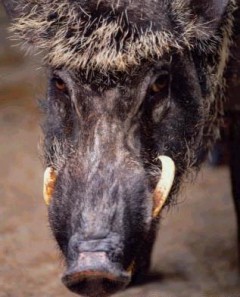
As a tip to make tracking them easier, learn more about the social and natural behavioral traits of these creatures. Important information you must know about wild boars, to better hunt them, are their eating habits. Knowing what, when, and where they eat will help you understand the behavior and hunting grounds of these animals. Understanding their eating habits will allow you to spot more of their tracks as you hunt them down.
Wild boars are crepuscular animals, mainly active beginning dawn until dusk. Thus, it is also expected that they would go about and hunt for food during these times. Wild boars are highly omnivorous animals, capable of feeding on both plants to animals; and are scavengers, eating almost anything they would come across.
One of the most common signs that you should look for when tracking wild boars is rooting. Although their eyesight is not great, wild boars have an excellent sense of smell. These creatures use their long snouts to dig up the ground to look for tender roots and morsels such as tubers, grass, mushrooms, worms, and insects. By rooting, wild boars would leave a trail – an easily discernable patch of the area that has been dugout. In fact, in some areas, they leave quite widespread damage that causes erosion and spoil ecological balance. Although this activity is year-round, it reaches its peak before spring ends and continues until summer and winter.
Wild boars also feed on berries, nuts, acorns, pecans, fruits, and carrions. On occasion, they also feed on eggs, small reptiles and birds, young deer, rabbits, and even dead animals. When there is an abundance of food in their territory, wild board normally do not wander too far, never crossing 10 square miles. When food is scarce though, especially during the cold months, expect your hunting range to expand as they can search for food for up to 50 square miles.
Be an intelligent wild boar hunter. Knowing your prey makes hunting it easier. It would not be amiss to research information among friends or on the internet about these creatures’ behaviors including their eating habits. Next time, before you go wild boar hunting, pay attention to these small important details because they could be your ticket to catching the biggest wild boar!
Hog Hunting Fl, Hunting Fl, iOutdoors Blog
Florida Hogs
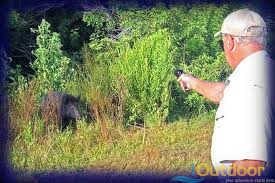
Florida is a well-known haven of adventure where you can go hunting for various animal species, including wild boars. Hunting in the wild will give you many surprises, including what animal you just might found. Still, there are certain species that are known to inhabit certain areas in the state so that when hunting in a certain area, you’ll have a general knowledge of what to expect.
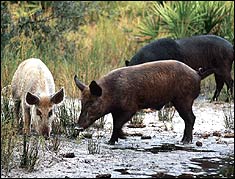
When hunting for hogs in Florida, you will most likely encounter the feral hog, Sus scrofa, a wild swine species that belongs to the Suidae family. This species is not native to Florida and is thought to have been brought by early Spanish explorers in as early as the 1500s.
A feral pig has a gestation period of 115 days and quickly grows, reaching full size in 12 months. It produces about 10 piglets per litter and has about 2 litters in a year. It grows a tusk, has good hearing, and an excellent sense of smell but has poor eyesight. This species has a very lean body, long snout, and forward pointed or upright ears.
Another species found in Florida is the Russian wild boar or sometimes called European wild boar. This species also has a long snout, pointy ears, and long tusks. It has a tufted straight tail and could range in color from tan to gray to almost black. Its face also has grizzled hair.
Since these species are found in the wild and are not controlled, many of them interbreed to produce hybrids. These hybrids can resemble either parent and would surely have a tusk, long snout, and upright or pointy ears.
![Wild Boar Eat What?]()
Hog Hunting Fl, Hunting Fl, iOutdoors Blog
The Florida wild boar or hog is often referred to as feral hogs or swine. There are three general types of feral hogs including free-ranging swine, Eurasian wild boar, and hybrids between the two former types. Wild hogs are now predominant in Florida and can be found in every county as well as at least 35 states and Canadian provinces.
The highest density of feral hogs in Florida can be found north and west of Lake Okeechobee and in areas with large forested tracts, dense understory vegetation, and limited public access.
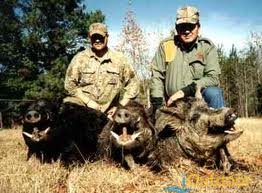
History of the Florida Wild Boar
The Florida wild boar is not native to America. There are many theories surrounding the origins of the wild boar. One popular theory is that the wild boars are descendants of the swine that Spanish explorers brought from Spain to the state of Florida.
Wild Boar Facts
The Florida wild boar has an average gestation of 115 days, an average of 2 litters per year with about 10 piglets with every litter. Young pigs grow quite fast and can reach 100 pounds in 12 months. This creature is omnivorous and is known to eat all kinds of food ranging from plants to small animals.
Problems Caused by the Florida Wild Boar
Wild hogs bear an opportunistic and omnivorous tendency which leads to many conflicts with people and wildlife. The presence of wild boar and their preferred food directly compete with many popular game animals such as deer, turkey, and squirrels. Wild boars are also known to eat the nests and young of many reptiles, ground-nesting birds, and mammals.
They have also been observed to consume young domestic livestock. Other than their food choices, some wild hog behaviors also pose a threat to the environment. Their rooting activities can destabilize soil surfaces and lead to erosion and many other ecological problems.
Dealing with the Florida Wild Boar
In an effort to preserve the number of popular game animals as well as the young of many reptiles, mammals, and other livestock, necessary measures have been put into place. One of these methods is hunting. This is an important population control method for wild hogs because it is inexpensive, provides recreational opportunities, and is useful in reducing adult hog numbers.
Trapping is also another method of controlling the number of Florida wild boars. This can offer more success especially because the hog is nocturnally active. Lastly, hogs can be controlled using the excluding method which makes use of fencing. This option, however, is quite expensive, especially for large areas.
![Wild Boar Eat What?]()
Hog Hunting Fl, Hunting Fl, iOutdoors Blog
Rutting out the Beasts
Boar hunting is sometimes considered a test of bravery and strength – after all, the hunter goes after a wild animal that could easily defend itself with sharp tusks. Wild boar and feral pigs are hunted for their meat, their tusk as a marker for trophy animals – set at more than 2 inches, their head to be mounted as display, and just for fun and challenge.
When is the best time of year to boar hunt? Well, there is a hunting season set in most states although some areas allow boar hunting at any time of the year. So, it is best to check with a specific state or locality as to the schedule of the hunting season.

You can hunt for hogs anytime of the year, yes, but you might want to stay away from the set hunting season. This way, you’ll have less competition because most people choose to hunt during season hunting. Opinions among hunters are divided as to which season is best for a hunt – summer or winter. Each season does have its advantages.
During summer, when temperatures become really high, it is easy to find boars near sources of water. All you have to do is wait near a body of water and you’ll likely find one. Still, some hunters prefer the added challenge of hunting boar during winter. Their tracks can be hidden by fresh snow – the best thing to do is use trained dogs to hunt the boars and keep them at bay while you prepare for the kill.
To answer this question, it is best to go out and try hunting in both seasons to see which you prefer.
