![What is a rigging needle?]()
iOutdoors Blog, Key West Fishing, Kite Fishing, Marlin Fishing, Offshore Fishing, Sail Fishing
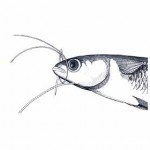 A rigging needle is simply a needle used for rigging bait to help aid on offshore fishing such as Trolling, Kite Fishing, or live-bait fishing. One end has a hole where the thread is placed while the other end is sharp to be able to penetrate the bait/lure body.
How to Rig the Bait
Of course, there are many different ways to rig your bait, lure, etc. In general, you have to understand that something that you are about to rig to the line. What is it made of? Does it have a head and a body? What is the shape and type of its head? These are just some of the things you have to deal with.
Learn when to use a leader and what leader to use. Select the bait or lure. Cut several pieces of bowstring (or other sturdy string), prepare strings as many (or more than) as your lures/baits. Get some pieces of Dacron or similar material. Glue all these stuff together and use a rigging needle to stitch them securely, making sure to arrange them in such a way that you will maximize your chances of landing as many fish as you can.
There are needles readily available, though you can also make your own.
Making Your Own Rigging Needle
What you need is a piece of wire coat hanger, file, hammer, and a drill with a 1/8” drill bit. It is quite simple to improvise a rigging needle. First, untwist the coat hanger and cut off a 12” piece (make it shorter or longer, depending on your bait; 12” is good for rigging eels). Use a file to sharpen one end. Use the hammer to flatten the opposite end. Drill a hole in the flattened portion and that’s it – you’ve just finished making your own needle.
Where can I purchase a Needle?
The best way to purchase a rigging needle would be from a local tackle store or online. If you are looking to learn more about the practical uses of rigging needles, local knowledge could be very helpful. Once you understand the applications, you can purchase your needles online conveniently. R & R Tackle make an exceptional tool to help increase your odds of success on the water.
![What is a rigging needle?]()
iOutdoors Blog, Islamorada Fishing, Key West Fishing, Marlin Fishing, Offshore Fishing, Sail Fishing, Tuna Fishing
What are Outriggers Used For?
 Mainly used in deep sea trolling, outriggers are a pair of long poles fitted on both sides of a boat that holds fishing lines away from the boat. It is usually made of fiberglass and aluminum, and is tilted at an angle between 70 to 80 degrees.
When being used, outriggers are lowered to an angle nearly the same level as the water’s surface. At the edge of each outrigger is a pulley with a cord, attached to which is a quick release clip that holds the fishing line. Once a fish strikes, the line is released so that it can be landed with the use of the traditional rod and reel.
Generally, outriggers improve the chances of a fish striking because not only does it allow the angler to cover more ocean space, it also permits the use of multiple lines. Because outriggers allow the use of multiple rods and reels, anglers can troll as many fishing lines as it may allow, thus, simulating a school of bait fish. It also allows the leader out of the water, thus, preventing bubbles that may scare the fish away.
Outriggers also hold the fishing lines at a distance from both sides of the boat, spreading the lines far enough to prevent the risk of tangling. With more lines in the water, the angler can set them at different distances and depths that can create a variety of natural patterns to increase the chances of a strike.
The shallow, rocky reefs are also home to many fish species, however, trolling in these grounds are dangerous. With the use of outriggers, the fishing boat can stay in the safe deeper water while the lures are positioned to graze the shallow waters.
![What is a rigging needle?]()
Destin Fishing, iOutdoors Blog, Islamorada Fishing, Key West Fishing, Marlin Fishing, Miami Beach Fishing, Offshore Fishing
When trying to land that trophy marlin or, if you are ambitious enough, a thousand-pounder, you need all the information and help that you could find. When trying to catch the marlin of your dreams, try using these lures.
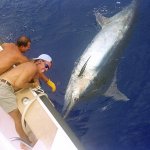 1. Mold Craft Wide Range
What is so great about the Mold Craft Wide Range is that it can be used in a wide range (thus its name) of conditions and speed. Thus, it is a favorite among anglers who want to land the big fish because it can be used in rough waters. This feature is accomplished by the center hole and squared-off nose.
2. Pakula Lumo Sprocket
The Pakula Lumo Sprocket was designed mostly as a straight runner and has a very tight swimming action. Lures by Pakula were first marketed in Hawaii for many years before these were sold in Australia, then, and the rest of the world.
3. Mold Craft Super Chugger
One of the lures you really must have, the Mold Craft Super Chugger has a concave face that enables it to grab a gulp of air which it then lets out in a thick bubble stream. This lure also moves in a side-to-side wiggle so that it resembles the swimming movement of fish.
4. Joe Yee Super Plunger
The Joe Yee Super Plunger is among the most popular and most widely used plungers, worldwide. A favorite by many anglers, these lures have caught their fair share of thousand-pound marlins.
5. Marlin Magic Ruckus
Another favorite among anglers, the Marlin Magic Ruckus is among the most productive lures used for catching marlin.
![What is a rigging needle?]()
Destin Fishing, iOutdoors Blog, Islamorada Fishing, Key West Fishing, Marlin Fishing, Miami Beach Fishing, Offshore Fishing
Top 5 largest marlin caught in the Atlantic
Marlin is a prized game fish, mostly because it offers a big challenge to the angler as it fights long and hard.
1. By Peter Ganz
The Atlantic Blue Marlin caught by JPeter Ganz was estimated to be 1,400 lb. It was caught off the waters of the islands of Azores, a Portuguese archipelago – near the Faial Island. This fish was not hauled in but was tagged, revived, and released back to the waters. For sure, this fish is among the largest caught.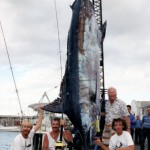
2. By Jacky Delbrel
Jacky Delbrel caught a 1,189 lb Atlantic blue marlin, again in the part of the Atlantic Ocean in the Azores, near the island of Faial. This catch holds the IGFA 80-pound world record for Atlantic Blue Marlin.
3. By Jean-Paul Richard
A 1,157-lb Atlantic marlin was caught by Jean-Paul Richard in Madeira. Caught along with this thousand-pounder was slightly smaller thousand-pounder weighing 1,028 lbs.
4. By Jack Harrington
It was on June 26, 1974, that the first thousand-pounder marlin was caught off the Oregon Inlet by Jack Harrington. Among the largest caught to date, this is worth mentioning especially since not too many thousand pounders have been caught. This marlin weighed 1,142 lb.
5. By Tracy Melton
Tracy Melton caught an Atlantic marlin weighing 1,083 lbs in Madeira. It was caught with an 80-pound tackle.
Of course, there are also plenty of marlins caught that are not listed here but could be heavier than these. There are also talks of the fish weighing as much as 2,000 lbs which were almost caught.
![What is a rigging needle?]()
iOutdoors Blog, Marlin Fishing, Miami Beach Fishing
Marlin migratory habits from Miami to Key West
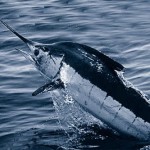 Marlins have the ability to thermo regulate, that is, they can control the temperature of their body at a certain limit. Thus, unlike most fish which are cold-blooded, marlins do not have to migrate to warmer waters in deep sea when winter sets in. Still, significant migration can still be seen in many marlin species – largely attributed to their taking advantage of feeding opportunities in the temperate zones during spring and summer.
Marlin spawning happens in tropical waters. Thus, fish living or foraging in temperate waters have to migrate to the warmer tropical waters during spawning season. Studies have indicated that a significant population of marlin stays in these tropical waters, though; many also migrate to colder regions. Still, when marlins migrate, they often pass through warm waters such as those in the Gulf Stream and the Agulhas Current, using these waters as “highways”.
Large as they are, they can travel long and far, moving from one ocean to another. In fact, there had been many instances wherein marlin tagged and released from one ocean was caught and identified in another ocean, half the globe away or further south or further north.
Thus, it is not surprising at all to find marlin in Open Ocean as well as close to the shore. Marlins are also found all over the world, mostly because of this migration in search of food and for spawning. Mostly pelagic, marlins move closer to bottom structures that create an upwelling that bring plankton and bait fish close to the surface.
There is no definite season for marlin migration, though; some observers have discovered migration on certain times of the year at a particular spot.
![What is a rigging needle?]()
iOutdoors Blog, Bottom Fishing, Marlin Fishing, Offshore Fishing, Sail Fishing, Shark Fishing
Sailfish, Marlin and Shark all for Catch and Release!
There are some anglers who do not get the underlying philosophy behind catch and release. Although there are some communities that only allow catch and release for certain fish species, it is already a different story when catch and released is practiced voluntarily.
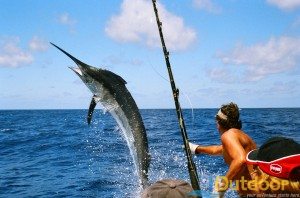
There is always the great debate between “catch and release” and “catch and kill”. For the proponents of catch and kill, they may ask: why release an injured fish back into the water when it will die anyway or why catch a fish at all if it you don’t get to keep it and serve it at the dinner table? Although the idea of a catch and release is not acceptable to many anglers, the practice could also be a good idea.
Catch and release is a recreational fishing practice of releasing a captured fish back into the water. The idea is to release the fish before its scale, skin and slime layers gets damaged, and before it suffers grave injury or exhaustion. Anglers would normally use bar-bless hooks to increase the fish’s survival, allowing it to be released without lifting it from the water.
Majority of the advocates of catch and release have ecological conservation in mind. For them, keeping a kill not for the need to survive but for sheer recreation is an abnormality in natural evolution. Releasing a prize catch back into the wild is the best thing any angler could do especially when it concerns fish species with dwindling population. Although there are many who doubt the survival of a captured-and-released fish, they have extremely high survival rates between 95% and 97%.
The conservation practice of catch and release will prevent the over-harvesting of fish that could gravely affect the marine food web chain. It will ensure a sustained population of fish species to safeguard the future of sports angling. Besides, most anglers would want to catch that large fish, but let’s face it, all of them are not that tasty. So, instead of enduring its taste on the table, why not throw it back into the water instead?

 Mainly used in