Charter Head Boat, Drift Fishing, iOutdoors Blog, Marlin Fishing, Offshore Fishing, Party Boat Fishing
What is Sea Sickness?
What Happens, Why Does it Happen, and How to Prevent It?
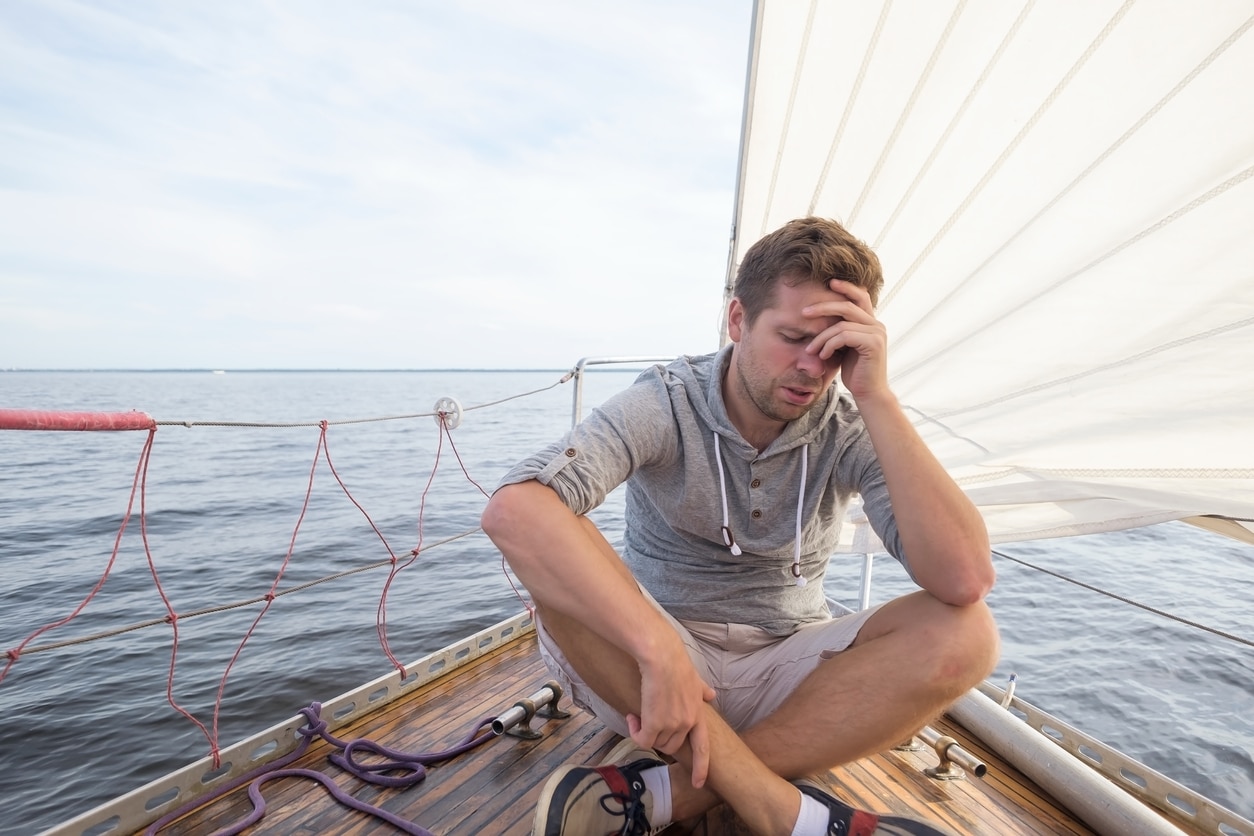
Seasickness is a form of motion sickness and occurs after spending some time on a boat on the water. This type of motion sickness is brought about by the rocking motion of the craft and is characterized by nausea and, in extreme cases, vertigo. Some people are vulnerable to the condition after only a minor stimulus, while some are immune, and others are immune through exposure.
What is Motion Sickness?
Motion sickness happens when repeated movements of vehicles disturb inner ear muscles. Some people experience vomiting and nausea when traveling in their cars. Three-dimensional movies can also cause nausea. This is also common for people at theme parks, roller-coast rides. Also, the same thing happens to many when riding on a boat, like cruises. It’s often called seasickness, but it remains the same disorder known as motion sickness. We include in this article exciting items for the readers. If you follow this blog, it may clarify that motion sickness is a widespread disturbance in our inner ear and that millions of people deal with the same common problem.
Visually Induced Motion Sickness is it the Same Thing?
Any mode of travel, whether in route to the sea or air, may create a feeling of visually induced motion sickness. Kids 0 to 12 years of age have the highest probability of recurring motion sickness. These conditions can lead to ear damage to the ears and internal structure if not corrected. Motion sickness can usually be resolved quickly and does not typically need a professional diagnosis. Reserving a window seat can help; any visually fixed item you can focus on with help reduces the symptoms before you leave to make a reservation for the flight. Eating well, so the stomach feels well settled and hours before activity.
Try to prevent eating greasy foods or acids before or during travels. Have home remedies at hand or try alternative treatments, which you can read about below for pilots, astronauts, or other professionals who often suffer frequent motion sickness as part of their professional cognitive therapy for prevention.

Causes or Triggers for Sea Sickness in Inner Ear
Motion sickness is not a virus and is not infectious reported by national disease control. However, some factors can bring on motion sickness relatively quickly. These include going below deck for extended periods, looking through binoculars for long periods, and staring at objects your brain will interpret as stable (reading, needlework, and even your cell phone).
How can Motion Sickness be Prevented?
If any of these symptoms continue for longer than two days, call your doctor. If you do travel, plan in advance to control your motion sickness.
Preventing Motion Sickness
There are some methods to help deal with motion sickness without using medications. Here are some tips to help naturally to prevent motion sickness:
- Staying busy and keeping your mind occupied like fishing.
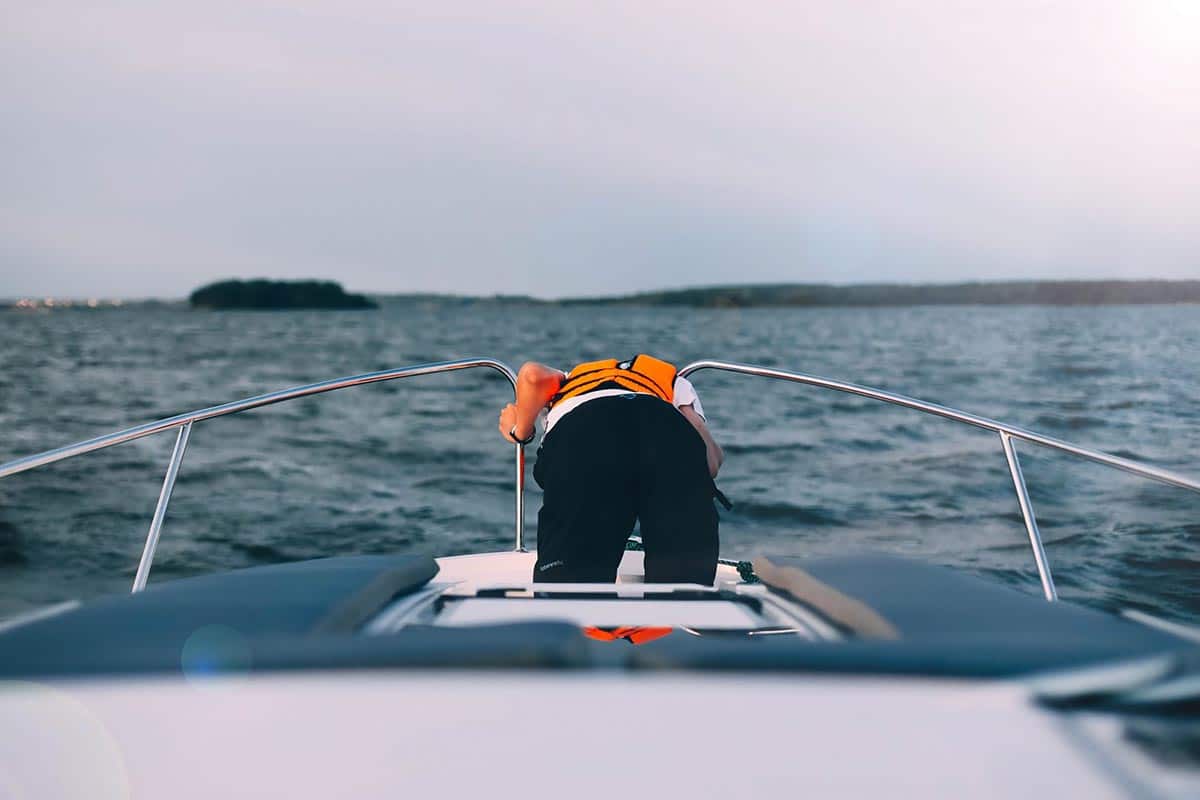
- Waiting on deck, keep fresh air to your face.
- Take deep breaths and drink plenty of water.
- Don’t cruise or go boating on an empty stomach.
- Limit boating activities for pregnant women
- Getting lots of sleep, being well-rested helps to prevent motion sickness.
- If you have a choice, Cruise in relatively calm waters.
- Go boating in larger boats; smaller boats tend to bob up and down more.
- If going on a Cruise, check if the vessel is equipped with stabilizers
- Try to stay at the boat’s center to help eliminate the rocking motion that causes motion sickness.
These tips will help the inner ear distract your brain from the rocking motion. Keeping occupied is crucial as it helps trick the brain into believing that you are uncomfortable from the constant rocking motion of the vessel. The fresh air also helps eliminate the motion sickness rather than staying indoors or in a cabin the whole time. While it may also be best not to cruise on an empty stomach, it should be remembered that fatty and spicy foods are not the best type of food to stock up on before going on a cruise as this can trigger motion sickness.
How is Motion Sickness diagnosed?
Suppose experiencing motion sickness; it’s best to see your family physicians if you have children younger than 12 with motion sickness at some point. They’ll examine your inner ears, ask if you feel sick, maybe have cold sweat. Your family physician’s doctor will want to see you before providing medical advice or recommending meds. You may notice some nervous system symptoms when traveling, but know once you get motion sickness, you can experience other symptoms as well.
Motion Sickness Symptoms and Treatments
Many family physicians recommend scopolamine. It helps prevent nausea and diarrhea. Over the counter Antihistamines are effective; one brand commonly used is Benadryl. But many of these will typically make you sleepy. Antiemetics (antiemetics) may help control nausea and work well for inner ear motion sickness. These motion sick medicines are sometimes bought or prescribed from places like the Cleveland Clinic and others after a physical exam.
Some alternative therapies are available in store, and if used when symptoms start, the brain responds. Get in touch with your doctor if a diagnosis is proper for you. These medications work best when taken before travel so as not to cause conflicting signals when you travel. Food and good drinks are essential to prevent motion sickness. Eating crackers, non-acidic foods, and drinking flavored beverages (ginger ale is the best option), try not to drink alcohol to ease nausea. The academic research institutions say if you have straight motion sickness, arm, leg, and facial patches will help.
Living with Motion Sickness
Plan your life knowing you have motion sickness, use virtual reality experiences moving well in the future are helpful to reduce motion sickness. If symptoms of motion sickness are mild, medicines can act well, try your local Walgreens, Target or West Marine. Ideally, if you’re on a mobility motion sickness drug, prepare to travel preferably in advance!
Avoid amusement park rides; don’t read in moving vehicle front seat to prevent car sickness. If your motion sickness encounters severe cases of pale skin, cold sweats, motion stops. This may include discomfort in the vestibular system, sensory conflict, strong odors, or your ears sense movement or such placement the general feeling is to seek first aid.

iOutdoors Blog, Islamorada Fishing, Key West Fishing, Marlin Fishing, Miami Beach Fishing, Offshore Fishing
What is Gulf Stream?
The Gulf Stream is an ocean current that pushes warm water to North America’s eastern coast. This warms Western Europe also. England is less than 12 miles away from the equator than the warm areas of Canada. So if nothing, the Gulfstream warm-water environment brings England a far warmer climate. The current of warm water impacts the environment at the east coast of Florida, preserving temperatures that stay cooler in the winter and a bit warmer in the summer than those in the other southeastern states. Luckily England has a much warmer climate; as a result, the sea surface temperature is warmer waters of the Gulf of Mexico.
How does it affect the East Coast Gulf Stream?
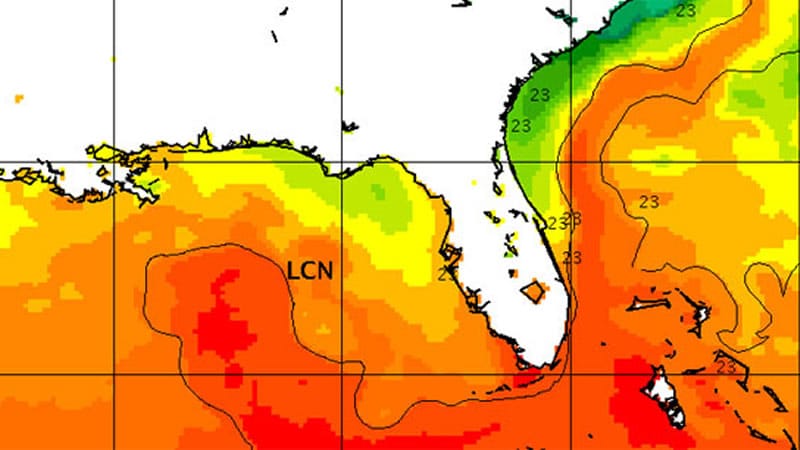
It is not whether fish like the Atlantic Gulf Stream or not, rather the importance of the Atlantic Gulf Stream towards marine organisms and marine life. The Gulf Stream is the essential ocean-current system in the northern hemisphere. As a vital weather driving force, the warm water temperatures of the Gulf Stream are the reason why there are mild winters and warm, humid summers in North America.
The Gulf Stream also plays a role in the productivity of fishing areas. However, when it comes to fish and underwater wildlife, water temperature plays a crucial role in the location of different species.
What causes the Streams?
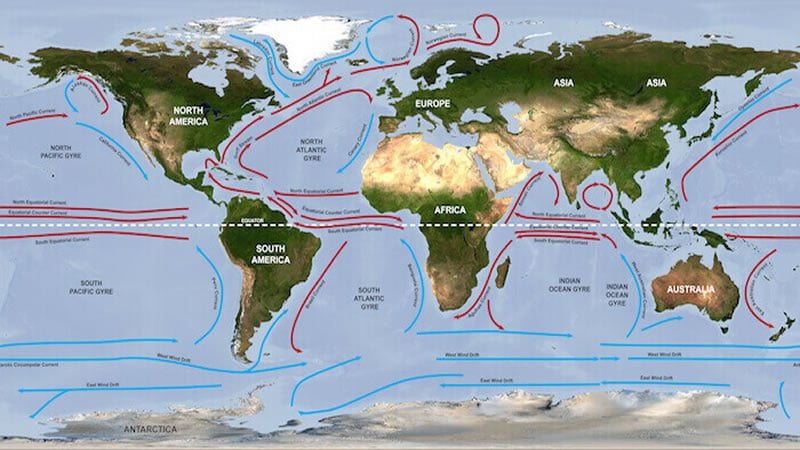
The Gulf Stream generates extensive circular currents and strong winds called an oceanic gyre. The ocean is constantly in motion and can travel water between places using currents. For example, the warm waters of the Gulf of Mexico send warm water to the North Atlantic Ocean. Cold seawater recedes and travels south as warmer water enters. A river sinks and begins to move south from the ocean until it finally makes its way to Antarctica. This map shows how the five ocean gyres impact ocean movement. Five oceanic gyres exist on Earth.
Gulf Stream Riders in the Atlantic Ocean
Some exotic tropical fish are seen by fishermen in the Northeast weekly throughout the summer. The Gulf stream is a powerful stream of flow that runs north along the east coast of Florida and turns Northeast offshore the Carolinas coast along Long Island and Cape Cod. The warm tropical waters it transports significantly affect the weather patterns in the Northeast – and Europe as well. The most familiar fish of the family is the gray Triggerfish, which comes by late July and takes residence alongside buoy chains, jetties, and wrecks. Other tropical species include tarpon up to 5 feet deep inside Peconic Bay and a 4-foot barracuda in Montauk Point.
Caribbean fish that Travel in Gulf Stream
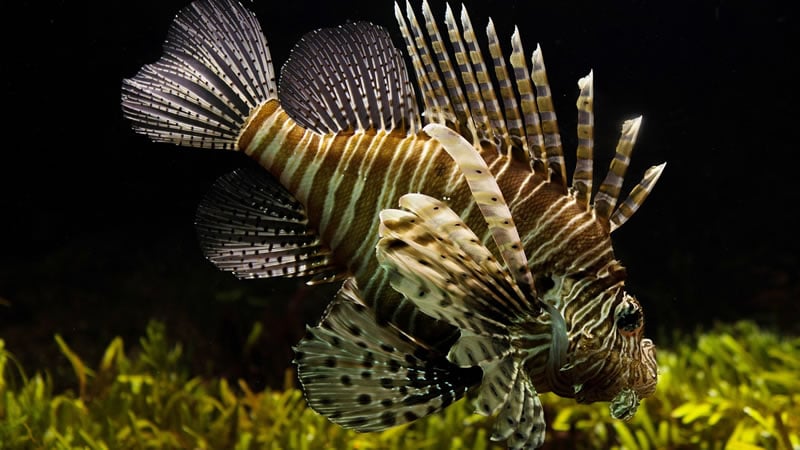
The lionfish has spread across the eastern waters of Florida. It has even been seen on the shoreline of Manhattan and Long Island. How can we find warm water fish in cold waters? Gulf Stream is a current which originates on the Gulf of Mexico that flows northward around Florida and over the coast of the United States. The current carries warm water through the Caribbean and up to Europe. Along with the warm water, the tropical fishes travel along the coastline of the Atlantic. The terrible part will be that tropical fishing species caught in the stream in the colder water will inevitably die.
Fish in the Gulf Stream
Many of the fish that anglers look for and fish for live swimming within the Gulf Stream’s current. Both predator and prey have been living in this current their entire lives. Their location will depend mainly on the water temperature they are most comfortable living in.
What is the Sargasso Sea?
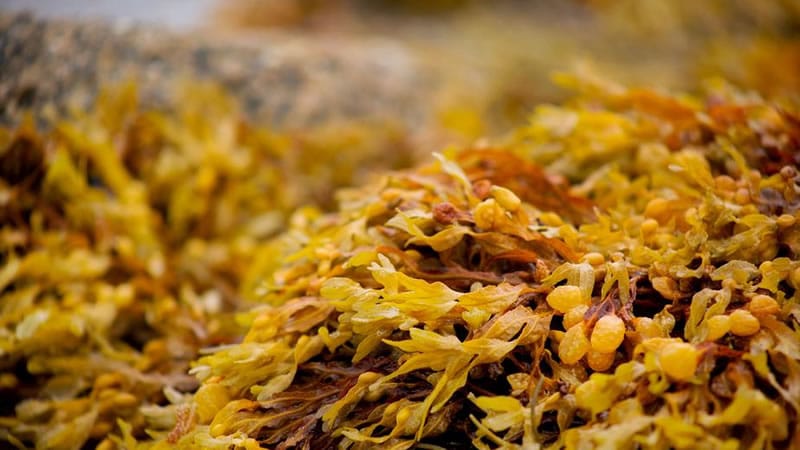
In the Atlantic Gulf Stream, because of the Sargasso Sea, provides excellent fishing when found. Many fish move in and out of the Gulf Stream and into the Sargasso Sea. The Sargasso plants, which are the origin of the name the Sargasso Sea, get sucked into the Gulf Stream and help provide the basis habitat for marine life within the current. The Sargasso plant is a freely floating living plant that covers the center of the Atlantic Ocean. Successful fishing is determined based on the ability of the angler or the captain to locate the Sargasso.
 In Conclusion
Gulf Stream is similar to a gigantic Warmwater river running clockwise around the Atlantic Ocean. It collects warm water near the equator when it travels and then carries that warm current along the coast of Northern Carolina. The current may remain at a distance of about 20 miles from our beach during the winter months, but it can be very near Hatteras Inlet during the summer. Good captains are needed to fully understand the Gulf Stream to know which species to catch. Captains know this because certain animals prefer different water temperatures, which can only be encountered at the edges of Gulf Stream Current, where it meets the colder surroundings.
Bottom Fishing, Drift Fishing, iOutdoors Blog, Kite Fishing, Marlin Fishing, Wreck Fishing
What is a Stinger Hook?
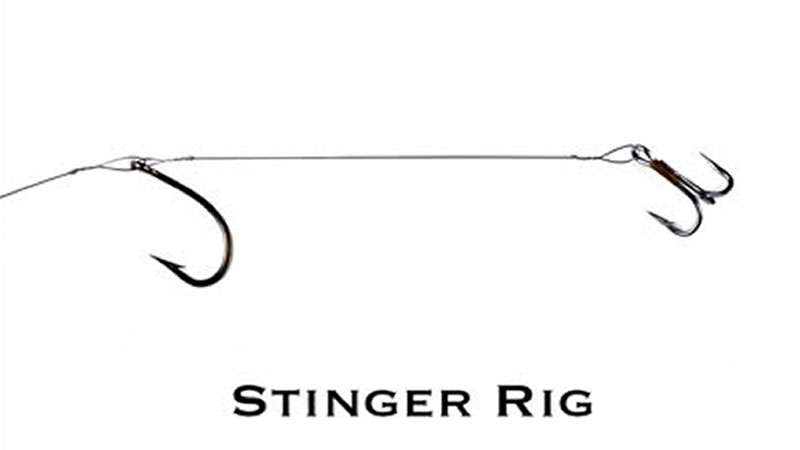
The stinger hook is simply an extra hook added to the existing rig. There are stinger hooks readily available for sale but it is also possible for you to improvise – just tie the hook to a leader line and connect it to your rig, be it a live bait, jig, anything.
What Hook Do I Use?
Want to increase your chances of hooking that big fish of your dreams or just increase the number of fish you land? Then, better use a stinger hook.
The most common type of stinger hook is a treble hook. Brands including Mustad and VMC make exceptional treble hooks. Anglers also have luck using J hooks for a stinger as well. Experiment with both hooks to see what works best for you. You can measure this by determining if your stinger rig helped keep fish on when they strike, especially species like Kingfish and Wahoo.
How to Make A Stinger Rig
The first thing that makes a stinger rig is your hook. Once you have them picked out, you can move onto your leader line.
Choose a line leader that will be strong enough for the fish you are hoping to catch. Just make sure it will still be as inconspicuous as possible. Common options for the line leader material include a wire, fluorocarbon, or monofilament.
Malin stainless wire leader is a preferred choice for anglers that are going deep-sea fishing. Depending on the size of the fish you are looking to catch will justify the strength of the wire. Use the table reference to determine the best size wire for your rig.
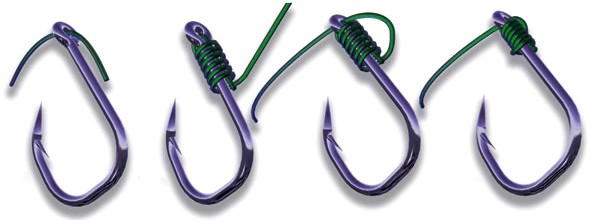
Once you have the wire and hook, you will need to tie the stinger hook onto your wire. The best knot for this is the Haywire Twist. Practice will make perfect. You can either use a tool made for this or you can tie it by hand.
When to use
In general, you can never go wrong with adding a stinger to your line – unless you are using crankbaits as this could make the line snag easily and could affect movement. Thus, if you are using a jig, lure, live bait, or any other bait, you can use the stinger hook.
When the short-biting fish are just stealing your bait, pulling it by tail, and swimming away without being hooked, then the stinger hook will come handy. Make sure to place the hook as far back into the bait as possible to increase the effectiveness of the setup.
Land more fish, land bigger fish – use a stinger hook the next time you go fishing. Still, check with local regulations and laws if these hooks are not illegal.

Offshore Fishing, Destin Fishing, iOutdoors Blog, Key West Fishing, Marlin Fishing, Miami Beach Fishing, Sport Fishing
Best Place in Florida to Catch Marlin: Guides, reports and charters.
Where is the best place in Florida to catch a Marlin? Marlin Fishing is the purist form of big game sport fishing. Catching a marlin is one of the top dreams of offshore fisherman everywhere and Florida has its share of Marlin to catch! The most well known big game marlin fisherman was Ernest Hemmingway. The celebrated author and angler who often frequented the waters of the Gulf Stream, Hemmingway pioneered the use of outriggers in big game fishing. Marlin can be caught in deep water almost anywhere along Florida’s coast but there are two places in Florida to target marlin. One is Woods Wall, 20 miles South of Key West, lies an area known as “The Wall”. The Wall is the outer edge of the continental shelf where the ocean bottom drops sharply from 950 feet to 2000 feet in a very short distance.
In late August the adult marlin begin to dominate “The Wall”. The second is the Destin – Panama City area and around the bend in the Panhandle. October is considered the best month to catch marlin in the Panhandle. On June 14, 1985, Warren Culbertson, fishing from Destin, landed a blue marlin which tipped the scales at 980.5 pounds. To this day it still remains the largest blue caught on hook and line in the Gulf! Blue and white marlin are the targeted species available in Florida waters. The white marlin averages around 70 pounds, and the rod-and-reel world record white marlin, caught in the Gulf Stream off Miami Beach in 1938, weighed 161 pounds. The Key West Blue Marlin Tournament still ranks as the largest and most successful Marlin tournament in the Keys.
Tackle
The most effective method of targeting blue marlin is trolling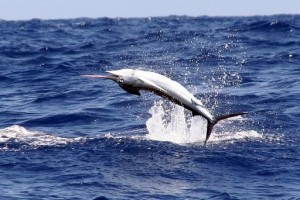 lures and rigged baits at a quick clip anywhere from 3-20 miles offshore. If you’re lucky enough to get the bite from a blue marlin, expect a world class battle as you must fight for every inch of line you retrieve. It is recommended to troll with 50 to 80 pound tackle and wide reels with plenty of line capacity- this will give you a fair chance if you hook into a really big Marlin or a big tuna which is definitely a possibility. High quality large capacity lever drag reels and matching rods are a must for successful Marlin fishing. An angler can expect even a small marlin (200 lbs) to run off 200 to 300 yards of line in a matter of seconds. Your line is only as strong as its weakest point and when I say a 500 pound raging marlin will find any weak point in the line or the angler you can count on it.
Good knot tying is absolutely essential. The double line is formed with a Bimini Twist. The Bimini Twist offers 100 % breaking strength and also acts as an additional shock absorber. I would suggest using four feet of double line on 30 and 50 lb tackle and six to eight feet on 80 and 130 lb gear. Heavy duty swivels are a must and under no circumstances should you use snap swivels. In the world of big game marlin fishing, BIG baits catch BIG fish. Dolphin, blackfin tuna, big bonita, and small to mid size yellowfin tuna are all on a big marlins menu. 14” to 20” lures with big profiles are customary when searching for a beast. A good recommendation is the original Sea Boots Kona Lure or the Knucklehead. Most marlin, even big ones, can usually be released in under an hour. The short pump and wind tactic is a good technique for breaking standoffs. Setting the Drag- Drags should be set at 25% to 30% of the line’s test by using a hand scale, pull line off the tip of the rod and adjust the drag accordingly. Remember one important thing- catching large fish like a marlin is not a one man job, it takes a minimum of two – the captain who operates the boat and the angler who operates the rod and reel. If a mate is on board then you have the perfect team and a better chance of hooking and landing a good fish.
Fly Fishing, Backcountry Fishing, Bottom Fishing, Destin Fishing, Dolphin Fishing, Drift Fishing, Flats Fishing, Grouper Fishing, Inshore Fishing, iOutdoors Blog, Islamorada Fishing, Key West Fishing, Kite Fishing, Lobster Catching, Marlin Fishing, Miami Beach Fishing, Offshore Fishing, Permit Fishing, Redfish Fishing, Sail Fishing, Shark Fishing, Snapper Fishing, Snook Fishing, Sport Fishing, Sword Fishing, Tarpon Fishing, Trout Fishing, Tuna Fishing, Wahoo fishing, Wreck Fishing
What hook should you use for which fish?
Wow! Old as man itself but it can really be overwhelming when you start to choose a hook. Freshwater, saltwater, bait hooks,“J” hook, circle hook or live bait hooks. Hook choice is VERY important! As a general rule I judge the hook size I need to use as a function of the bait size I am using, not the size of the fish I am targeting. The fish I am targeting determines the bait size. I particularly prefer circle hooks- they virtually hook themselves and are very fish friendly in catch and release situations. Experience is the best teacher on hook selection- use the right hook for the right fish and type of fishing you are doing and be prepared have a selection of hooks at hand. One common mistake is using a hook that is to big. Imagine this – if I hook you in the arm with a small quarter size hook are you going to be able to get a way or are you going to follow me anywhere? A sharp point and a strong hook is much more important than the size. Except in the case of top water lures please consider twice before you use a treble hook- there is virtually no opportunity for catch and release using a treble hook and they are banned in many areas. Treble hooks are dangerous to fisherman as well- use them sparingly and only when you plan to kill and eat the fish. One very important rule: Even though a new hook seems sharp out of the package always, always sharpen your hooks before you use them and re-sharpen them often.
Fish hooks come in several types. Knowing a few of the more popular ones and their uses can help you be successful.
Which hook should you use for which fish?
 O’SHAUGHNESSY This hook is named for the specific design of the hook. It’s a standard hook, forged with a very strong bend. This hook is relatively thick, very strong, and not likely to bend out of shape. Generally designed for saltwater, it is good for general bottom fishing use. Sizes range from #3 to as large as 19/0.
 ABERDEEN These hooks, while primarily used in smaller sizes in freshwater, are also used by saltwater anglers. They are generally made from shaped wire. Unlike the O’Shaughnessy, it can and does bend. It can be bent back into shape several times before it becomes too weak. However, once a fish is hook and the barb has completely penetrated, this hook holds quite well. These hooks are modified with bends in their shanks for use in jig molds.
 CIRCLE Perhaps the best innovation in hooks to come along, circle hooks promote healthy catch and release. The design of the hook itself, when used properly, prevents fish from being hooked in the gut. Many anglers have a problem using these hooks because they require no hook set. If you do try to set the hook, it will generally come out of the mouth of the fish. These hooks are designed to move to the corner of the fish’s mouth and set themselves as the fish swims away from you. Anglers feel a bite and simply begin reeling, slowly at first, then faster as the hook gets set.
 LIVE BAIT These hooks generally have a shorter shank than other hooks. Whether that is to allow the live bait to swim more freely or to be less apparent to the fish is debatable. My vote is to allow the bait to swim more freely. These hooks come in regular and circle designs. Regular live bait hooks will be swallowed and result in gut hooks most of the time. Circle live bait hooks provide a greater chance for a good release.
 KAHLE The curve on these hooks makes them ideal for live bait. Made from the same wire as the Aberdeen hooks, they will bend if hung on the bottom of some structure. However, once a fish is hooked, the design of the hook prevents it from being straightened.
The Guide below provides an overview of the parts of a fishing hook. There are some common parts to all hooks. Those parts include the eye, shank, gap, point and barb. The variations on these characteristics result in dozens of hook styles.
Anatomy of a Hook
The Eye
The hook eye is the connection point to the fishing line or the body of lures. Ringed eyes are the most common. The metal is bent in a uniform loop and the end sits flush against the shank. Needle, looped and tapered are some other types of hook eyes, but they tend to be used for specific applications, like saltwater or dry flies.
The Shank
The shank is the length of the hook from the eye to where the bend starts. Shanks come in short, medium or long lengths. Short ones greatly reduce the size of the hook. Medium length shanks are the most common and used in an array of fishing situations. Long shanks can be used for live bait fishing where finesse isn’t critical, or to match a longer profile of an artificial bait.
The Gap
The gap is the size of the bend in a hook from the shank to its point. An average size gap will do in most situations, but sometimes a wide gap is needed. A wide gap is used for rigging thick-bodied baits to ensure that the hook point will be exposed on the hook set.
The Point
This is the tapered end of the hook. As its name suggests, it’s the sharp point that penetrates a fish’s mouth. The shape of the point will vary. Needle, knife edge, spear, or rolled ones are some examples. The most important thing, however, is that you keep your points sharp, so invest in a hook file and use it often. Quality hooks are packaged extremely sharp and will stay sharp longer than cheaper ones.
The Barb
The barb is designed to hold the hook in place once it penetrates the fish’s mouth. The larger the barb, the more difficult it is for the fish (and likely yourself) to get the hook free. Many catch and release anglers pinch barbs with pliers or file them down for easy hook removal.
Other Basic Hooks
 BAIT HOOKS come in a variety of styles. Most feature barbs on the shaft to hold bait in place. Longer shank hooks are good for teaching kids to fish, while shorter shank ones are often used in snells.
 TREBLE HOOKS feature three bends and points in one hook. Trebles provide more hooking potential to many artificial baits such as crankbaits, jerkbaits or topwaters. Bait anglers also use trebles. Cut bait for catfish or threading minnows for lake trout are two examples where trebles are regularly used.
 SIWASH HOOKS are quite strong and have a long shank and point. These hooks have a straight eye so they sit properly on lures. Siwash hooks are often used on single-hook baits, such as spinnerbaits. I also use them sometimes to replace factory-provided treble hooks on certain baits, especially spoons.

JIG HOOKS are designed to sit in specific jig molds. They feature a bend just below the hook eye, with a 90-degree bend being the most common. Pouring your own jigs can save you money and be a fun winter hobby to gear up for the next season

Offshore Fishing, Bottom Fishing, iOutdoors Blog, Marlin Fishing, Redfish Fishing, Snook Fishing, Sport Fishing, Tarpon Fishing, Tuna Fishing
What kind of bottom fish can you find in the offshore waters of Tampa?
If you’re passionate about fishing, you must try your hand in Offshore Sports Fishing at Tampa Bay in Florida. Catching some bottom fish in your adventure is especially most rewarding, as it is a unique experience to have bottom fishes like the sea bass, and the tautog as your prize catches.
There are also other bottom dwellers that could amaze you with their peculiarity, too, and they’re just waiting for you to go hook them good. These include famous names like the redfish, the tarpon or silver king, and the snook. The redfish are known as bruisers because they are feisty and put up a great fight once they’re hooked. Tarpons meanwhile, are acrobatic wonders, as they could leap as high as ten feet just to escape from an angler’s grasp. The snook, on the other hand, is the starfish in Florida, one of the most pursued species of bottom fishes.
Offshore Fishing 101
Anglers head out 20-30 miles from the beach when they go off-shore sports fishing. This means they’re out to get some blue water fishes including wahoo, tuna, and marlin. Bottom fishes meanwhile are caught when boats go near wrecks or reefs where deep water bottom dwellers may be found. If one is lucky enough, the Speckled Hind and the Marble Grouper may be hooked in such waters.
Going on a fishing adventure in Tampa Bay is certainly worth it. You may do it all by yourself to enjoy some peace and quiet or you might want to bring your entire family to experience sports fishing in the best way possible. The best thing about choosing Tampa Bay as your fishing adventure destination is that you could simply charter a boat that would take you to the appropriate offshore spot where to catch your precious bottom fishes.


 Long shanks can be used for live bait fishing where finesse isn’t critical, or to match a longer profile of an artificial bait.


