Bottom Fishing, Drift Fishing, iOutdoors Blog, Kite Fishing, Marlin Fishing, Wreck Fishing
What is a Stinger Hook?
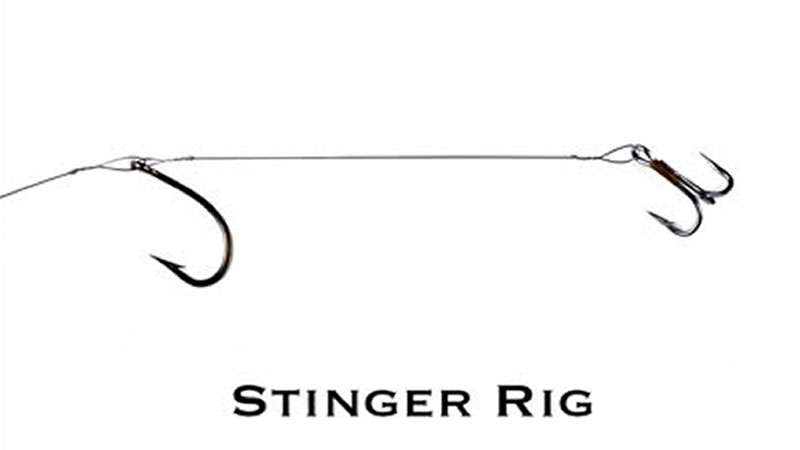
The stinger hook is simply an extra hook added to the existing rig. There are stinger hooks readily available for sale but it is also possible for you to improvise – just tie the hook to a leader line and connect it to your rig, be it a live bait, jig, anything.
What Hook Do I Use?
Want to increase your chances of hooking that big fish of your dreams or just increase the number of fish you land? Then, better use a stinger hook.
The most common type of stinger hook is a treble hook. Brands including Mustad and VMC make exceptional treble hooks. Anglers also have luck using J hooks for a stinger as well. Experiment with both hooks to see what works best for you. You can measure this by determining if your stinger rig helped keep fish on when they strike, especially species like Kingfish and Wahoo.
How to Make A Stinger Rig
The first thing that makes a stinger rig is your hook. Once you have them picked out, you can move onto your leader line.
Choose a line leader that will be strong enough for the fish you are hoping to catch. Just make sure it will still be as inconspicuous as possible. Common options for the line leader material include a wire, fluorocarbon, or monofilament.
Malin stainless wire leader is a preferred choice for anglers that are going deep-sea fishing. Depending on the size of the fish you are looking to catch will justify the strength of the wire. Use the table reference to determine the best size wire for your rig.
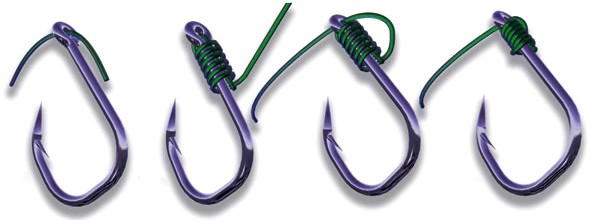
Once you have the wire and hook, you will need to tie the stinger hook onto your wire. The best knot for this is the Haywire Twist. Practice will make perfect. You can either use a tool made for this or you can tie it by hand.
When to use
In general, you can never go wrong with adding a stinger to your line – unless you are using crankbaits as this could make the line snag easily and could affect movement. Thus, if you are using a jig, lure, live bait, or any other bait, you can use the stinger hook.
When the short-biting fish are just stealing your bait, pulling it by tail, and swimming away without being hooked, then the stinger hook will come handy. Make sure to place the hook as far back into the bait as possible to increase the effectiveness of the setup.
Land more fish, land bigger fish – use a stinger hook the next time you go fishing. Still, check with local regulations and laws if these hooks are not illegal.

Miami Beach Fishing, Bottom Fishing, Dolphin Fishing, iOutdoors Blog, Kite Fishing, Offshore Fishing, Sail Fishing, Snapper Fishing, Sport Fishing, Sword Fishing, Wreck Fishing
Miami Offshore Fishing Report
Miami, FL is one of the most sought after fishing destinations in the world. You can experience some of the best fishing during the fall season. When you visit Miami, you are opening yourself up for a fishing adventure of a lifetime. Here is a Miami Offshore Fishing Report which consists of some clues to what is going to be biting during these times.
You may be drawn to Florida for beautiful weather, great beaches and exciting night life but don’t count of the exceptional fishing opportunities. If you are planning a vacation from September through November to Miami, you will be visiting during the prime offshore fishing months. Every offshore angler dreams about hunting down some of their favorite catches or to take a fish off their bucket list but you have to know your fish first!
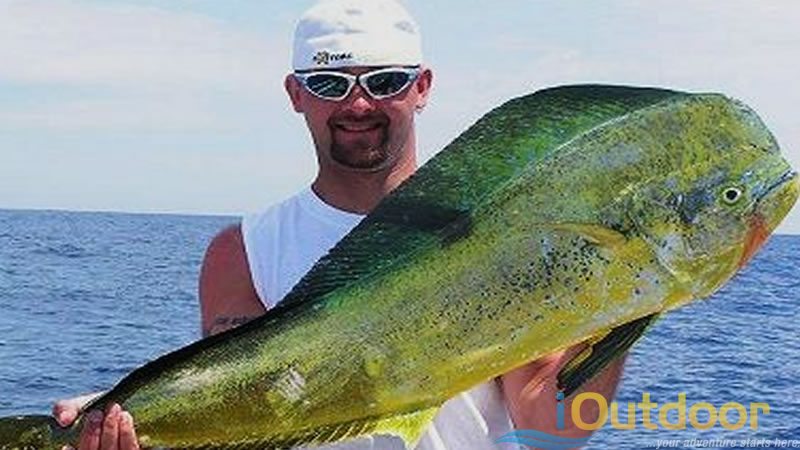 September is a great month to continue to search for that bull dolphin or mahi-mahi. The Gulf Stream is still bringing them through Miami and provides potentials for you to catch great numbers of them. You can also troll some wrecks for king fish during the month of September. Both species enjoy big baits. Stop by your local tackle shop and pick up some ballyhoo. We would also advise to never travel offshore without live bait. You can find schools of pilchards along the beaches or you can also pick up a dozen or two from your local tackle shop. Live bait comes in handy when you come across a large school of fish and want to load the boat quickly. Run out to the largest weed line or structure you can find and hold on for the fight of your life.
October through November bring about the first cold snaps of the year. When this occurs, it will change the way we approach and fish especially offshore. Colder waters and temperatures bring in the sailfish. Live bait is most certainly the most effective method in catching this bill fish. Fly a kite and get ready to have some fun as you watch a sailfish circle your live pilchard or goggle-eye. Get out on the water and determine which depth and location these sailfish are moving in. Keep an eye out for action in shallow depths and jumping sailfish. Don’t count out the king fish from sky-rocketing through the water to chase or eat your live bait.
Swordfish Fishing is also going to be excellent during these months. Whether you want to catch them during the daytime or nighttime is your preference but make sure you know the different techniques in order to do so. Each situation will call for different depths and equipment. Hop on board with a local expert and we can show you how to catch them in either day or night. 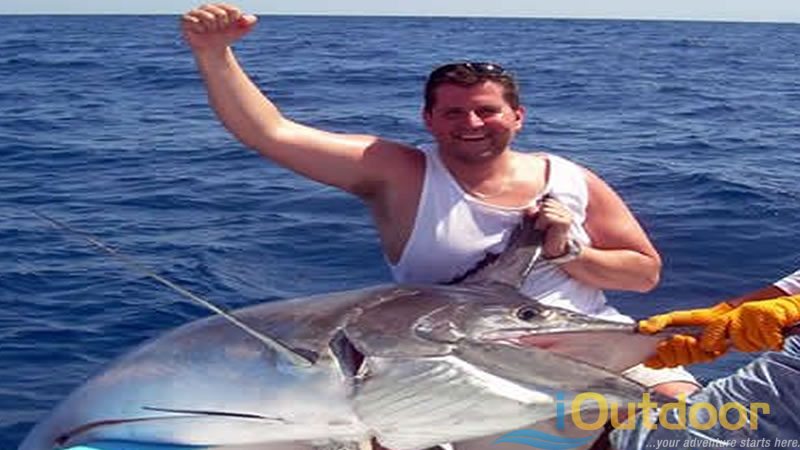
Don’t count out bottom fishing throughout these months. Your local reefs and wrecks will have endless species that you can catch. The main species would be snapper. Not only are they incredible fun to catch but they are most certainly a treat. Snapper is one of the most delicious bottom fish you can catch. Throw out a chicken rig with some deep or live bait and hold on for a great bite.
Your adventure starts when visiting Miami! Offshore fishing is going to be spectacular for an abundance of species. Don’t miss out on the action and take a break from the beaches and enjoy some beautiful weather in the deep blue sea. Feel free to contact us with any questions and we would be glad to help! We can get you in touch with our local experts.
To find out what will be biting during your trip, check out our Miami FL Fishing Calendar!
[fusion_builder_row_inner][fusion_builder_column_inner type=”1_2″ layout=”1_2″ last=”no” min_height=”” hover_type=”none” link=”” border_position=”all”][fusion_button link=”https://ioutdoor.com/fishing/deep-sea/florida/miami/” text_transform=”uppercase” title=”Plan Your Next Outdoor Vacation” target=”_self” link_attributes=”” alignment=”center” modal=”” hide_on_mobile=”small-visibility,medium-visibility,large-visibility” class=”” id=”” color=”blue” button_gradient_top_color=”” button_gradient_bottom_color=”” button_gradient_top_color_hover=”” button_gradient_bottom_color_hover=”” accent_color=”green” accent_hover_color=”” type=”” bevel_color=”” border_width=”3px” size=”small” stretch=”yes” shape=”pill” icon=”fa-ticket-alt fas” icon_position=”left” icon_divider=”no” animation_type=”flash” animation_direction=”left” animation_speed=”0.3″ animation_offset=”top-mid-of-view”]PLAN YOUR NEXT FISHING VACATION[/fusion_button]
Your Adventure Starts Today while Visiting Miami.
Don’t forget to follow us on Facebook, YouTube, Twitter and Instagram.
Fly Fishing, Backcountry Fishing, Bottom Fishing, Destin Fishing, Dolphin Fishing, Drift Fishing, Flats Fishing, Grouper Fishing, Inshore Fishing, iOutdoors Blog, Islamorada Fishing, Key West Fishing, Kite Fishing, Lobster Catching, Marlin Fishing, Miami Beach Fishing, Offshore Fishing, Permit Fishing, Redfish Fishing, Sail Fishing, Shark Fishing, Snapper Fishing, Snook Fishing, Sport Fishing, Sword Fishing, Tarpon Fishing, Trout Fishing, Tuna Fishing, Wahoo fishing, Wreck Fishing
What hook should you use for which fish?
Wow! Old as man itself but it can really be overwhelming when you start to choose a hook. Freshwater, saltwater, bait hooks,“J” hook, circle hook or live bait hooks. Hook choice is VERY important! As a general rule I judge the hook size I need to use as a function of the bait size I am using, not the size of the fish I am targeting. The fish I am targeting determines the bait size. I particularly prefer circle hooks- they virtually hook themselves and are very fish friendly in catch and release situations. Experience is the best teacher on hook selection- use the right hook for the right fish and type of fishing you are doing and be prepared have a selection of hooks at hand. One common mistake is using a hook that is to big. Imagine this – if I hook you in the arm with a small quarter size hook are you going to be able to get a way or are you going to follow me anywhere? A sharp point and a strong hook is much more important than the size. Except in the case of top water lures please consider twice before you use a treble hook- there is virtually no opportunity for catch and release using a treble hook and they are banned in many areas. Treble hooks are dangerous to fisherman as well- use them sparingly and only when you plan to kill and eat the fish. One very important rule: Even though a new hook seems sharp out of the package always, always sharpen your hooks before you use them and re-sharpen them often.
Fish hooks come in several types. Knowing a few of the more popular ones and their uses can help you be successful.
Which hook should you use for which fish?
 O’SHAUGHNESSY This hook is named for the specific design of the hook. It’s a standard hook, forged with a very strong bend. This hook is relatively thick, very strong, and not likely to bend out of shape. Generally designed for saltwater, it is good for general bottom fishing use. Sizes range from #3 to as large as 19/0.
 ABERDEEN These hooks, while primarily used in smaller sizes in freshwater, are also used by saltwater anglers. They are generally made from shaped wire. Unlike the O’Shaughnessy, it can and does bend. It can be bent back into shape several times before it becomes too weak. However, once a fish is hook and the barb has completely penetrated, this hook holds quite well. These hooks are modified with bends in their shanks for use in jig molds.
 CIRCLE Perhaps the best innovation in hooks to come along, circle hooks promote healthy catch and release. The design of the hook itself, when used properly, prevents fish from being hooked in the gut. Many anglers have a problem using these hooks because they require no hook set. If you do try to set the hook, it will generally come out of the mouth of the fish. These hooks are designed to move to the corner of the fish’s mouth and set themselves as the fish swims away from you. Anglers feel a bite and simply begin reeling, slowly at first, then faster as the hook gets set.
 LIVE BAIT These hooks generally have a shorter shank than other hooks. Whether that is to allow the live bait to swim more freely or to be less apparent to the fish is debatable. My vote is to allow the bait to swim more freely. These hooks come in regular and circle designs. Regular live bait hooks will be swallowed and result in gut hooks most of the time. Circle live bait hooks provide a greater chance for a good release.
 KAHLE The curve on these hooks makes them ideal for live bait. Made from the same wire as the Aberdeen hooks, they will bend if hung on the bottom of some structure. However, once a fish is hooked, the design of the hook prevents it from being straightened.
The Guide below provides an overview of the parts of a fishing hook. There are some common parts to all hooks. Those parts include the eye, shank, gap, point and barb. The variations on these characteristics result in dozens of hook styles.
Anatomy of a Hook
The Eye
The hook eye is the connection point to the fishing line or the body of lures. Ringed eyes are the most common. The metal is bent in a uniform loop and the end sits flush against the shank. Needle, looped and tapered are some other types of hook eyes, but they tend to be used for specific applications, like saltwater or dry flies.
The Shank
The shank is the length of the hook from the eye to where the bend starts. Shanks come in short, medium or long lengths. Short ones greatly reduce the size of the hook. Medium length shanks are the most common and used in an array of fishing situations. Long shanks can be used for live bait fishing where finesse isn’t critical, or to match a longer profile of an artificial bait.
The Gap
The gap is the size of the bend in a hook from the shank to its point. An average size gap will do in most situations, but sometimes a wide gap is needed. A wide gap is used for rigging thick-bodied baits to ensure that the hook point will be exposed on the hook set.
The Point
This is the tapered end of the hook. As its name suggests, it’s the sharp point that penetrates a fish’s mouth. The shape of the point will vary. Needle, knife edge, spear, or rolled ones are some examples. The most important thing, however, is that you keep your points sharp, so invest in a hook file and use it often. Quality hooks are packaged extremely sharp and will stay sharp longer than cheaper ones.
The Barb
The barb is designed to hold the hook in place once it penetrates the fish’s mouth. The larger the barb, the more difficult it is for the fish (and likely yourself) to get the hook free. Many catch and release anglers pinch barbs with pliers or file them down for easy hook removal.
Other Basic Hooks
 BAIT HOOKS come in a variety of styles. Most feature barbs on the shaft to hold bait in place. Longer shank hooks are good for teaching kids to fish, while shorter shank ones are often used in snells.
 TREBLE HOOKS feature three bends and points in one hook. Trebles provide more hooking potential to many artificial baits such as crankbaits, jerkbaits or topwaters. Bait anglers also use trebles. Cut bait for catfish or threading minnows for lake trout are two examples where trebles are regularly used.
 SIWASH HOOKS are quite strong and have a long shank and point. These hooks have a straight eye so they sit properly on lures. Siwash hooks are often used on single-hook baits, such as spinnerbaits. I also use them sometimes to replace factory-provided treble hooks on certain baits, especially spoons.

JIG HOOKS are designed to sit in specific jig molds. They feature a bend just below the hook eye, with a 90-degree bend being the most common. Pouring your own jigs can save you money and be a fun winter hobby to gear up for the next season
![What is a rigging needle?]()
iOutdoors Blog, Key West Fishing, Kite Fishing, Marlin Fishing, Offshore Fishing, Sail Fishing
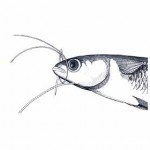 A rigging needle is simply a needle used for rigging bait to help aid on offshore fishing such as Trolling, Kite Fishing, or live-bait fishing. One end has a hole where the thread is placed while the other end is sharp to be able to penetrate the bait/lure body.
How to Rig the Bait
Of course, there are many different ways to rig your bait, lure, etc. In general, you have to understand that something that you are about to rig to the line. What is it made of? Does it have a head and a body? What is the shape and type of its head? These are just some of the things you have to deal with.
Learn when to use a leader and what leader to use. Select the bait or lure. Cut several pieces of bowstring (or other sturdy string), prepare strings as many (or more than) as your lures/baits. Get some pieces of Dacron or similar material. Glue all these stuff together and use a rigging needle to stitch them securely, making sure to arrange them in such a way that you will maximize your chances of landing as many fish as you can.
There are needles readily available, though you can also make your own.
Making Your Own Rigging Needle
What you need is a piece of wire coat hanger, file, hammer, and a drill with a 1/8” drill bit. It is quite simple to improvise a rigging needle. First, untwist the coat hanger and cut off a 12” piece (make it shorter or longer, depending on your bait; 12” is good for rigging eels). Use a file to sharpen one end. Use the hammer to flatten the opposite end. Drill a hole in the flattened portion and that’s it – you’ve just finished making your own needle.
Where can I purchase a Needle?
The best way to purchase a rigging needle would be from a local tackle store or online. If you are looking to learn more about the practical uses of rigging needles, local knowledge could be very helpful. Once you understand the applications, you can purchase your needles online conveniently. R & R Tackle make an exceptional tool to help increase your odds of success on the water.
![What is a rigging needle?]()
Bass Fishing, Bottom Fishing, Charter Head Boat, Fly Fishing, Grouper Fishing, iOutdoors Blog, Kite Fishing, Lobster Catching, Marlin Fishing, Offshore Fishing, Sail Fishing, Shark Fishing, Sword Fishing, Tuna Fishing
Ridin’ the Waves in Florida
Florida boasts of having over 8,000 miles of coastline as well as 4,500 miles of inland waterways. With this much water for cruising, it is no wonder that boating is such a popular sport in the state. Many boaters often find themselves cruising over Florida waters and its waterways for the sheer beauty of it. Many types of boats have graced the waters of Florida ranging from mega-yachts to wooden skiffs. In Florida, owning a boat is as normal as owning a car.
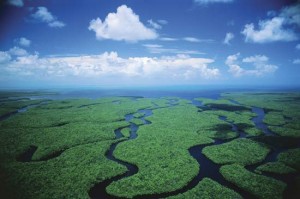
Florida Waterways
The wonders of boating in Florida are further enhanced with its waterways, passages where boats can pass through for maximum boating experience. There are many waterways maintained by the Florida Inland Navigation District, the two most common and popular are the Intracoastal Waterway or ICW and the Okeechobee Waterway.
The ICW is also known as “the ditch” and is a natural but dredged channel. This channel extends 500 miles down the east coast of Florida to the tip of the Keys. This is a very popular boating route because it runs through rivers, creeks as well-dredged canals, giving boaters an extremely great variety in boating experience.
The Okeechobee Waterway, on the other hand, is composed of 135 miles of boating route. Extremely popular during the summer, this waterway runs along the St. Lucie Canal from Stuart, across the lake, then on to Sanibel Island via the Caloosahatchee River.
Best Places to Anchor Out
Just as cars park in a parking lot, boats do so as well but in ports. Boats aren’t just anchored anywhere. There are many great places to anchor in Miami including across Baker’s Haulover Inlet in front of Florida International University; in front of Watson Island; the anchorage in Boca Chica Harbor; and the bayside by Sand’s Cut. Palm Beach County also has a great place to anchor such as Peanut Island across Lake Worth Inlet.
Boating Rules and Regulations
It is recommended that before purchasing a boat or even before boating in Florida, especially for those new in the area, to get acquainted with the state’s boating rules and regulations for a safe and legal boating experience.
iOutdoors Blog, Kite Fishing
[fusion_builder_container type=”flex” hundred_percent=”no” equal_height_columns=”no” menu_anchor=”” hide_on_mobile=”small-visibility,medium-visibility,large-visibility” class=”” id=”” background_color=”” background_image=”” background_position=”center center” background_repeat=”no-repeat” fade=”no” background_parallax=”none” parallax_speed=”0.3″ video_mp4=”” video_webm=”” video_ogv=”” video_url=”” video_aspect_ratio=”16:9″ video_loop=”yes” video_mute=”yes” overlay_color=”” video_preview_image=”” border_color=”” border_style=”solid” padding_top=”” padding_bottom=”” padding_left=”” padding_right=””][fusion_builder_row][fusion_builder_column type=”1_1″ layout=”1_1″ background_position=”left top” background_color=”” border_color=”” border_style=”solid” border_position=”all” spacing=”yes” background_image=”” background_repeat=”no-repeat” padding_top=”” padding_right=”” padding_bottom=”” padding_left=”” margin_top=”0px” margin_bottom=”0px” class=”” id=”” animation_type=”” animation_speed=”0.3″ animation_direction=”left” hide_on_mobile=”small-visibility,medium-visibility,large-visibility” center_content=”no” last=”true” min_height=”” hover_type=”none” link=”” border_sizes_top=”” border_sizes_bottom=”” border_sizes_left=”” border_sizes_right=”” first=”true”][fusion_text]Kite Fishing in the Sunshine State
Kite fishing is among the most exciting fishing techniques being used by anglers today. This type of fishing is especially popular in Florida where many surface feeding predators such as sailfish are abundant. Kite fishing is effective in Florida because this part of the Atlantic is windy and has an abundance of sailfish. This fishing technique is best used from October to April when the winds favor kite flying.
The target: sailfish
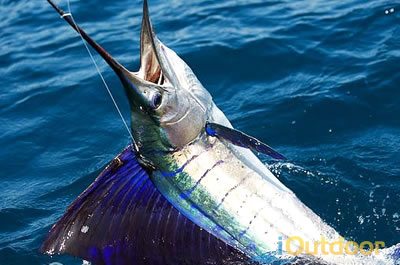
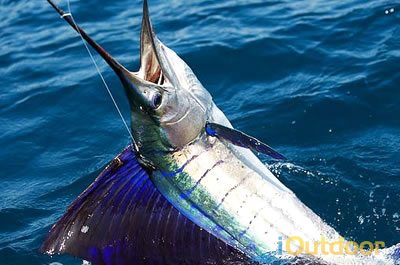
Sailfish got their name from their enlarged dorsal fins which resemble a sail. They have a silvery white underbelly, dark blue top, while the rest is brown-blue in color. Sailfish are long and could measure up to 10 feet and weigh up to 200 lb. Typically are considered as highly prized game fish and are known not only for their incredible jump but also for their fast speed bursts of up to 70 mph.
The bait
Popular bait options are cigar minnows, Spanish sardines, ballyhoo, goggle eyes, blue runners, and pilchards. Bear in mind that the bait should be alive and can swim freely to be able to lure in the sailfish.
The equipment
We suggest colorful kites are used to keep the bait on the surface of the water. These kites are mounted on rods. Most boats fly at least two kites at a time, on both sides of the boat. The type of kite used depends on the wind speed.
The method
The live bait and a hook are attached to the line connected to the kite. When the kite is launched, the bait swims around and makes splashes that attract the sailfish. What is exciting about kite fishing is that the bait is kept on the surface so that you can easily see the moment the sailfish strikes the bait. [/fusion_text][/fusion_builder_column][/fusion_builder_row][/fusion_builder_container]


 Long shanks can be used for live bait fishing where finesse isn’t critical, or to match a longer profile of an artificial bait.


