
Air Boat Ride, Air to Ground, Animal Park Experience, Bird Watching, Cycling, Eco Tours, Hiking, Horseback Riding, Hunting Fl, iOutdoors Blog, Nature Adventures
Bee Sting What to DO
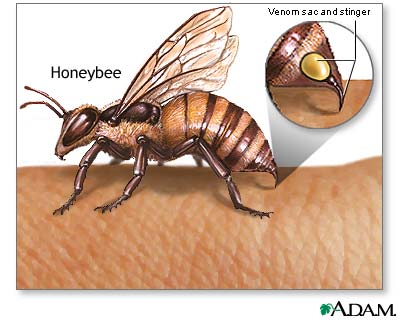 Bees may look cute but they can be deadly or can cause you much pain. The best piece of advice when it comes to dealing with bees is to get away from them as fast and as soon as possible while outdoor. Moreover, if one manages to sting you, the more you should hasten to get away from the area. Bees release signals to call for other bees, so if one bit you, reinforcements are likely on their way, too.
Bees are common in the outdoors and you should use caution when doing outdoor activities. There are many species in the outdoors that have a defense, some on land, and some in the water like the jellyfish for example.
How to Treat Bee sting
- Remove the stinger. Bees leave a stinger that contains venom. Take the stinger as quickly as you can. It is advisable to scrape it from the skin because pulling it out can release more venom but if you find this difficult to do, better pull out the stinger than risk getting a more severe reaction.
- Wash the area. The area stung by the bee will usually swell and have reddish coloration. Wash it carefully with soap and water. Do not rub.
- Apply a cold compress. A cold pack wrapped in a cloth can help alleviate the pain. This can also slow down the action of the venom. Press the cold pack gently unto the affected area for a few minutes. You can also make a paste out of baking soda and water which you can then apply to the affected area for about 15 to 20 minutes.
- Relieve the pain and itch through medication. A bee sting can itch and hurt a lot. You can use a topical cream or household ammonia to relieve the itch while you can take acetaminophen for the pain. You can also drink antihistamine to prevent or cure an allergic reaction.
Hopefully, you have successfully made it through the Bee sting what to do phase and now starting to recover!

Bird Watching, Animal Park Experience, Nature Adventures
Marco Island Nature Preserve
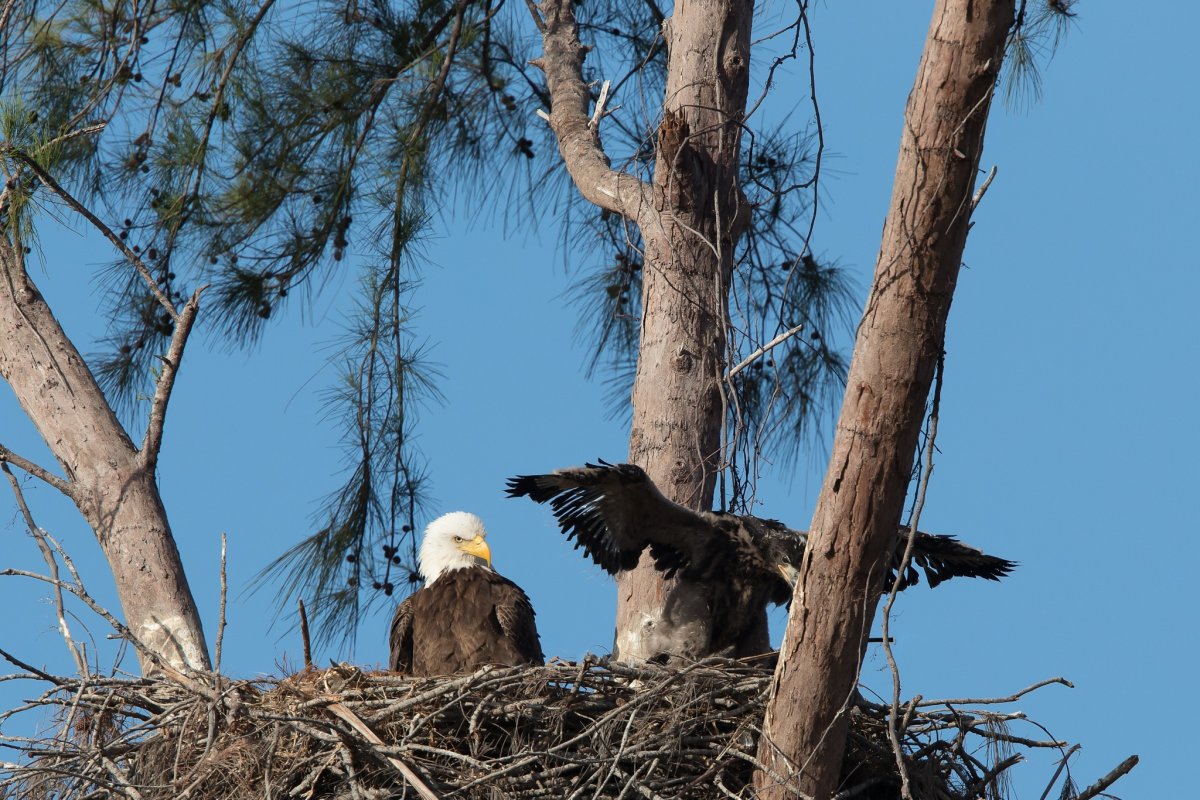
On Friday evening, a foreign bald eagle entered the Marco Island Nature Preserve & Bird Sanctuary and attacked a nest belonging to a female eagle named Calusa and her two eaglets. The attack comes less than a week after Paleo, Calusa’s partner, was found dead on the preserve due to an electrocution.
FWC officers retrieve the fallen eaglets, who, despite the fall appear to be doing well. Photos by John Busch.
According to witness Doreen Hertel, observers at the sanctuary called the authorities to report the incident.
“It was unbelievable as we watched the eagle bringing it [the eaglets] down by the wing,” Hertel said.
Officers from the Florida Fish and Wildlife Conservation Commission (FWC) arrived on the scene shortly thereafter. They were able to locate the two eaglets on the ground. The eaglets were then transported to the Conversancy of Southwest Florida for monitoring.
“We will stay in touch with the conservancy to follow their progress,” the Marco Island Nature Preserve & Bird Sanctuary said in a Facebook post on Friday. “The eaglets did not seem to have any injures and were pretty feisty. We would like to thank the FWC and the conservancy for their fast response and excellent work.”
Carl Way, chairman of the Marco Island Nature Preserve and Bird Sanctuary hands an FWC officer a box containing one of the eaglets. Jon Busch and his granddaughter Peyton look on.
If you encounter a dead or injured eagle the FWC asks that you contact the FWC OLE Department at 888-404-3922. Please do not attempt to pick up the bird or take any of its parts (feathers, talons, etc.). This is prohibited under the Bald and Golden Eagle Protection Act and the Migratory Bird Treaty Act.
Article By Samantha Husted
Additional information of things to do in Marco Island:
Fishing Marco Island, Florida :
Marco Island has one of the most sought after game fish, Snook. It can be found in the waters around Marco Island some weighing up to 15 to 30 pounds. Marco Island (close to both Naples and 10,000 Islands) offers an amazing array of saltwater species for both Inshore and Offshore fishing. Marco Island is unsurpassed for its beauty and calm fishing waters. The calm, pristine tropical backwaters of Marco Island, Chokoloskee and 10,000 Islands are a secluded fishing paradise everyone should experience at least once.
Fly fishing in the backcountry around Marco island is a world class experience that should not be missed. You will glide along the shallows in a state of the art boat, so swiftly, so stealthy- enjoying both nature and a fishing fiesta!
Inshore fish for Spotted Trout, Redfish, Snook, Shark, Tarpon, Spanish and Cobia in the beautiful and calm Gulf of Mexico waters are most anglers choice.
![What to Take on Your Bird Watching Adventure]()
Bird Watching, Eco Tours, iOutdoors Blog, Nature Adventures
What to Take on Your Bird Watching Adventure
Bird watching is an exciting adventure. After all, you do not know exactly what lies ahead, what species you might encounter. Identifying the species you see or hear during a trip can also be challenging, especially to novice bird watchers. To maximize the fun and learning experience, be prepared.
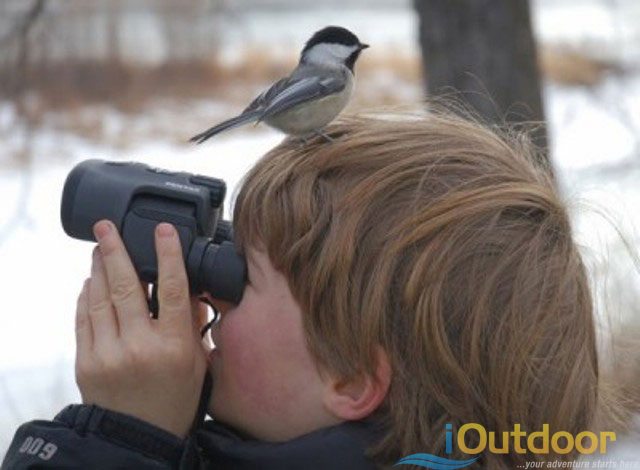
A pair of binoculars is an essential tool when bird watching. A lot of birds have colors that easily blend with the surrounding foliage or many species are so small that you can’t easily see them unless they are located close or are magnified by your binoculars.
You can also bring a field guide. However, familiarize yourself with the book or booklet before you go bird watching else you’ll be doing more book reading than bird watching. The field guide will help you identify the species that you see. This is especially useful to distinguish species that might look closely alike but differ in certain aspects.
A camera, especially one attached to your binoculars, is always a piece of good equipment to bring along. You’ll be able to take photos of the birds and identify them at home. That way, you’ll have more time to look for other species. A better option is a video camera with extra memory cards so you won’t miss the action.
Some birdwatchers also bring along audio recording equipment to help them identify both the species that they see and the ones that they missed but heard calling/singing.
It is also possible to bring a portable media player. Also, to easily store data or upload them to the internet, some bird watchers also prefer bringing laptops or mobile phones with internet browsing capabilities.
![What to Take on Your Bird Watching Adventure]()
Bird Watching, iOutdoors Blog, Nature Adventures
Interesting Birds of Florida
Florida is home to more than 500 species of birds, many of them beautiful and interesting. Some of them can be found almost any time of the year while others come and go, depending on the season.
An example is the Magnificent Frigatebird, a species sometimes referred to as Man O’War. Males are mostly black but have a scarlet throat pouch that is inflated during mating season while females have a white breast, blue eye ring, and brown bands on their wings.
Another interesting species is the Canary-winged Parakeet, also known as the White-winged Parakeet, is a little parrot that is extremely hard to spot while bird watching. It is mostly green but has white patches on its wings.
The White-tailed Tropicbird is a seabird that is slender and mostly white in color. Its wings are very long and the inner wings have a black band.
Another interesting bird species in Florida is the Red-whiskered Bulbul which has a brown back and a white front. It is a crested bird and is especially notable for its red face patch.
The Purple Gallinule is actually a multi-colored bird species that has large yellow feet, mostly green back, red and yellow bill, and a purple-blue plumage.
The Roseate Spoonbill has a long neck, long legs, and a long bill that resembles a spatula. It is mostly pink in color but has a white neck and greenish head.
The Masked Booby is mostly white in color but has pointed black wings and tail. It also has a distinct dark grey face mask.
Other interesting species are the Audubon’s Shearwater, Anhinga, Wood Stork, Brown Noddy, Snail Kite, Short-tailed Hawk, Limpkin, Wilson’s Plover, Bridled Tern, Roseate Tern, Black Noddy, White-crowned Pigeon, Mangrove Cuckoo, Eurasian Collarde-Dove, Antillian Nighthawk, Florida Scrub-Jay, Gray Kingbird, Black-whiskered Vireo, Red-Winged Blackbird, Black-Throated Blue Warbler, Spot-breasted Oriole, Shiny Cowbird, and many others.

Bird Watching, iOutdoors Blog, Nature Adventures
Spotting Birds in the Sunshine State
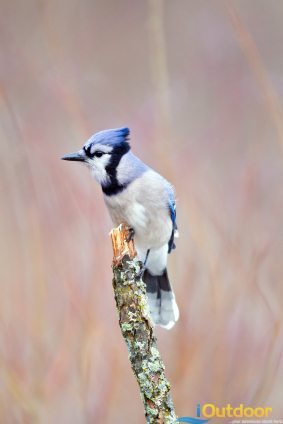
Just what exactly is it about Florida that many bird enthusiasts flock here for bird watching? There is but one simple reason and that is many migratory birds all land here in Florida. Florida’s diverse habitats are also home to many native birds. These include but are not limited to tiny hummingbirds, huge herons, plain jays, exotic spoonbills, seed-eating buntings, predatory hawks and ospreys. There are even more than 1,000 pairs of bald eagles in Florida, second only to Alaska.
 Why So Many Birds in One State?
Florida’s unique placement between tropical and temperate regions is one of the reasons why so many different types of birds can be found in the state. Another reason is the presence of two important flyways or migratory corridors which are used by Caribbean birds and birds from other faraway places. This is the reason why so many migratory birds can be seen in Florida.
The Art of Bird Watching
Timing, picking the right site, patience, and a bit of luck is important for bird watching enthusiasts. In Florida, resident birds can be spotted all year round. However, for a bit more excitement, bird enthusiasts who wish to see migratory birds can do so from mid-April to mid-May and also in October.
Picking bird watching sites isn’t spontaneous. In fact, there are already recommended bird watching sites throughout the state that bird enthusiasts can visit. There is also a program called The Great Florida Birding Trail or GBFT which was established by the Florida Fish and Wildlife Conservation Commission. The core of GBFT is a network of nearly 500 sites throughout Florida which have been deemed recommended for maximum bird watching experience and the opportunity for bird education.
Recommended Bird Watching Sites
Some of the best bird watching sites in Florida include but are not limited to the following:
- St. Mark’s Wildlife Refuge in Tallahassee,
- Payne’s Prairie in Gainesville,
- Merritt Island National Refuge in Titusville,
- Busch Gardens in Tampa,
- Suncoast Seabird Sanctuary in St. Petersburg,
- Corkscrew Swamp Sanctuary in Ft. Myers,
- J.N “Ding” Darling National Wildlife Refure in Sanibel,
- The Conservancy of Southwest Florida in Naples, and
- Everglades National Park in Miami.
Bird Watching, iOutdoors Blog, Nature Adventures
Finding BIRDS!
The best time of year to bird watch largely depends on where you are and what you expect to see. Technically, any day would be a good day because there’s bound to be a bird flying somewhere at any given time. In fact, you can go bird watching on your front or backyard anytime you want.
Still, if you are serious about bird watching, spring is among the best seasons to go. This is the time when they are displaying a wide variety of full color breeding plumage. You’ll also hear them singing and calling to each other in this courting season.
Summer is also a good option because the birds are nesting and would probably follow the same pattern day after day – find food to bring to their young. So, it would be easy to spot them, searching for food. However, by the end of summer, there are less birds venturing out as most species undergo molting.
You should be on the lookout for spring and fall migrations. At these times, you’ll be seeing hundreds or even thousands of the same species traveling together. It is best to go bird watching during early mornings when the birds are more active, calling each other and flying around. There are certain places that migratory birds frequent year after year; thus, you might want to go bird watching there.
Seeing rare birds is one of the dreams of a bird watcher. For this, you might want to listen to the weather report are certain conditions lead to drift migration of species that don’t usually fly to a certain place.
