
Water Sports, Charter Head Boat, Inshore Fishing, iOutdoors Blog, Key West Fishing, Miami Beach Fishing, Offshore Fishing, Party Boat Fishing, Sport Fishing, Wreck Fishing
SAFETY AT SEA AND YOUR CHARTER.
Charter Boat laws:
Operating a Charter Fishing operation requires more than just a captain and a boat. The Captain must hold a current USCG license with homeland security TWIC card. To be a saltwater Fishing Guide in Florida, you must also comply with U.S. Coast Guard (USCG) requirements. The U.S. Coast Guard (USGC) requires all operators of for-hire vessels to have a Captain license. Charter vessels must also be commercially registered. Charter, headboat and saltwater fishing guide operations must have an FWC charter captain or boat license to cover their passengers, who are not required to hold a recreational saltwater fishing license.
This license allows the captain and vessel to engage in charter fishing, whale watching, SCUBA diving, and tour cruises. This license is limited to near coastal waters only not more than 100 miles offshore and is not valid for international voyages. He must be enrolled in a random drug testing program, and carry a current first aid card. The boat must meet USCG – UPV standards (for 6 or less guest). There are many additional safety items required on a charter boat than a recreational boat. Trash and pollution place-cards are required onboard, as well as an emergency plan. Coast Pilot, Tide Charts and Light List for the waters operated are required onboard. Type 1 PFD’s with a whistle, lightened reflective tape are required for everyone on board. A life-ring is also required. This and the PFD’s are required to include either the boats name or registration numbers. Though inspections are not required, it is best if it is done to ensure compliance.
A state fishing license must be provided for all guest fishing on the boat. Federal (NOAA) Fishing Permits are required if the boat will engage in any fishing activity past state lines (3 miles Atlantic – 9 miles Gulf). Although VHF’s nor GPS locators are not required, they should be considered as a very important safety equipment that should be on every boat. Properly licensed Captains and charter operations spend a good deal of money to be so, and will not mind showing these required licenses and permits. If a charter operator will not show you these, then it may be best to look elsewhere.
Always make sure your boat and captain has these safety items on board:
-
- Working radio.
- A correctly fitting life preserver for each passenger.
- Signaling devices both visual and audible such as flairs, whistle and/or hand held air horn.
- Anchor.
- Some type of shade.
- Plenty of fresh water.
- Fire extinguisher.
- A throw-able flotation device.
- First aid kit.
You can do your part by:
-
- Wearing proper clothing for a day out in the elements.
- Using alcoholic beverages moderately.
- Following the instructions of the captain, guide or mate.
- Getting plenty of sleep the night before and staying hydrated.
- Wear sunscreen and a hat. The Florida sun can be brutal.
- Proper shoes that protect your feet and boat deck.
- A life jacket is no substitute for adult supervision of children in and around the water. Children float differently than adults. Because their body weight is distributed differently, children are more likely to float face down in the water.
If you are not sure the boat you are chartering has the necessary equipment ask your captain or guide to show you. If he does not or cannot comply think twice about continuing your charter. Your safety is your ultimately your responsibility, don’t leave it up to the other guy, insist on good boating safety practices!

Bottom Fishing, Drift Fishing, Grouper Fishing, iOutdoors Blog, Party Boat Fishing
What is deep jigging?
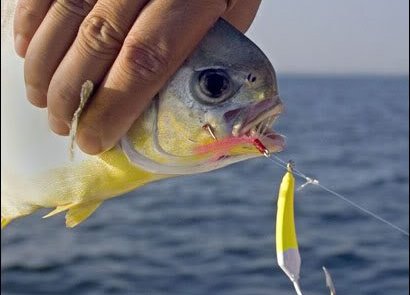
Deep jigging is the term used for fishing using jigs in a deepwater setting, usually more than 100 feet deep. This fishing technique is often employed to catch husky bottoms fish species such as mutton snapper, amberjack, and grouper. However, this can also be used of pelagic species such as cero mackerel, Spanish mackerel, and kingfish. Deep jigging is also great for catching wahoo and dolphin fish.
The Jigs
There are many different types of jigs you can use for deep jigging. These jigs were designed to imitate bait; thus, it comes in various shapes, sizes, and colors. You’ll find feathered jigs, bucktail jigs, feathered jigs, and many others. The rule of thumb is: the deeper you fish, the heavier the jig you should use.
Getting the Technique Right
As with any other fishing technique, you might not get it right the first time but you’ll soon master the technique with constant practice. Also, you’ll learn from trial and error – pretty soon, you’ll be catching that monstrous fish.
The best day to go deep jigging is when the winds and currents are not too strong but there has to be wind and current to make the jig move as it drifts over the bottom. The idea is to make the jig act like a real fish, make sure to limit the up and down movements in just one place – that is unnatural and easily spotted by the fish you are trying to lure.
Deep jigging requires strength and stamina – after all, you are hoping to catch that big pompano or whatever large fish species you are targeting. This is the best time to employ fast upward jerks and to use heavy-duty lines and rods that can handle heavy weights.
Bottom Fishing, Drift Fishing, iOutdoors Blog, Offshore Fishing, Party Boat Fishing, Snapper Fishing
 How many different types of SNAPPER are there in Florida waters?
Snappers, particularly the red snapper, are quite common game fishes in Florida waters. Known to thrive in estuaries up to depths of 450 meters, they feed in freshwater in search of smaller fishes and crustaceans though a few species’ main diet consists of planktons. Florida is the perfect place for snappers to thrive since they prefer warmer climates. In perfect conditions, they can grow up to one meter in length.
All over the world, there are more than 100 species of snappers discovered. Some of them can be found in the waters of snapper in Florida. Here are the top five most popular snapper species in Florida:
- 1. Red Snapper
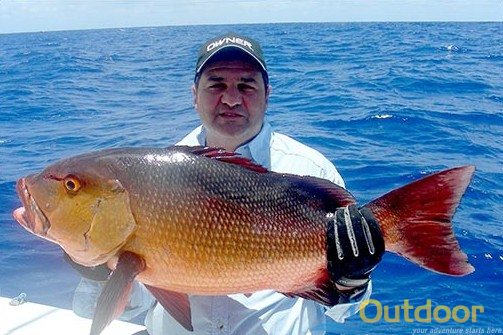
The Red Snapper is the most popular snapper in Florida because of its amazing size which could grow from 3 pounds to 50 pounds. Areas to find it in the state during open season include bridges and piers, and also offshore on the continental shelf particularly off the Panhandle and Northern coasts.
- 2. Mangrove Snapper
Also known as the Gray Snapper, the Mangrove Snapper is also widespread in Florida’s saltwater. It is called as such because they congregate in small mangrove areas all around the state. Other than mangroves, juveniles can also be found inshore in inland waterways, tidal creeks, and grass beds while adults typically thrive nearshore and offshore in wrecks, rock, and coral reefs. Popular areas to catch it include the areas of Clearwater, St. Petersburg, Sebastian, and Daytona.
- 3. Yellowtail Snapper
Most distinguishable due to its yellow tail, the Yellowtail Snapper is smaller but just as tasty compared to its cousin, the Red Snapper. Feeding mostly on shrimps, it can be caught offshore in Florida up to depths of 300 feet. During the summer months, it is most abundant in the Florida Keys.
- 4. Mutton Snapper
One of the largest snappers, the Mutton Snapper can be found in South Florida especially during the months from spring to fall when they spawn. It can be found in inland areas along mangroves and canals where it feeds on preys like smaller fishes and snails. It can also be sporadically caught in the Gulf Coast such as the Middle Ground.
- 5. Cubera Snapper
This fish is the largest of the snapper family, growing up to more than 110 pounds in size. Juveniles can be found conglomerating inshore in grass beds while adults thrive nearshore and offshore in rocky reefs, ledges, and wrecks where they feed on fishes and crustaceans. The Cubera Snapper is mostly predominant in the Florida Keys especially during late summer when they spawn.
Other species of the Snapper family that can be found in Florida include the following: the Lane Snapper, Mahogany Snapper, Blackfin Snapper, Dog Snapper, Queen Snapper, Schoolmaster, Silk Snapper and Vermilion Snapper.
![What is a depth finder used for?]()
Bass Fishing, Bottom Fishing, Drift Fishing, Grouper Fishing, iOutdoors Blog, Offshore Fishing, Party Boat Fishing
What is a depth finder used for?
The technology used in depth finder originated during the World War II when solar technology was invented to give the Allied powers advantage over the Axis’ elusive submarines. This same technology is being used today to aid anglers catch fish lurking under the water.
A depth finder, also called a fish finder, is a hi-tech fishing tool that uses sonar (Sound Navigation & Range) to detect the bottom of the water and fish, displaying them on a remote display screen for the angler to see. 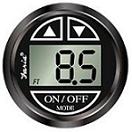
A device attached to the bottom of the watercraft transmits sonar waves through the water below, and when they hit an object, whether a fish or waterbed, they bounce back. The transmitter receives the signals back and analyzes them, displaying its findings on a small display screen. The screen then provides a visual representation of the underwater including the objects and waterbed underneath the watercraft. Depth finder technology is so advanced these days that they could distinguish between objects like seaweeds, waterbed, trash, and of course, fish; and represent them with instantly-recognizable symbols on the screen.
For anglers, they hope that their depth finder will bounce back signals of an elusive fish. Because anglers are given an approximate picture of the underwater, it could allow them to know the location of the fish. Most depth finders today could also provide an estimated depth of the fish, thus, also allowing anglers to know how deep their lures should be. The ability of the depth finder to determine the depth of the bottom of the sea or lake, also allows anglers to refrain from wandering off into shallow waters that could damage their boats.
There are several manufacturers of depth finders today including Eagle, Furuno, Garmin, Humminbird, Lowrance, Magellan and Raymarine. Some of the models sport the latest in scientific advancement such as GPS technology and electronic compass displays among others.
![What is a depth finder used for?]()
Bottom Fishing, Charter Head Boat, Drift Fishing, Grouper Fishing, iOutdoors Blog, Party Boat Fishing
Five Great Depth Finders
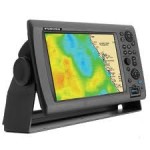 Depth finders are among the best equipment to bring on your fishing trip. You’ll surely be able to land that big fish of your dreams, if you know how to use these gadgets. Let’s list 5 of the best depth finders available in the market.
1. Lowrance
A lot of anglers would swear by Lowrance depth and fish finders. This brand has a wide range of gadgets that offer advanced GPS systems that let you calculate your position within 10 ft; thus, it is often favored not only by serious anglers but hunters, professional pilots, and backpackers as well. What’s so great about Lowrance products is that most have a built-in feature that offer full color display screens and displays various underwater conditions like temperature. Also, some models can even store coordinates of up to 1000 different locations.
2. Humminbird
Products by Humminbird are relatively cheap yet are able to provide readings of up to 600 ft and can be used even at speeds on 70 mph. These products are easy to install, easy to figure out, easy to use, and dependable. Just remember to keep it dry and away from saltwater.
3. Garmin
Garmin depth finders are in full color with a dual beam transducer which makes it quite accurate not only for finding fish under the boat but also along the sides. It can even be easily mounted on the trolling motors – you won’t need an adaptor.
4. Norcross
Norcross offers no-frills products that will show you the depth, precisely for up to 200 ft even at 63 mph. It has shallow and deep water alarms. It is also waterproof.
5. Uniden
Uniden provides products that have a large, backlit LCD screen precisely showing depths from 2.5 ft to 199 ft. It features shallow water alarms.
![What is a depth finder used for?]()
Bottom Fishing, Charter Head Boat, Fly Fishing, Grouper Fishing, iOutdoors Blog, Marlin Fishing, Offshore Fishing, Party Boat Fishing, Sail Fishing, Shark Fishing, Sword Fishing, Tarpon Fishing, Tuna Fishing
Offshore Fishing – What to Bring
 No matter how good your fishing skills are, sometimes, they are not simply enough to get that trophy catch. To assist you in this endeavor, fishing tackles can be used, which can highly improve your chances of snagging your dream blue marlin or bluefin tuna.
Fishing tackles, also known as “fishing gear”, are the physical equipment’s needed when fishing. Almost all gears and equipment’s used in fishing can be called fishing tackles from terminal tackles such as hooks to lines, sinkers, reels and rods to name a few. Because of their number, it is impossible for you to bring all of them in an offshore fishing trip. So that you will not over pack or leave anything essential, here are the top ten fishing tackles to use for offshore fishing, which can serve as your guide in packing.
- Fishing rod. The fishing rod is the most important fishing tackle you will ever need for offshore fishing. In choosing your fishing rod, make sure that its weight and length are perfect for you so that you will still remain comfortable using it despite hours of fishing.
- Fish Hook. Hooks are the devices that impale the fish in the mouth or body. During every fishing opportunity, make it sure to bring hooks in different sizes and styles so you’ll have plenty to choose from.
- Fishing line. A fishing line is a cord used in angling, its end being where the hook is attached. Important factors in choosing your fishing line are: length, weight and material. Remember that they must be tough enough to resist offshore fishes.
- Fishing sinker. A sinker is device which weight is used to improve casting distance and the speed of sink of the bait.
- Fishing reel. Reels are devices used together with a fishing rod to allow the deployment and recovery of a fishing line with the use of a spool supported by an axle.
- Fishing bait. Baits or lures, whether natural or artificial, can also make or break your fishing expedition. Choose your bait depending on the type of fish you would like to catch.
- Net. A net can be handy to secure a fish already caught because it would be agonizing to lose a prize catch at your feet.
- Tackle box. Of course, with the number of your fishing tackles, it would be easy to damage them, or worse, misplace or lose them. Thus, it is always wise to bring a tackle box where you can keep your fishing equipment’s, gears, accessories and baits.
- Fishing basket or cooler. Having caught a prize fish, of course, you’ll need a fishing basket or cooler where to store them.
- Right Fishing Outfit. Although most people who go fishing are keen on their fishing equipment’s and gears, they rarely think about their outfit. For practicability, make it sure that you wear comfortable clothes, fishing boots or waders if you intent to stand in the riverbank fishing, fishing vest with utility pockets, and a fishing hat to keep you protected from the rays of the sun.
You should Read this blog: Why Deep-Sea Fishing Should Be In Your 2021 Fishing Trip List


 No matter how good your