
iOutdoors Blog, Bass Fishing, Redfish Fishing, Sail Fishing, Shark Fishing, Snapper Fishing, Snook Fishing, Striper Fishing, Sword Fishing, Tarpon Fishing, Tripletail Fishing, Trout Fishing, Tuna Fishing, Wreck Fishing
What Fishing Line to use?
As a fisherman, there is a good chance that you have choices to make regarding your fishing line? Perhaps you have difficulties, your lines breaking while you were reeling a catch or casting your favorite lure. Having a faulty fishing line may not be the whole reason.
These events may reinforce the fact that you need to change your fishing line or use the wrong type. The question now is – What fishing line to use?
Like the lure and rod and reel, fishing lines are one of the components necessary for any angler’s success. It doesn’t matter if you’re catching bluegill from the bank, flipping bass out of thick grass, or trolling offshore for sailfish. You need the excellent quality and right type of line to land fish and have a hassle-free time.
With hundreds of different fishing lines on the market, what types, what sizes, what diameters should you use? It’s about the most difficult choice for most anglers.
So we were going to break down all the different fishing lines reasonably according to their uses, faults, and certain types of fishing best suited for each style.
It’s in the little details
Identifying the target species, fishing style, habitat, lures, and baits, and the angler’s skill all have a bearing in choosing the best line for the job.
From trolling spoons for oversized pike and steelhead; to deep jigging lead heads for walleyes and smallmouths; to working topwater frogs or spinner-baits for bass; there’s a specific kind of line to help anglers get the best results.
There are four significant types of fishing lines on the market today that matter for all practical purposes. Each has its pros (strengths) and cons (weaknesses), and anglers love each type.
99.9% of the anglers, when starting, only understand the difference in the packaging and color of the line. Braid, fluorocarbon, and monofilament mean nothing to them. We want to share what the pros already know about the fishing line and how they choose the different types. Share the cons no one wants to talk about and the pros of why you should be using it. You will know the perfect fishing line to use when selecting your favorite lure. Additionally, plan on fighting your favorite fish species by article end.
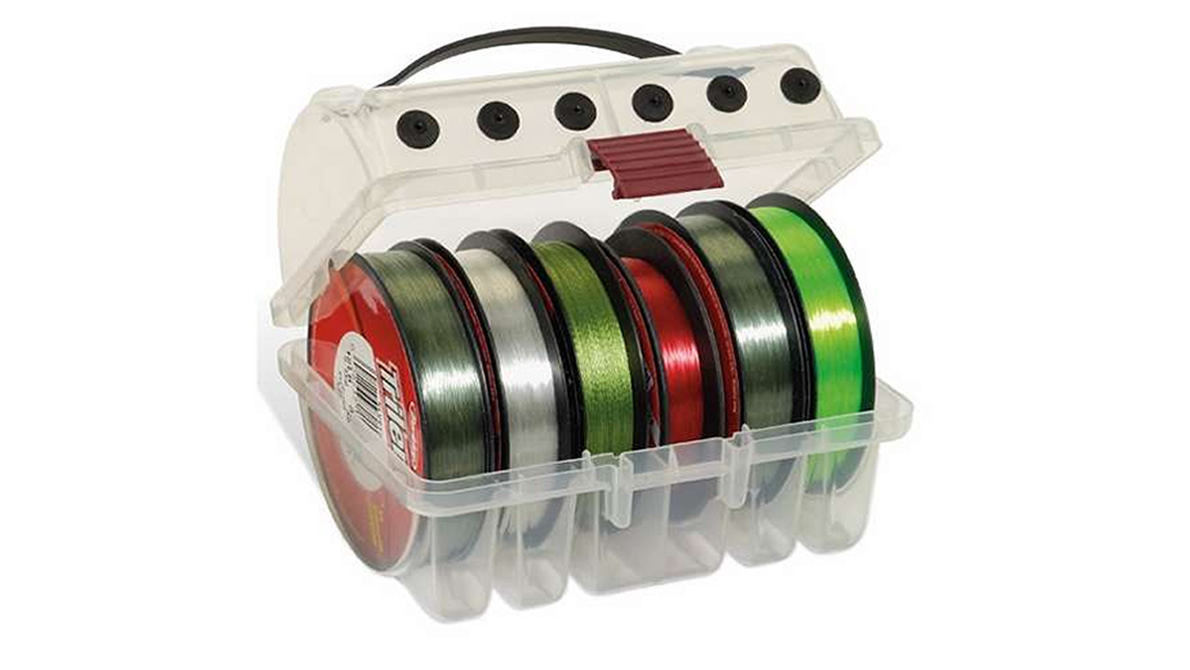
All Fishing Lines have Personalities
Before we start suggesting different products on the market, there are a few personalities of each line to go over. Later in the article, this will help you understand why one line might be not as good as another in your current situation.
- Abrasion Proof: Ever have a fish cut the line with his teeth? Maybe your favorite fishing spot has lots of rocks, and you get cut off all the time? Having a line that is more abrasion-resistant will help. Or, more importantly, make sure you are not using a fishing line that is not abrasion-resistant.
- Buoyancy: This is how your line floats in the water or how quickly it may sink. Different situations are going to call for a specific fishing line. The more buoyant the line is, the better it will work for topwater lures. Lik that sinking provides a better feel of the fishing lure or bite of a fish. It also helps with the hooking of fish in some cases.
- Memory: This happens to some types of lines when it gets old or is stored in the sunlight. When you cast, and your line lies in the water, is it straight or curled up? That’s memory. A fishing line with lots of memory will also get kinks or knots as you reel cast and retrieve. The biggest problem that occurs from the fishing line with lots of memory is losing all your casting distance.
- Strength: It comes in all types and forms of fishing line. Strength should not be only the breaking point. The most critical factor to consider regarding power is the diameter of the fishing line. Not all fishing lines are equally treated when looking just at diameter vs. strength. There is a time when stability is more important than the diameter, and the diameter is more important than power.
- Stretch: Is the distance the line with giving before breaking. The stretchy line is vital for certain fish and lures. In some cases, it helps with fighting a fish; other times, like with crankbaits, it gives the fish time to inhale the bait before you can react. Typically, the stretchy line also provides less sensitivity to the lure and bite of a fish.
- Visibility: This should be a given; fish can see line color. The fishing line’s specific colors work better in different color water, other fishing techniques, and various fish species. Spooking of fish because of line color is one of the number of mistakes beginners make in choosing a line.
Okay, now that we understand the fishing line’s personalities, let’s deep dive into the types of lines on the market today!
Monofilament: The Old Reliable
Since I can remember, monofilament has been the standard line for catching bluegill or Blue Marlin worldwide. Even today, the retail stores are full of inexpensive fishing lines, which is monofilament. It’s an excellent value for anglers; it works, catches fish, and casts well initially. It can be used on any style fishing reel, is easy to work with, and has good knot strength.
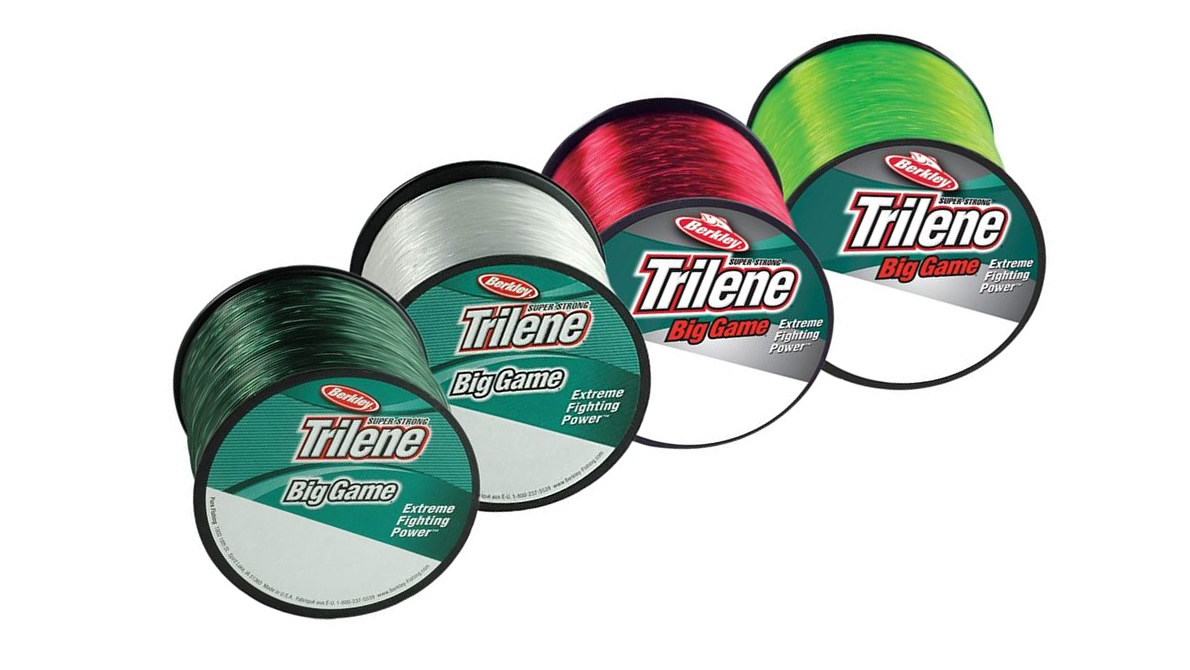
Pros of Monofilament
Monofilament is known for its reliability. It stretches under pressure; it’s durable and forgiving in the same breathe. The bulk of the fish landed in the world happen on monofilament. Some Monos are a bit stretchy; they still provide a right hook to drive hooks deep in to fish. Unlike its sister line fluorocarbon, monofilament is more forgiving and softer. It is helping with abrasions from rocks, fish teeth, and others. Think of mono as the old reliable; when you need a line you can rely on for almost all fishing forms, she won’t let you down.
Because it’s softer and more flexible than fluorocarbon, knots tie easier with mono, and cutting the line with almost anything, including your teeth, works for a Mono connection. Monofilament is exceptional for line sizes smaller than 12 pounds. It’s easy to cast lighter lures and adaptable for any terminal tackle, such as snaps, hooks, sinkers, bobbers, and swivels.
Cons of Monofilament
Monofilament is the line with the most stretch. It can be a fault or an asset for anglers. It provides less sensitivity than the fluorocarbon line, which can lead to anglers’ loss of fish as some anglers have difficulty detecting light strikes. Stretch also requires anglers to set the hook harder to drive deeply into the fish’s mouth.
The monofilament fishing line’s main fault is the memory, which creates loops, knocks, and twists, causing multiple casting issues. Monofilament can be especially tricky with lures that spin the line, like that happens when trolling. Twisting is caused by not adequately using leaders and swivels to decrease line twists.
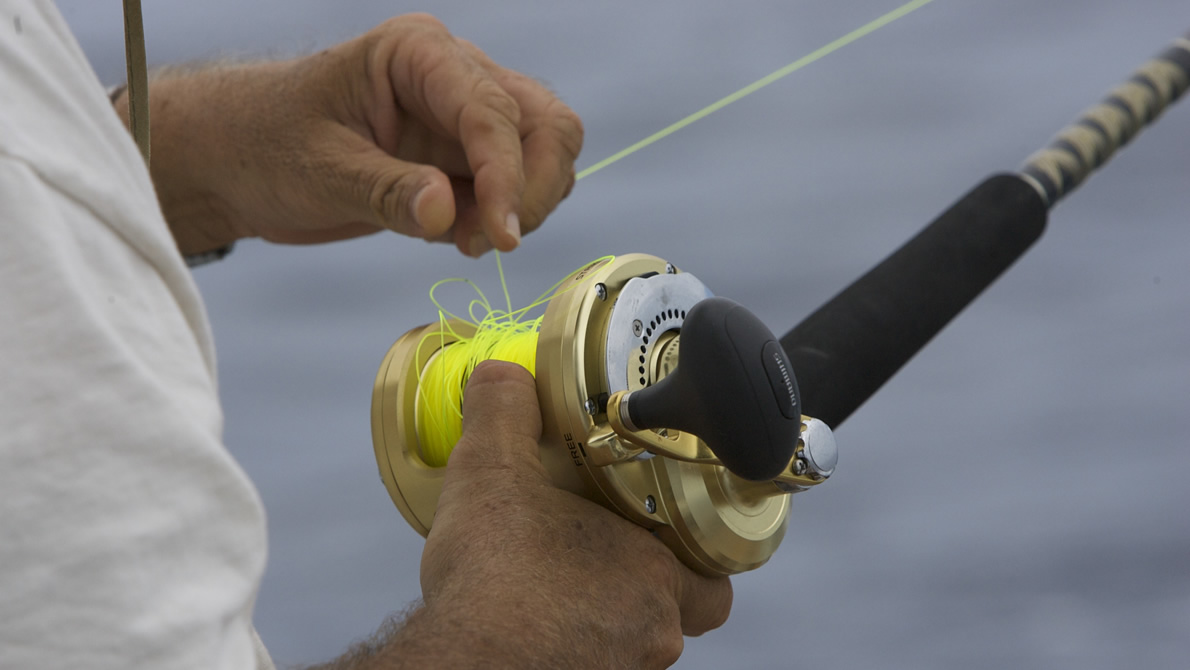
How And Why Anglers Use Mono
There are many monofilament applications, and since it’s been around for decades, many top anglers are committed to it, like a veteran fishing guide, Capt John Leech, of Kissimmee, Florida.
“I use Trilene XL monofilament line the most it’s what I feel like I get the most bites on,” he says. “Yes, still use braid and fluorocarbon with no-fault, braid has many advantages in thick covers, such as no stretch, incredible strength, solid hooksets, lots more sensitivity, longer life spam on the reel. And use monofilament because it works on sunny days, cloudy days, and all days in between. I have just always had confidence in it, so if it’s not broken, why change.”
Capt John also commented that monofilament is much cheap when your fishing every day as he does. It’s smooth, and it makes it easier to tie knots quickly.
Florida fishing guide Capt Al out of new Smyrna Beach uses limp monofilament leaders when he uses live bait, especially when bobber fishing with a slip-float rig.
For Saltwater fishing trout and redfish, it mostly uses monofilament.
“Being able to see my line is important so a hi-vis Mono is a majority what I use. And so fish won’t see or shy from it, I always employ a fluorocarbon leader.” My preferred monofilament is Berkley Trilene Big Game for trout and redfish; both are smooth casting.
Copolymer: A Basic Improvement
Attempt to make improvements to monofilament; the industry created a copolymer fishing line. It’s a newer version of the version of monofilament, with slite changes. They embedded a different cord of nylon, making it two or stains of material instead of one. This process strengths the line reduces stretch and, more importantly, provides manufacturers access to create a unique recipe and customize the line’s characteristics to specific types of fishing.
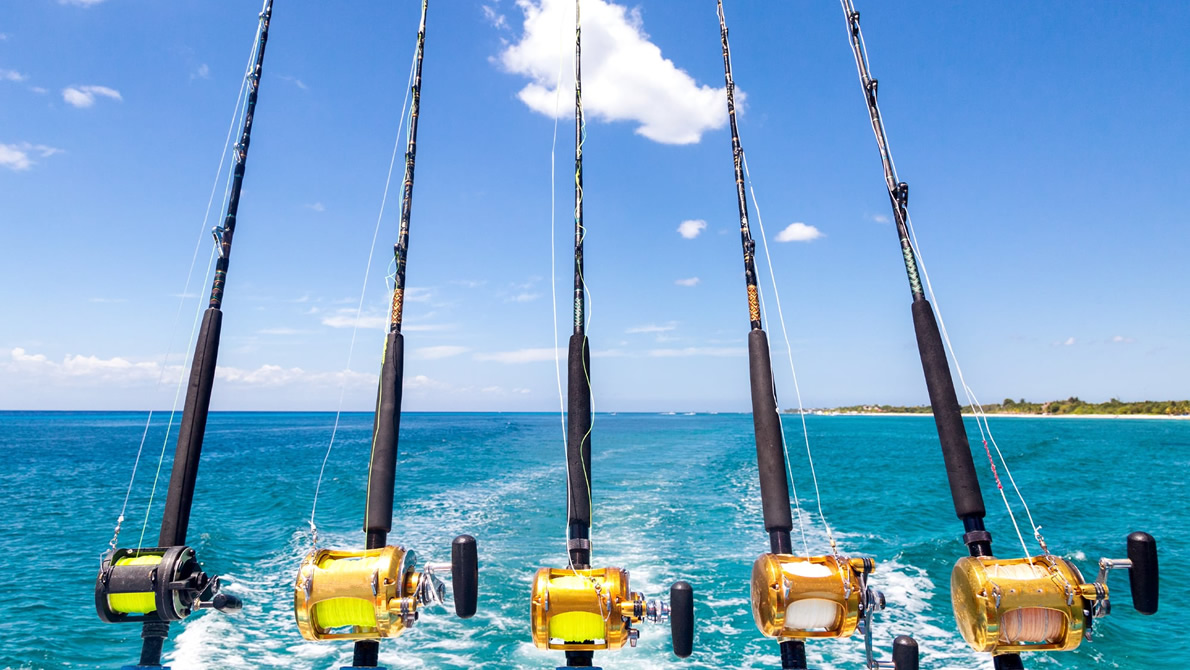
Pros of Copolymer
You wonder when you go to the store and see so many different fishing lines and ask, why? The copolymer is responsible, as the manufacturing process allows quickly unique signatures of a new line into the market. The manufacturers can mimic existing lines and make slight changes so they can say it’s better and different”? In general, its a lower stretch than monofilament but carries less memory. All while maintaining shock strength, improved casting, and knot strengths. It’s also more abrasion-proof, all while adding increased stability to the line.
Cons of Copolymer
A unique difference between monofilament and copolymer is it doesn’t float very well. While it is still nylon-based, the core to monofilament can still heat up and get sunlight damage from the UV rays. The big loser is the angler; with all the technology changes to monofilament to create copolymer, it has made the price considerably more expensive. You have to decide if the difference is of value to you.
How And Why Anglers Use Copolymer
There are many specific applications for copolymer that lead Captain Troy Wells of FortLauderdaleFishing.com uses in his day-to-day operation.
“I use copolymer line on most all reel types, and I love it for deep-water tactics like jigging and suspension rigs. It’s what we get the most fish on,” he says.” I don’t mind paying a little more; there’s no reason not to. We land more fish; you can’t convince me otherwise.”
The Ever So Popular Braided Line
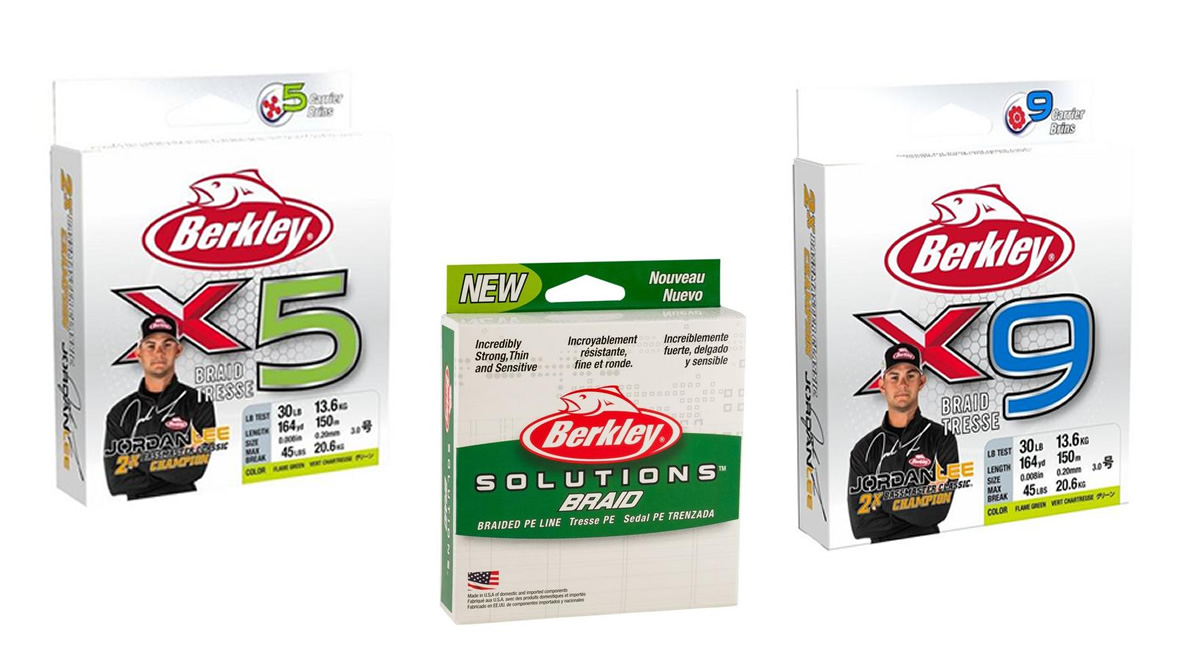
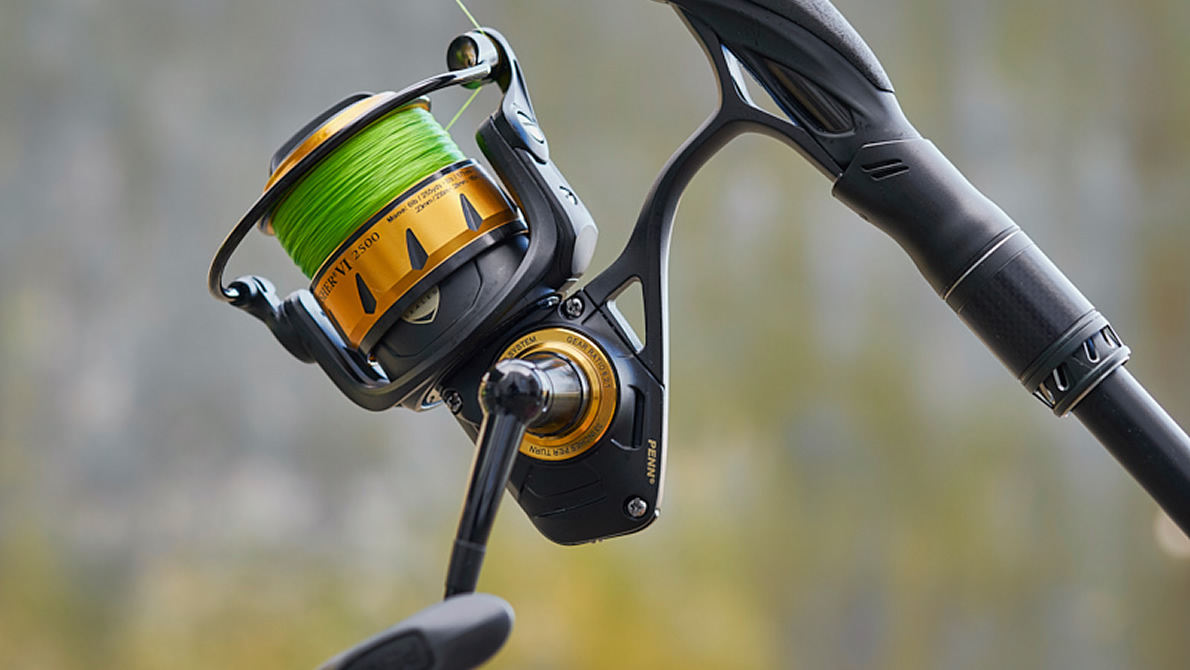
Braided line has boomed in popularity in recent years due to comparatively new improvements that have resulted in high abrasion resistance, excellent diameter per test, superb casting characteristics, and extended life use. Perhaps braid’s biggest asset is that it has virtually no stretch; thus, it’s exceptional sensitivity. It makes it a top choice for deep water and heavy cover fishing and “feeling” the slightest bite from fish. However, no stretch can be detrimental if anglers overplay fish, pulling out or straightening hooks, resulting in a loss.
Pros of Braided Line
Its strength, clearly the #1 feature of the braid. Secondly, it would be the diameter, especially in the big sizes like 15, 30, 50, and 80 pounds. In very light tests, let’s say, under 10 pounds, it is extremely sensitive and still super strong. Most people use it for its casting distance, which outperforms all of its counterparts. The addition of adding a monofilament or fluorocarbon leader provides an exceptional advantage over the fish.
Cons of Braided Line
It’s the most expensive, more than monofilament, copolymer, fluorocarbon, and it can be tricky; even wind knots can tie in a ball of waste. It can be much harder to tie knots; if the proper knot is not connected, the braid tends to slip. Many stand monofilament knots that work great, such as the Clinch Knot and Blood Knot, do not hold well with braided lines. Not necessarily a negative, unless you don’t have them. With braid, it requires a pair of clippers or scissors to retie.
How And Why Anglers Use Braid
Well, respected multi-species angler and Lake Erie fishing guide Capt Mark Rose out of Erie, PA uses braid for finesse applications deep jigging for big smallmouth. “I use Berkley X9 braid attached to a fluorocarbon leader for most deep and clear water fishing applications I do.” Capt Mark says explicitly, “for drop shot fishing in the clear waters of the Northeast, I use 6- or 8-pound braid with an 8 to 10pound fluorocarbon leader.”
Mark adds that one of the primary reasons he uses braided lines is that it increases his customer’s sense of “feel” when fishing deep water. He says the benefits of supper thin diameter and lack of stretch are unbeatable.
Capt Tom Goodrick, Lake Erie Walleye expert, says, “braided line is his first choice when running moving baits to set hooks in fish like pike and walleye. Crankbait trolling for walleyes and other species is perfect for braid because I can ‘clear’ a lure of debris without reeling the bait back to the boat. Deep jigging with hyper-sensitive, no-stretch braided line makes for controlled solid hook-sets by customers.”
Fluorocarbon
The fluorocarbon fishing line is a relatively new product compared to its counterparts that have been around forever and improved dramatically over the years. Its price had also come down considerably from when it was introduced into the marketplace.
Pros of Fluorocarbon
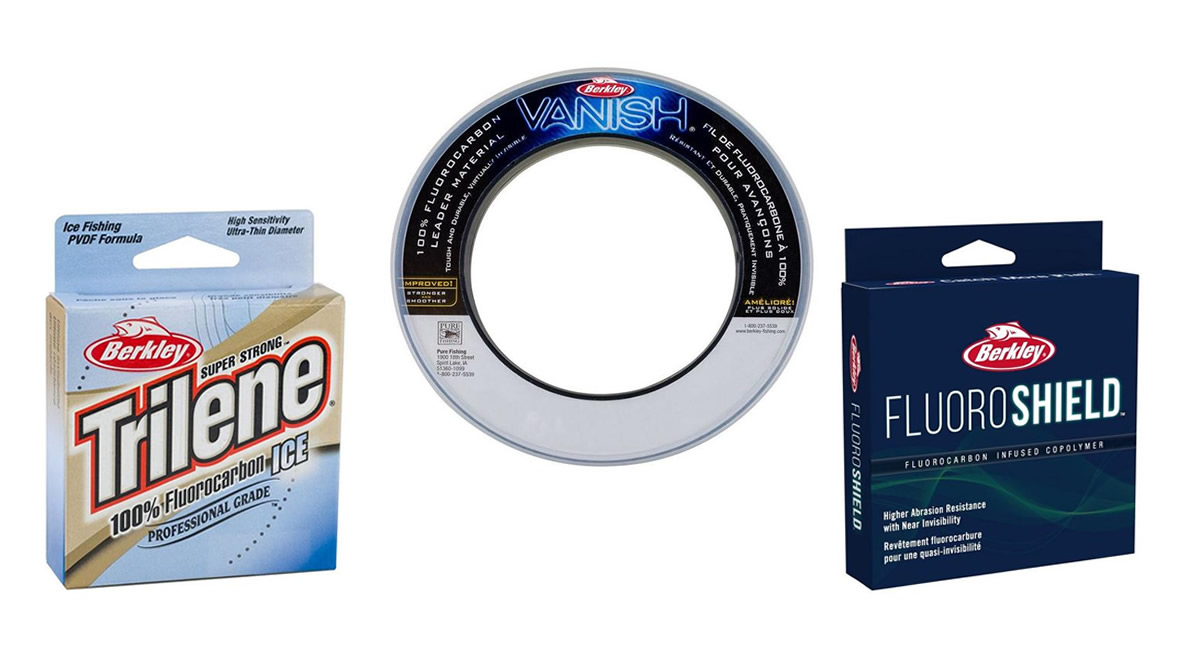
Visibly almost identical in design to monofilament in that it’s round and feels very similar. It’s virtually invisible, ultra-clear underwater because light passes through it. For this reason, anglers can use fluorocarbon in heavier pound tests than monofilament and copolymer lines that are more visible.
While fluorocarbon does stretch, it has much less bonce than monofilament, although it feels more elastic than braided line. It’s built with a hard casing, so it’s more rigid and more resistant to abrasion. Fluorocarbon is known as a stiffer line than all its counterparts, and it is. But technology and development have made many improvements in recent years. Cleary excepted by new era of anglers, fluorocarbon is quickly gaining lots of endorsements from top anglers.
Cons of Fluorocarbon
Fluorocarbon, because of its density, sinks faster than monofilament. So for topwater lures, it’s not the best choice of line. The bigger continued to complain from the weekend angler is the difficulty of tieing knots due to additional stiffness. It is most critical to wet your line when tying with fluorocarbon to help the line slip and tighten the knot.
How And Why Anglers Use Fluorocarbon Line
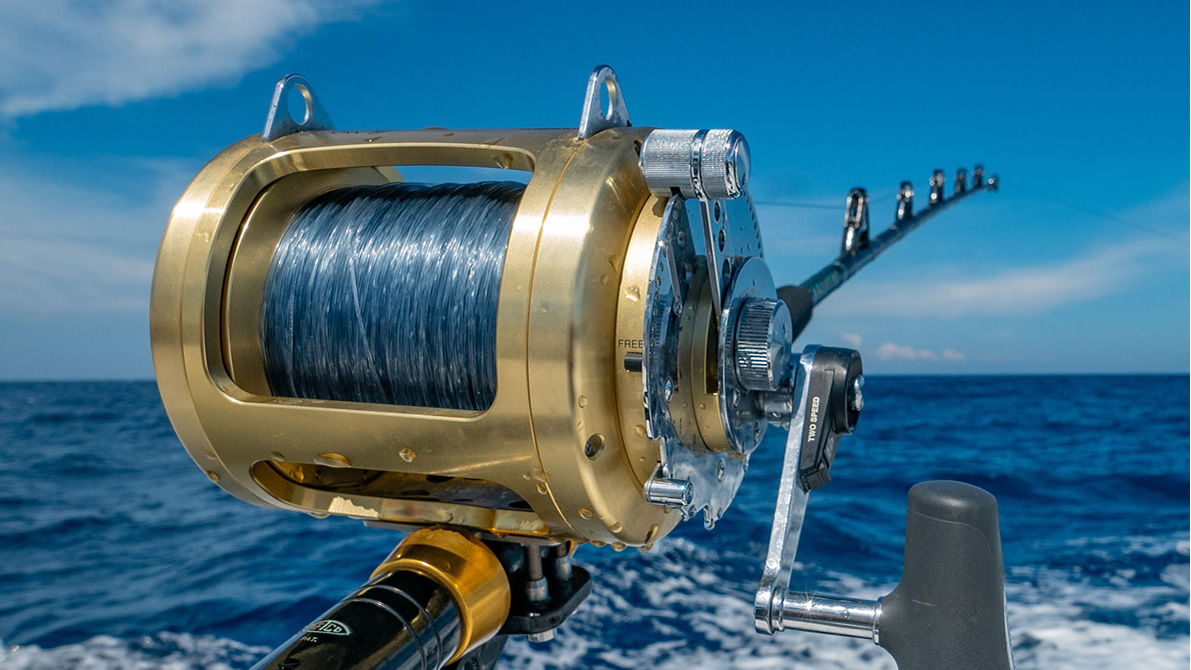
“Berkley FLUOROSHIELD Fluorocarbon has become my number one all-purpose line,” says Capt Mark Shepard. “It’s durable and castable on bait-casters while still maintaining lots of abrasion resistance. I mainly use it because it’s the most transparent line of all that is manufactured. That means it’s the closest to transparent of anything other than water.
Shepard says he uses it almost exclusively for throwing his WOW Factor Crankbaits. “It’s stronger than monofilament and abrasion-resistant, and fluorocarbon helps a bunch.” everything else.
In closing
Most anglers know that they have to change their fishing line regularly. However, most only do so when something happens to remind them of this. Choosing the correct one based on conditions and species will change how you fish and the results!
Miami Beach Fishing, Charter Head Boat, Dolphin Fishing, Drift Fishing, Grouper Fishing, iOutdoors Blog, Party Boat Fishing, Shark Fishing, Snook Fishing, Sword Fishing, Tarpon Fishing, Tuna Fishing
Best Fishing Spots in MiamiWhat brings people to Miami? White sand beaches, tons of sunshine, vibrant nightlife, fresh food? Yeah, all of that. Fishing Miami is an afterthought for many, but not for us. Whether you venture through the mangroves or explore undersea shipwrecks for Swordfish, you’ll find a fishing culture as abundant as the one on land.
What Can You Catch in Miami?
If you’re unfamiliar with fishing in South Florida, you won’t know the best fishing spots in Miami. So you might be unsure of what to expect when you throw your line out. You’ll be happy to know that Miami is full of amazing (and huge) fish. Just as Miami’s culture is bustling with diversity and affluence, the waters are much of the same. Let’s check out the top catches of Miami.
Grouper
Beneath the surface of Miami’s crystal blue water is hundreds of wrecks and reefs inhabiting some delicious bottom feeders. You can expect to find Black, Red, and Gag Grouper all over the place, and that’s good news for anyone coming here to sample some of what Miami has to offer.
These fish are some of the prime targets for frequent anglers, but if you’re looking for something a bit more unique, you can travel a few miles out and find rare Snowy and Scamp groupers.
That said, there’s one fish that everyone travels here for, and it’s the Goliath Grouper. These monsters can weigh as much as 200 pounds or more, so if you’re planning your trip around locating one of these, you’ll want to bring some seriously heavy tackle. We recommend chartering a boat and recruiting the help of a local expert if this is your plan because they know the best fishing spots in Miami.
Tarpon
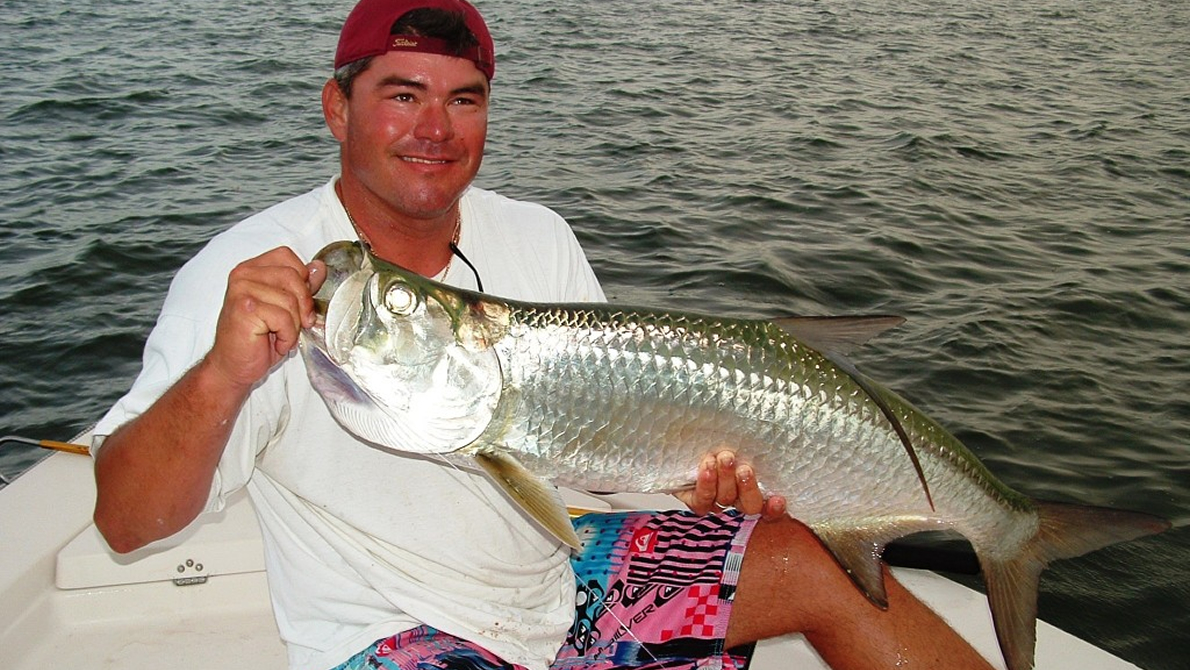
If you’ve got a smaller boat and you’re sticking to the shallow water, you can bring in a few Tarpon. While we make it sound easy, they’re a bit challenging to catch because they’re hard to find, and they put up quite a fight.
During the summer months is when you can find them most frequently around Biscayne Bay, but the problem is, most visitors travel here during the cold weather months and expect to find Tarpon. You can, you just have to know where to look.
These shallow water behemoths reach around 100 pounds, but if you’re looking for an enjoyable fishing experience, target the smaller and more aggressive fish in the 20-40 pound range.
Swordfish
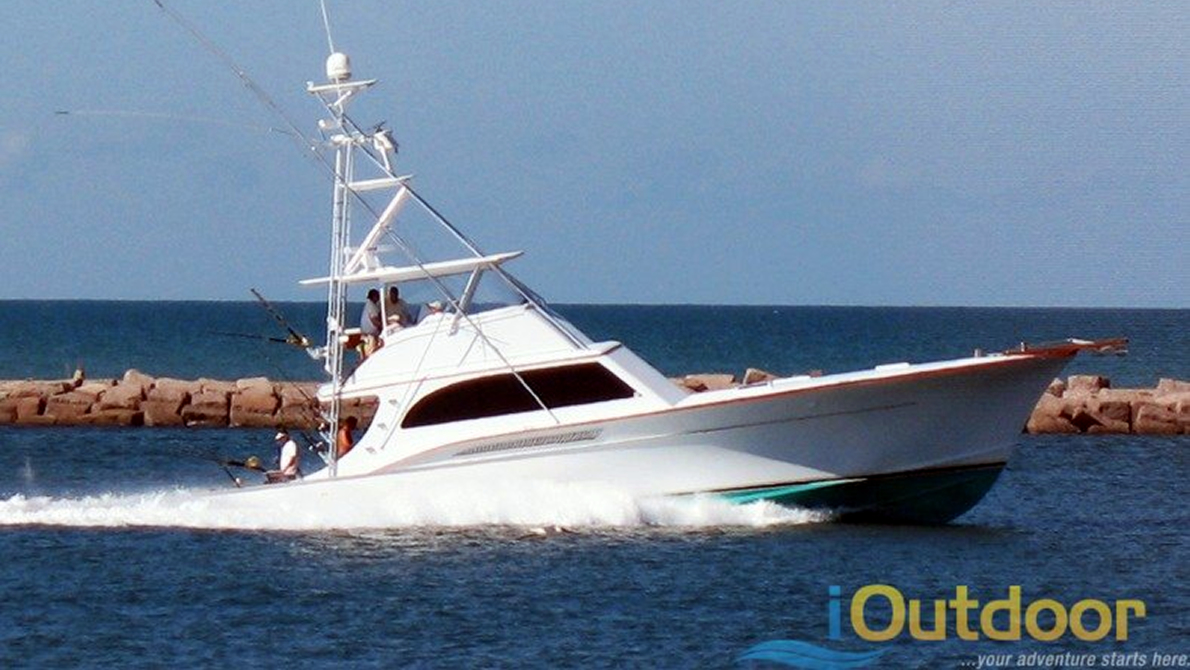
South Beach created swordfishing, and you can find some of the best swordfish anglers on the planet in this area of the country. If you’re interested in catching a fish with that “wow” factor that you can share with your buddies on social media, you’ll want to start fishing in South Beach Miami.
A few miles away from the shore, the water dips deeper, and the warmth from the Gulf Stream is what makes this the perfect environment for pelagic fish and certainly Swordfish. They’re active during the day and at night throughout most of the year, so expect to find them, the challenge is getting them into the boat.
Sailfish
Traveling a few extra miles out to the deep sea brings upon new challenges. Sailfish draw hundreds if not thousands of people to Miami each year to take on one of the greatest fishing challenges imaginable. They are the fastest fish around, and their incredible multi-colored sail real makes for an amazing fishing experience.
All the locals possess the best fishing spots in Miami, but they will tell you that kite fishing is the way to catch these beautiful creatures. It’s a strategy similar to trolling that requires you to skip the bait amongst the surface until you see the sail pop out of the water.
Fishing for these isn’t the kind of fishing where you leave your line out there and sit back and drink a beer, you need to keep your eyes on the water and pay attention to that sail
African Pompano
If you’re the kind of person who likes to stray off the beaten path and go for something a little different, African Pompano are available in Miami – but not in abundance. Many local anglers tell stories about how many of these they missed, but they’re never 100% sure until they pull them into the boat.
These incredible fish inhabit shipwrecks around 300 feet out, and they put up a fight, unlike any other. The reason these fish are so desirable is for their taste. They have thick fleshy meat, and they eat a very clean diet, so it makes them taste fresher than some of the other coastal varieties. Many anglers compare it to eating a steak.
Bass Fishing Miami
While so many people travel to Miami to take on everything the sea offers, an often forgotten treat happens inland in the canals and lakes that Dade County has to offer. Fishing Miami requires a “thinking outside the box” attitude. Grab your best bass fishing reel and rod and take a quick trip away from the salt spray with us.
Urban Canal Fishing for Peacock Bass
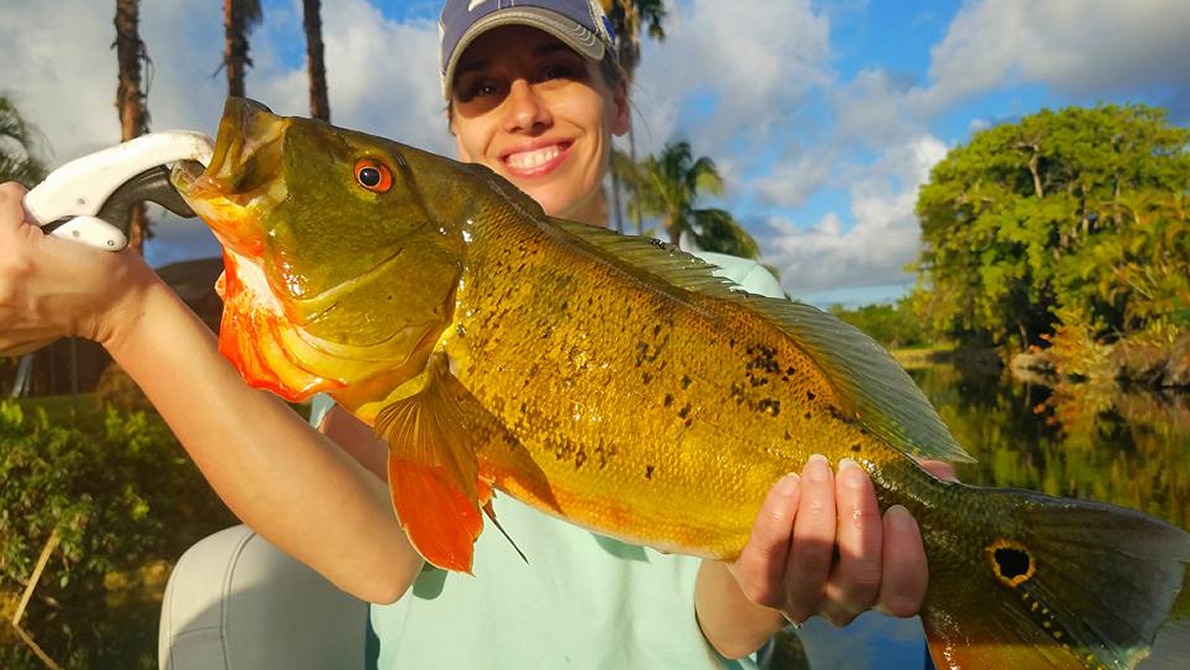
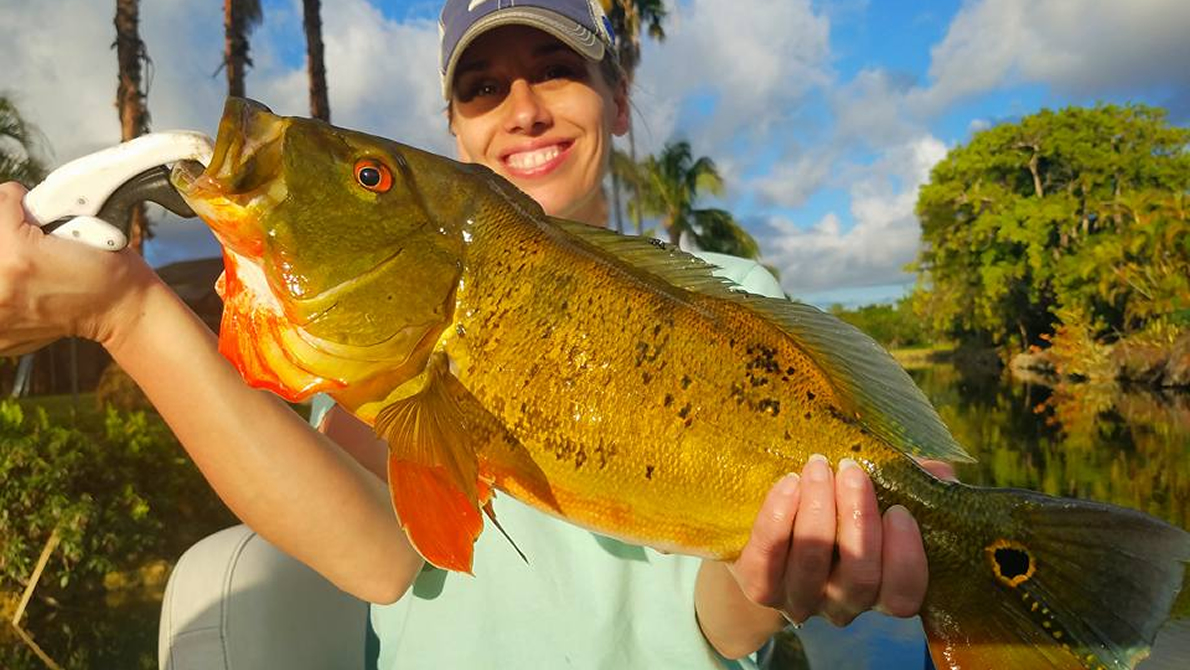
These are popular freshwater fish caught along the banks of many of the canals throughout South Florida. Many of the locals use a variety of different tackle ranging from live baitfish to artificial swimbaits and flies. Peacocks prefer live bait and most of the best lures used in catching largemouth bass, but the experts don’t recommend using plastic worms.
South Florida Largemouth Bass
Largemouth bass are a popular catch anywhere East of the Rockies, and that’s due to their incredible acrobatic fighting power. Locals recommend using plastic worms, jigs, and spinnerbaits when the weather is mild. You’ll have the most success during the fall and spring months when the heat isn’t too hot, and the coastal breeze is calmer.
Top Fishing Spots in Miami
There is no shortage of great places when fishing Miami, so let’s talk about specifics. When you visit, where are you going?
Biscayne Bay – If you’re chasing Tarpon inshore, this is where you want to go. You’ve got shallow waters, channels, and mangroves, and that makes Biscayne Bay the ideal environment for Tarpon. Best of all, you have a variety of options for how you want to fish. Cast from the shore, take out a kayak or explore on a boat.
Bache Shoal Reef – If you’re taking a boat off the shore, you’ll want to check out the wrecks around Bache Shoal. It’s a popular diving and snorkeling area so you’ll want to fish here when it’s not tourist season. Spear and kite fishing for Grouper, Snapper, and Sailfish is most popular.
Liberty Ship (O.L. Bodenhamer) – This is a sunken ship around 370 feet deep, and it offers some of the biggest game fishing available on the coast. It’s an artificial reef that draws a lot of attention and produces a large number of Sailfish and Swordfish all year long.
Miami Fishing Guide
So, you know what to catch and where to catch it, but how do you plan on getting your line in the water? You have a few different methods when fishing in Miami.
From the Boat
If you plan to get anywhere near anything like Tarpon, Swordfish, or Sailfish, you’ll need to take a boat out a couple of hundred feet. You’ll have some heavy gear, and you’ll likely need a sturdy boat to handle to fight and keep everyone safe.
The most affordable way to get the best offshore fishing experience in Miami is by joining a drift boat or party boat. You’ll have an opportunity to meet other people traveling through the area, and when everyone splits the cost, it’s much more affordable to fish Miami the right way.
From the Shore
Most people think you have to get out beyond the surf to catch fish in Miami, and that’s not true. With the many inshore fishing opportunities in canals and lakes, you can set up shop on the shore and catch plenty of Largemouth, Peacock, Snook, and Bonefish.
It’s worth mentioning that the heavy tourist industry has hurt many of the fishing opportunities here, and much of the canal and beach space is privately owned, so you can’t fish there. Just keep your eyes open for signs stating that.
Kayak Fishing
For a well-rounded experience, you could fish the canals with a kayak. There are even guided tours. Fishing this method allows you to get a workout in while targeting Snook and Redfish inshore. Of course, you can’t bring along as much gear, but the whole experience makes it worthwhile even if you don’t catch anything!
How to Charter a Boat in Miami
If you haven’t realized it by now, we’ll clear it up for you. Fishing in Miami is amazing, and there’s no shortage of incredible fishing opportunities for people of all ages and skill levels. The best way to get the whole experience is through using a guided fishing charter. The local captains will help ensure you get a full taste of what South Beach waters have to offer.
Best of all, chartering a boat in Miami isn’t as expensive as you think. You can take your whole family on the water, and the guides will take their years of experience fishing these waters and put you on the best fishing spots in Miami to work.
They’ll take you right where the fish are, hook you up with the necessary gear and tackle, and many even guarantee you catch something before heading back to the dock.
With the diversity of fish, abundant opportunities, and jet blue sky, it’s no wonder why people are fishing Miami all year long.


Ft Myers Fishing, Flats Fishing, Key West Fishing, Tarpon Fishing
Why fish with iOutdoors?
Anglers fishing with iOutdoor get action on our inshore fishing charters could become a Snook Finaddict. We fish out of many ports, in the Florida Keys, we catch and released Spanish mackerel, bluefish, jacks, and Sea Trout. Other great places are Miami Biscayne Bay. They can be caught on flies, topwater plugs, DOA Deadly Combos and CAL jigs with shad tails.
Customers come all the way from NH, Colorado, Texas, and others. Biscayne Bay is cool and starting to warm up fast. They catch and released Spanish mackerel, blues, jacks, and trout. Taken on Ultra Hair Clouser flies and CAL jigs with shad tails in Spring.
Places to Catch and Not just Visit
We fished with friends, in his home waters of Estero Bay. Capt. John knows his waters well and when conditions are right, fishing can be awesome. During a full moon, we targeted tailing Redfish on a negative low tide and despite breezy conditions, they tailed well. We had lots of shots at tailing reds, hooked 3 and landed 2, most were caught on DOA crab. After seeing Capt John big red pounce on a DOA crab with no hesitation, we will be throwing that lure more often!
iOutdoors fished my friend, Jim & Jonnie from Stuart, FL. They fished potholes and shallow grass flats from north St Lucie River and caught and released a few sea trout on poping coaks. Very surprised to see an adult coyote, stalking birds and digging shellfish out of the bottom about a ½ mile from shore on an exposed flat. We often see raccoons prowling flats or shorelines but this is the first time. I’ve never seen a coyote on saltwater shorelines.
Tommy and his son Jeffery, from NC, fished Jupiter Inlet with us on Friday. They had good action catching and releasing trout, Snook, Redfish, and blues on DOA Deadly Combos. The best action was with Snook to 15-pounds on topwater plugs in 12’-13’ foot of water. We got in on the action, catching and releasing five Snook in the 15-pound range all in the same area. It’s so much fun to watch schools of Snook blow up on bait and hit plugs!
In conclusion
Anglers fishing with iOutdoor get action fishing deep grass flats of Biscayne Bay for trout, Spanish mackerel, blues, and more should be a good inshore option. Big trout are also moving into shallow water in the Everglades where you may find Snook along with Reds in wood or on the edges of bars when the tide is high and low. Look for tripletail and sea trout when conditions are good.
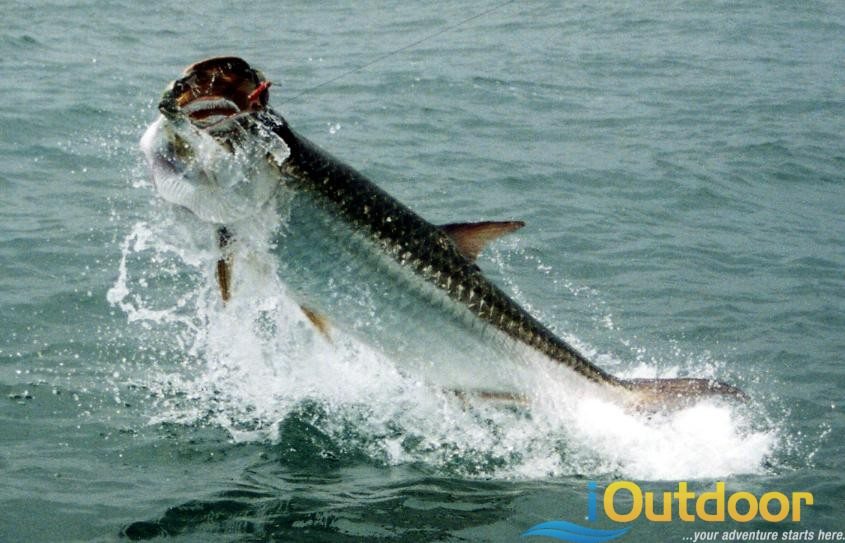
Tarpon Fishing, iOutdoors Blog
Tarpon Fishing in Fl, the Best Kept Secrets
Prime Location for Tarpon Fishing
Being able to go Tarpon fishing in Fl is one of the greatest feats an angler can ever achieve or boast about with fellow anglers. It isn’t just about using the right technique for tarpon fishing. Sometimes, it is also all about fishing in the right location, and the timing. For an even greater chance of catching tarpons or what is known as the silver king, the best place anglers can go to is the waters of Florida.
A great aspect of Florida tarpon fishing is that, depending on the chosen method, even a rookie can land a 100+ plus-pounder. This can be accomplished by using live bait on a circle hook in a channel where Tarpon is most aggressive. Why some would say live-bait fishing is the easy way, it does take the necessary additional skills to catch one on artificial lures. And maybe even an additional step in talent to weaponize yourself with a fly rod and tackle the Siler King. Why all three methods are home to specific locations and anglers’ passion, Florida is still the place to concur with your goal in the method you prefer.
In this article, we going to cover the best Tarpon fishing seasons in Florida and how they vary from one area of the state to another. Discuss the habitat and size of the fish, and the best time of day (day vs night). The bottom line is that you can locate Tarpon almost anywhere in Florida in the right month of the year.
Where does Tarpon Hide in Florida?
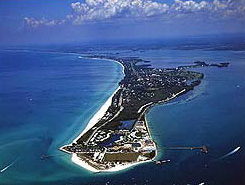
There is one place in Florida where a typical 80-day season can produce an average of 5,000 Tarpons landed. This fishing location is considered the world’s best fishing Tarpon hole. The key part of this location referred to here is Boca Grande Pass. The Boca Grande Pass is located on the Florida West Coast, just at the mouth of Charlotte Harbor. Charlotte Harbor is even renowned for being one of the nation’s largest underdeveloped estuaries. It has miles of unspoiled serenity and world-renowned fishing, especially Tarpon fishing.
Location Theory
It is unknown why Tarpon chooses to migrate to Boca Grande Pass. There are even many theories surrounding it. In reality, Boca Grande Pass is one of the deepest natural passes in Florida. Also, it is a known fact that Tarpons like to stay in deep waters. The depth of Boca Grande can be as deep as 80 feet. It is also the only major outlet of Charlotte Harbor that is fed by two major rivers namely, the Peace and the Myakka.
Boca Grande Pass Attraction
The main attraction of fishing in Boca Grande Pass is the “hill tide”. This is a wonderful event in nature that no tarpon enthusiast should ever miss. During the spring tides of the full and new moon, there are millions of “pass crabs” that get washed out from Charlotte Harbor to spawn. It is during this time that anglers can find a feeding frenzy with giant tarpon getting intoxicated by crabs. Nowadays, however, crab runs are more difficult to predict. In the event that anglers find themselves in luck and happen to be in one. It’s not uncommon to get up to 4 hookups on one fishing charter.
Last but not the least, fishing in the pass is regulated and there are many rules that abound it. It is then recommended that novices and angling experts hire a fishing guide prior to fishing in Boca Grande Pass by themselves to get experience and understand the dos and don’t of fishing the pass.
Tarpon Fishing Florida Keys
The Florida Keys are a vast and troublesome place for some anglers to fine Tarpon, know that is the same for everyone. You need to concentrate your focus on the migration, then the species itself. Here’s information on the location to better understand the Tarpon fishing in the Florida Keys.
Upper and Middle Keys
There is a large population of Tarpon around Channel Bridges, Tom’s Harbor, Seven Mile Bridge, and Long Key. Also, look for them in the flats near Islamorada Key. Additionally, Buchanan Bank in Marathon near Jack Banks are all considered good places to fish. While present near the Keys year-round, peak season runs from March until July. During springtime, Tarpon can mostly be located on the Florida Bayside. But as the year progresses, they start moving to the Atlantic side looking for deep water.
Lower Keys
The best locations are always Marquesas Keys, Harbor of Key West Harbor, and the famous Bahia Honda Bridge. Starting sometime in May, lasting through the middle of July is the best month to focus on the bridges that hold Tarpon. To catch more resident fish and exceptions to the rule, Key West Harbor has feeding Tarpon January through March every year. One of the places in the Keys that holds big Tarpon and in big numbers is Marquesas Keys. Simply because it is uninhabited, the Islands are located South of Key West and are only accessible by boat. The Bahia Honda Bridge is a commonplace also to find tarpons, this bridge is used to connect Spanish Harbor and Bahia Honda Key. These waters are surrounded by Tarpon all year long, because of the residential Tarpon and the Migration of tarpon.
Biscayne Bay Tarpon Fishing
While located just north of the Florida Keys, Miami is a big part of the Florida Tarpon migration pattern. Because of its vast port and inlets south of Biscayne Bay, it provides a fabulous location for Tarpon to migrate and fee on their way down the coast of Florida. Specifically, in the Government Cut (between Miami Beach and Fisher Island) and Port Everglades, look for this migration of tarpon to show up from February and hand around to June.
Other Florida Tarpon Fishing Locations
To help eliminate some water if at all possible, any city in Florida with a Port can be moved up the list of great Tarpon locations to visit. Many of these are found throughout Florida’s Atlantic coast, with ports and inlets offering great Tarpon fishing. This simply provides a freeway of traffic for Tarpon to come in and go as they wish. Our job as anglers is to intercept them in their travels when stopping for a meal. Other great Tarpon cities in Florida are Stuart, New Smyrna, St Augustine of course Jacksonville all on the east coast. Marco Island and Naples have Tarpon almost all year round. Skipping Boca Grande because we covered that about, Clearwater, St Petersburg, and Tampa all provide some of the finest Tarpon fishing in Florida during prime times.
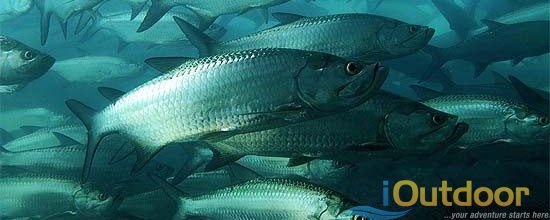
Most Talked about part of Tarpon Fishing
So you have a Tarpon securely hooked now what? Tarpons when hooked, are known for their somersaults, high jumps and massive head shakes. The signature move known through the industry for fishing Tarpon is to “bow to the King.” What is that, as the Tarpon is about to leap out of the water, lower your rod tip and point your rod outwards towards the fish to provide the line slack. There is no stopping a Tarpon of any size once hooked. There is no rushing or horsing it to the boat, no matter the line size.
Drags on reels were made because of fish like these, make sure to do everything properly. The drag should be well set BEFORE you hooked up because things will happen way too quickly to adjust drag during the fight. The drag on your reel will not need help if set right. Once you realize the drag is not holding or it is set to lose. You can attempt to hold your fingers on the spool to slow the pace, but not recommended. Just do not touch the line, or press the line against your rod. This will instantly create additional friction and resistance and cause the fish to get off.
What about the fight?
The only way to properly fight a Tarpon is to battle them till they get exhausted. You will notice a considerable difference in the run and pulling and they usually start to roll on their side. Because of being one of the top sports fish in the world, there are rules to landing them. You should almost always use a lip gaff on bigger Tarpon and a Boga Grip on small ones. This will secure the fish by its lower lip and the fish will be held while the hook is removed or if needed clips the leader.
Many things have changed over the years with tarpon fishing, the advent of circle hooks, and the policy of not taking or lifting the fish out of the water to take pictures. This is why you see so many pictures these days with the angler in the water because of good conservation practices. Circle hooks have added much better landing and release of Tarpon that are caught. Records show the release rate has more than doubled in the past decade because of circle hooks.
Different Techniques for Tarpon Catching
Artificial Lures
Here are a few proven productive lures, that iOutdoor Charter captains have proven to be effective. Keep in mind, that artificial lures are best used in a given scenario. You will use a much lighter line than you will with live bait. The main reason, the lighter line will be used for casting distance when sighting fish. You are almost always going to get the best casting distance using a spinning reel when using lures and plugs.
The spinning reel will also help with controlling the retrieve of the lure action and speed. Additionally, taking up the slack when a fish hits and comes at you or maybe just work lures in current, both are vital and accomplished better with spinning equipment.
Maybe more important than the lure itself, could be the weight. When we are referring to the weight of the lure, this could be accomplished by hook size or adding lead. When fishing lures like jigs, be sure to think about the proper weight for the area you are fishing. Do you want to be on the bottom, middle, or top of the water column? This is going to be determined by where the fish are feeding. There are many laws regarding which lures, hooks, and handling of fish, and they are all set by the FWC you read these guidelines before going fishing.
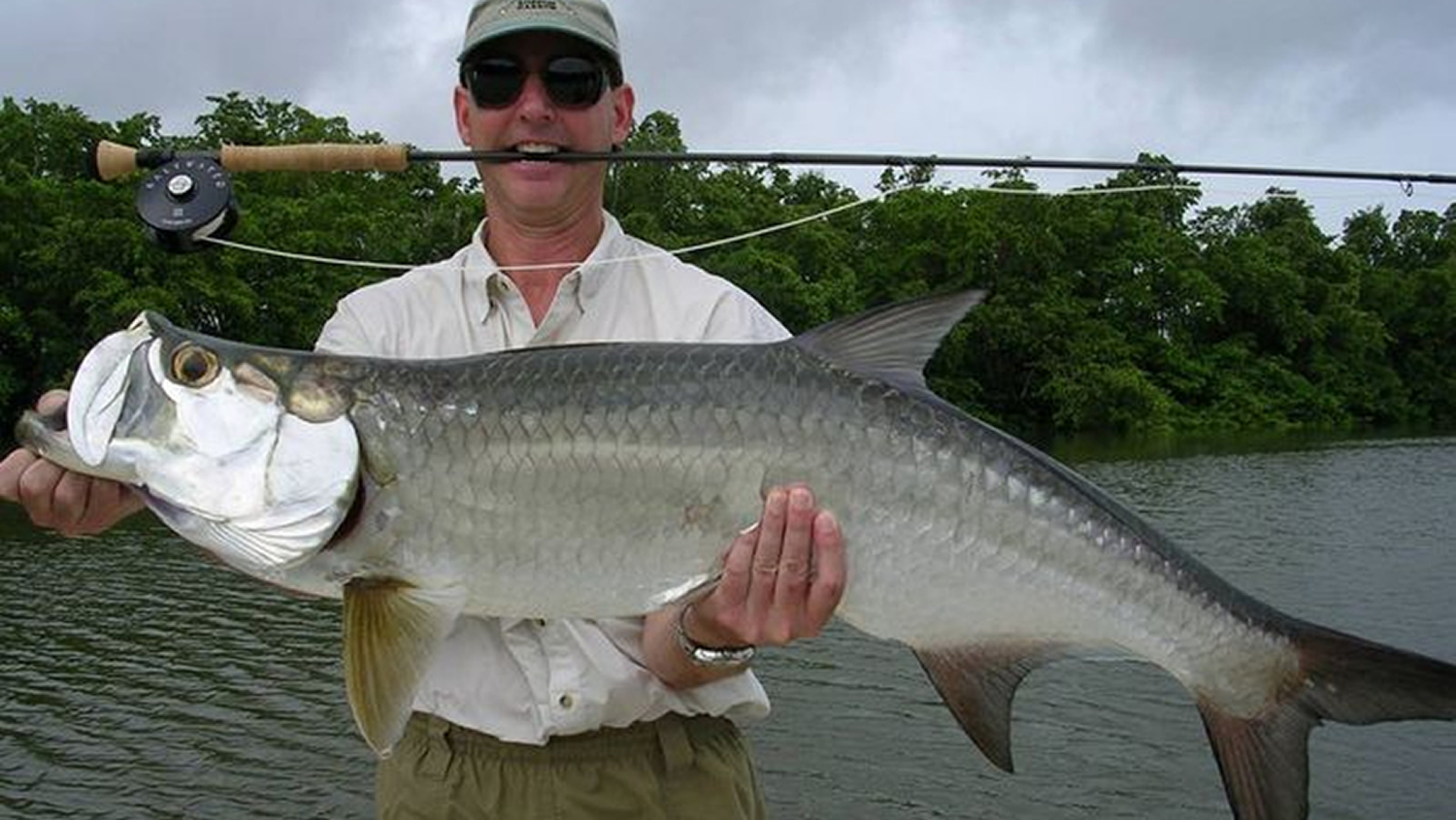
Fly Fishing
Fly fishing for Tarpon is a whole different animal completely. So let’s start with the basics. The color of your fly should reflect the color of the bottom of the area you are fishing. Most Tarpon flies used are 3”-5” in length. A number 2/0 hook for smaller tarpon and up to 5/0 for large fish. Commonly used by fly anglers is a streamer that has good contrast with the ocean bottom. Standard, orange, yellow, and red patterns are effective over sandy bottoms. For those darker bottoms, we like gray, blue, and green are more productive. When the mullet run is going on and Tarpons are seen feeding, match the hatch. Based on the size of the mullet, maybe 6”-8” match it in size. Common colors for mullet flies are white or lite gray flies with dark stripes to match the look of the bait.
When fly fishing canals and rivers, and bridges it’s common to use a 5-7 weight fly rod. A minimum size tippet of 12lb up to 20 lb. Bridges are known as a favorite tarpon spot, but when fly fishing tries to avoid these spots. Typically the fly rod is just no match for the fish with so many obstacles to use against you. In some cases, maybe when on a boat and you can get the fish away from the piling it’s doable. In general, not a good technique for fly fishing!
Live Bait Fishing
These are some of the common live bait used but are very specific to location, time of year, and what they are feeding on at the time of fishing. Mullet is a standard staple and the most productive live bait. But big horse shrimp, pinfish, pilchards, and specialty crabs on a circle hook often land these fish with success. Live-bait fishing is an art just like artificial or even fly fishing.
Knowing when to free the bait, or offer it up on a float to keep it in the center of the water column. All techniques that need to be tried are based on tides and currents. Strikes on live bait can be the most violent of any method. Dead bait or cut baits can be very productive at times when the fish are feeding near the bottom and are less active.
Conclusion
Hope this article helps you on your next tarpon fishing trip, below find a summary.

iOutdoors Blog, Backcountry Fishing, Bonefish Fishing, Inshore Fishing, Marathon Fishing, Tarpon Fishing
July Marathon Backcountry Fishing
Are you wondering what to explore when visiting the Florida Keys? The Florida Keys, especially the island community of Marathon, FL is one of the best destinations to visit. It is a 10-mile-long hardcore family-oriented destination. This island community offers you some of the best fishing in the Florida Keys. Hop on board for a July Marathon Inshore Fishing Charter of a lifetime with our local experts.
Marathon Backcountry Fishing is by far one of the most unique methods to experience the Florida Keys. Many travel to the Keys and strictly think either Tarpon or Deep Sea Fishing. We are here to inform you that Backcountry and Inshore Fishing has a wide range of offerings. You can catch a variety of different species including Tarpon, Permit, Bonefish, Snook, Trout, and so much more.
Marathon Florida fishing species tend to be seasonal with changes in conditions. One of the best ways to experience the Florida Keys is with a local expert. They are integral to the success you have on the water. Captain Robert Horachek is an expert in Marathon Backcountry Fishing and Inshore Fishing. He can tailor to your needs and provide you with the fishing adventure you are after.
Check out this July Backcountry Fishing Report out of Marathon, FL:
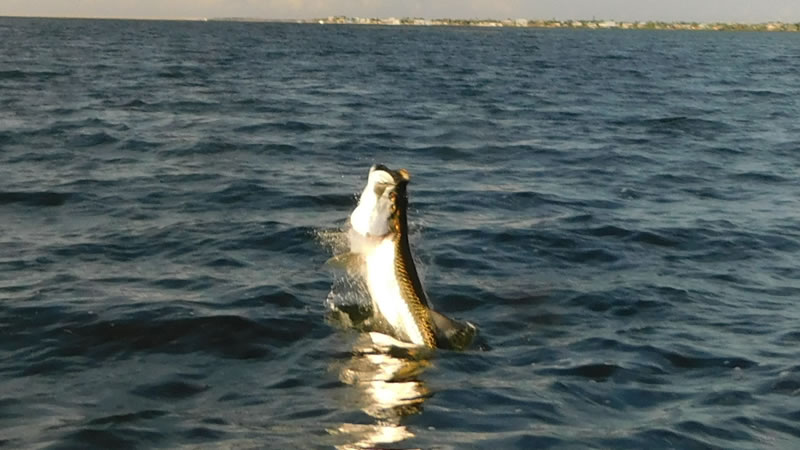 “Recently I had the opportunity to show Scott and his son Chad a great time on the water for a full day Charter here in the Florida Keys. Their plan was just wanting to get out on the water and catch fish, have a good time, and possibly have some for dinner. I told them the game plan would be getting out early in the morning at first light due to the high water temps in the afternoon and getting on a good early morning Tarpon Bite.
The main Tarpon migration season that occurs here in the Keys April, May, and June. Our first spot we stopped at was one of the local bridges. The first 30 minutes were quiet as I expected and told the guys that we would spend at least another 40 minutes to see if we would get a bite.
15 minutes later we were hooked up with a big Tarpon estimated to be a 100+ lbs. The fish itself gives us some really good photos of the fish coming out of the water. After about a 30 min battle, The fish wore through the fluorocarbon leader.
At that point, the tide went slack at the first spot so we made a run to a different spot in order to catch the end of the tide on the edge of a channel. We deployed some chum out into the water which shortly after we had some nice Mangrove Snapper behind the boat. Usually, you would most likely find snapper out on the reef this time of year getting ready to spawn.
In this case, we ended up 4 keepers sized Mangrove Snapper and a Yellow Jack which was enough for dinner as most of the snapper were undersized and released without harm. While fishing at that same spot, Scott and Chad caught 2 nice Tarpon with one fish estimated at 40lbs. 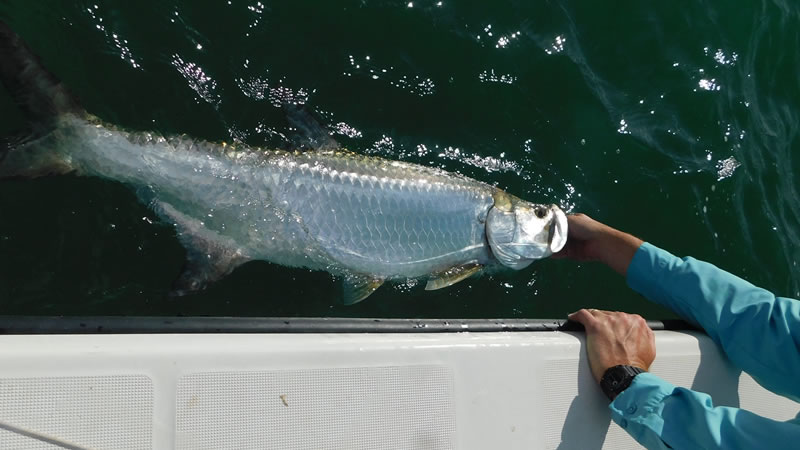
Lemon Sharks showed up shortly after the Tarpon as Scott and Chad hooked with a few of those. Prior to making a move, Scott and Chad were getting ready have something eat as one of them mentioning a “banana” was in their bag. I told them that bananas can be bad luck if you brought one out on the boat. They found it to be interesting I brought as explained to them that it can be a bad omen as most captains would say.
The next plan would be to target Bonefish and Permit. One of my specialties is that I put a lot of time into catching Bonefish in which the fishing has been really good lately and will continue all the way through the fall months.
Initially, it slow as I was waiting for the tide to get higher in the stage. Then we started seeing some fish as we bumped into them without getting a good shot. Shortly after we made a move close by where I figured we may catch one or two bones. Sure enough, we caught one Bonefish, 5 Jack Crevalles and a few small Barracudas.
We ended the trip shortly after as the afternoon water temps were getting hot and cloud clover which was obstructing our visibility for sight fishing. Despite all that, it was a great day for having a banana on the boat!” – Captain Robert Horachek 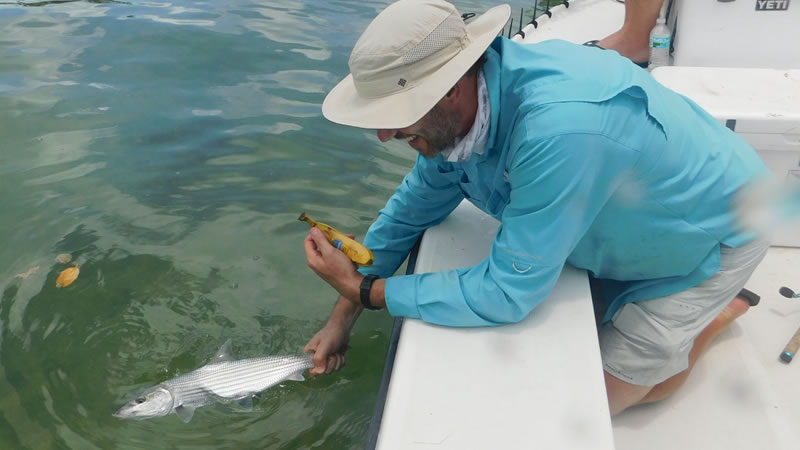
The Florida Keys is your destination for some of the best outdoor adventures in Florida. Our local experts will work hard to get you on the fish of a lifetime. We cater to you and what you are looking for. Sit back and enjoy learning more about the unique culture of what has built the Keys and more specifically Marathon, FL while Saltwater Fishing. While doing so, you will also get the chance at hooking into some beautiful hard-fighting fish. We look forward to seeing you on the water next time!
Your Adventure Starts Today while Visiting Florida.
If you enjoyed this post about Florida Fishing, you might also enjoy our Fishing Blogs.
Don’t forget to follow us on Facebook, YouTube, Twitter and Instagram.
[fusion_builder_row_inner][fusion_builder_column_inner type=”1_2″ layout=”1_2″ last=”no” min_height=”” hover_type=”none” link=”” border_position=”all”][fusion_button link=”https://ioutdoor.com/fishing/backcountry-fishing/florida/marathon/” text_transform=”uppercase” title=”VIEW AVAILABILITY” target=”_self” link_attributes=”BOOKING” alignment=”center” modal=”” hide_on_mobile=”small-visibility,medium-visibility,large-visibility” class=”” id=”” color=”blue” button_gradient_top_color=”” button_gradient_bottom_color=”” button_gradient_top_color_hover=”” button_gradient_bottom_color_hover=”” accent_color=”green” accent_hover_color=”” type=”” bevel_color=”” border_width=”3px” size=”small” stretch=”yes” shape=”pill” icon=”fa-ticket-alt fas” icon_position=”left” icon_divider=”no” animation_type=”flash” animation_direction=”left” animation_speed=”0.3″ animation_offset=”top-mid-of-view”]VIEW AVAILABILITY[/fusion_button]

iOutdoors Blog, Boca Grande Fishing, Inshore Fishing, Redfish Fishing, Snook Fishing, Tarpon Fishing
June Boca Grande Fishing
Are you traveling to Southwest Florida looking for things to do? Many travelers come to visit this beautiful coast looking to soak up the sun. What they don’t realize is that there is so much more you can experience. Boca Grande, FL is located on the beautiful island of Gasparilla along the Gulf of Mexico where the outdoor activities are endless. Enjoy some June Boca Grande Fishing on your next vacation to Southwest Florida.
Boca Grande is a true hidden gem on the Southwest coast. Whether you are staying at a local resort or a hotel, make sure you expand the horizon and explore the endless water activities. Fishing has to be at the top of all things to do here in Boca Grande. Several barrier islands create a massive ecosystem for travelers to experience.
One of the most important aspects of exploring this incredible destination is a local expert. Local knowledge provides the best method to help get you on the experience you are after. When you are visiting, you have the option to just enjoy a day on the water or catch fish. Our captains and experts come equipped to satisfy your needs.
June is a fantastic month to come explore Boca Grande. June Boca Grande Fishing is perfect for the kids, families, loved ones, and the seasoned angler. When you adventure out on a Boca Grande Inshore Fishing Charter, just let your expert know what style of fishing you are after. Every captain has the ability to show you a variety of different ways to catch your targeted species.
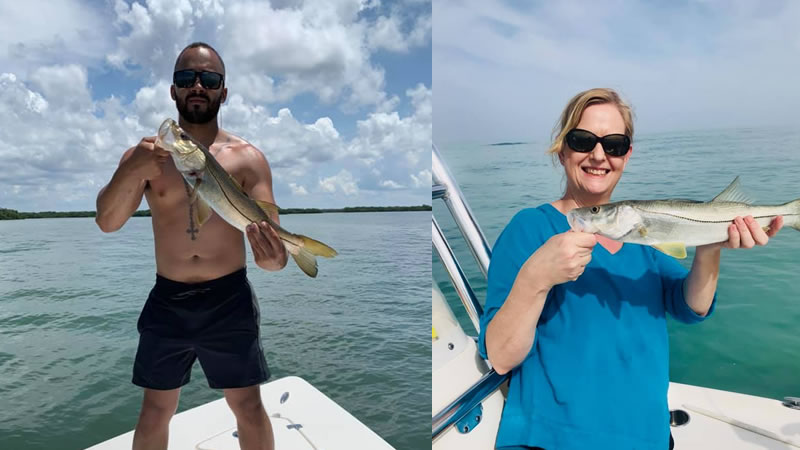 Boca Grande offers every style of fishing during these warm months. June is a great time to keep the family busy. You can get on constant action from a wide variety of species or focus in on that dream fish. Many anglers and travelers come to Boca Grande specifically for Tarpon or the Silver King. This mighty fish will give you a fight you will never forget. Boca Grande is known for its Tarpon fishing but there is so much more you can explore. Drop a live crab in front of a rolling tarpon and it will be game on!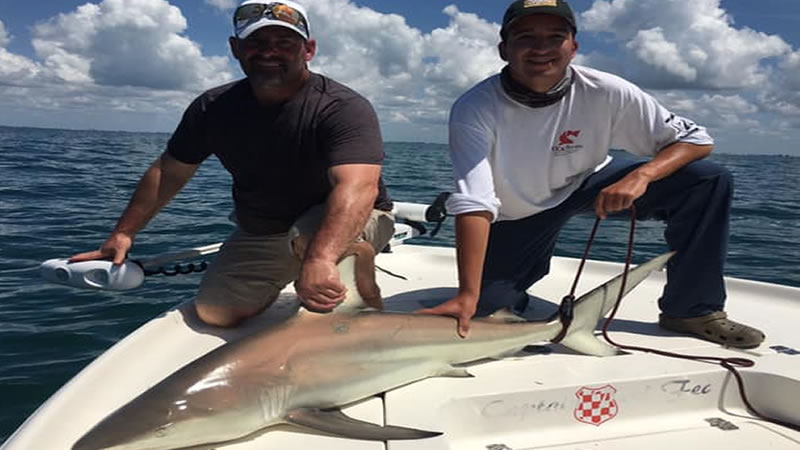
Professionals like Captain Paul Fec are seasoned with years of experience in this beautiful destination. Captain Paul can show you around and help you catch about every species in Boca Grande. If you are looking to stay close to shore and in the backwater, enjoy catching Snook, Redfish, Mangrove Snappers, and Jack Crevalle. These species feed on shrimp, pilchards, squid, and threadfins.
When it comes to inshore fishing with the family, live bait is the best method to catch all the species. Luckily, Captain Paul will get your arms ready and warm before your trip truly begins. One of the best parts about inshore fishing is catching your own bait with sabiki rigs. After getting a live-well filled for a day of fishing, drop your bait near a mangrove line and be patient. The mangrove lines are filled with fish looking to come out and ambush your bait. Several families and travelers this month enjoyed landing all the inshore species you can catch.
You can also push a little bit further out west into the Gulf of Mexico. Several miles out you will find shallow water reefs and wrecks. On this structure on the bottom, you can find bigger Snappers and Grouper. This structure provides shelter and builds an ecosystem for the fish to live. When this occurs, the ultimate predator is always looming.
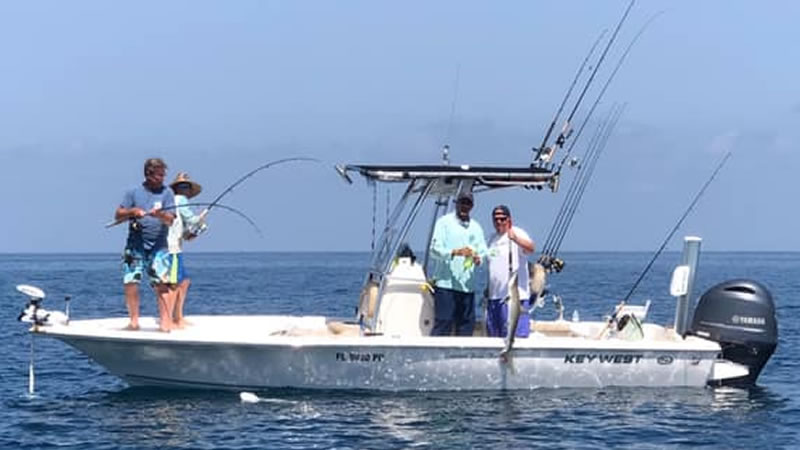 Once you set up a chum slick with a chum bag or chunks, the sharks tend to appear. If you are someone that wants to catch a hard-fighting species and wants to sweat this time of year, Shark fishing is a blast. Get the rod doubled over and enjoy the fight!
Another massive catch you can enjoy this time of year is the Goliath Grouper. Once the system gets fired up on your reef, you can drop some bigger baits on the bottom which can lead to a power driving fight from these monster groupers.
Every trip you embark on, you will always be in-sight of land. Never worry about sea-sickness on our inshore fishing trips. Captain Paul will make sure to take you out to waters you are comfortable with. When you embark on our fishing charters, you can always feel free to let the captain know how far you want to go out and they will adjust to get you on fish the way you want.
When you are traveling to Boca Grande, FL, you have many options to get in the outdoors. Fishing may be the highlight but is not the only adventure you can embark on. Captain Paul also offers
2-hour sunset cruises. Dolphin and manatees run wild in the waters of Boca Grande along Manasota Key or Lemon Bay. This sunset cruise allows you to see all the wildlife of Boca Grande including Osprey and Eagles. It also allows you to get out on a private beach and take pictures with the sun dropping in the background. A sunset cruise can be the perfect way to end a great day of exploring Boca Grande! 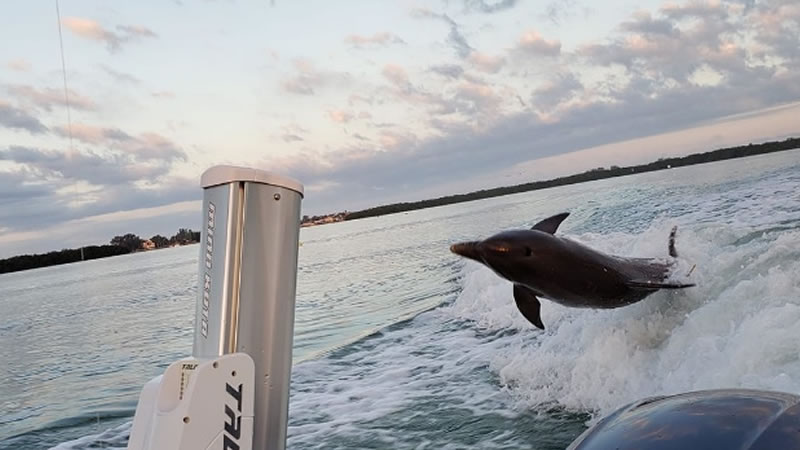
June Boca Grande Fishing is by far the best way to experience this beautiful destination. Luckily, our local experts have the ability to mold and mend the way you fish based off your needs. If you are looking for the best in the area, you do not have to look any further. We look forward to getting you out on the water here in Boca Grande on your next vacation.
Your Adventure Starts Today while Visiting Florida.
If you enjoyed this post about Florida Fishing, you might also enjoy our Fishing Blogs.
Don’t forget to follow us on Facebook, YouTube, Twitter and Instagram.
[fusion_builder_row_inner][fusion_builder_column_inner type=”1_2″ layout=”1_2″ last=”no” min_height=”” hover_type=”none” link=”” border_position=”all”][fusion_button link=”https://ioutdoor.com/fishing/inshore-fishing/florida/boca-grande/” text_transform=”uppercase” title=”VIEW AVAILABILITY” target=”_self” link_attributes=”BOOKING” alignment=”center” modal=”” hide_on_mobile=”small-visibility,medium-visibility,large-visibility” class=”” id=”” color=”blue” button_gradient_top_color=”” button_gradient_bottom_color=”” button_gradient_top_color_hover=”” button_gradient_bottom_color_hover=”” accent_color=”green” accent_hover_color=”” type=”” bevel_color=”” border_width=”3px” size=”small” stretch=”yes” shape=”pill” icon=”fa-ticket-alt fas” icon_position=”left” icon_divider=”no” animation_type=”flash” animation_direction=”left” animation_speed=”0.3″ animation_offset=”top-mid-of-view”]VIEW AVAILABILITY[/fusion_button]

