Offshore Fishing, Dolphin Fishing, iOutdoors Blog, Sport Fishing, Wahoo fishing, Water Sports, Wreck Fishing
Port Canaveral Offshore Trolling
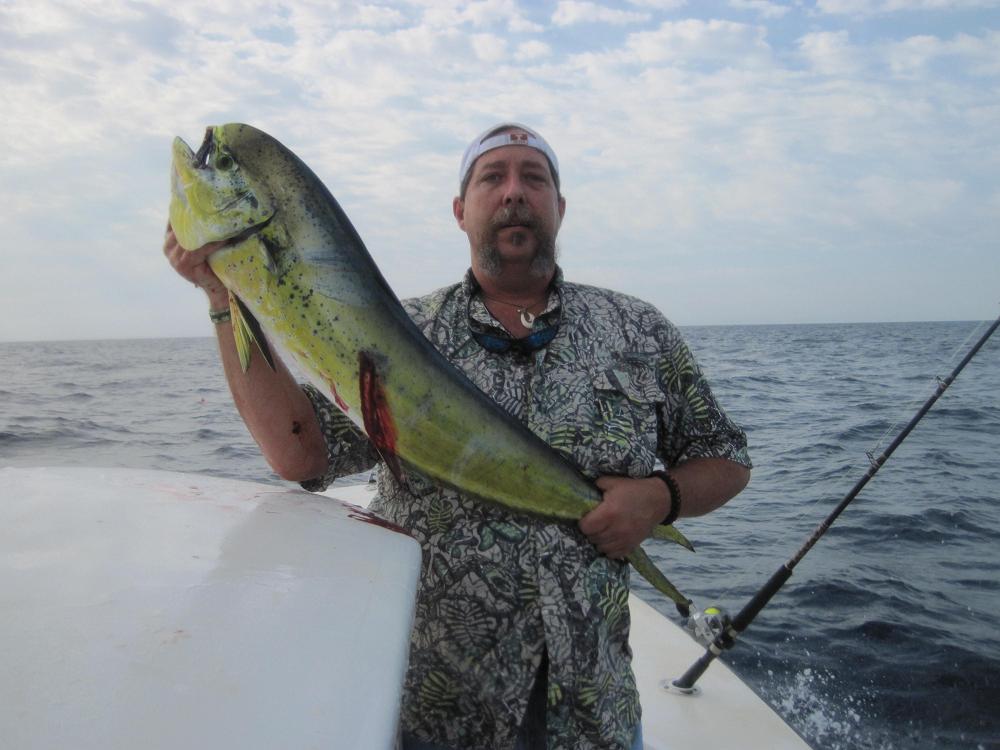
Great weather for fishing. West winds are starting to stack up some weeds offshore, and they proved to be somewhat fishy this trip. NE of the weather buoy some tightly scattered weeds proved to be just what the icebox needed. We started around the perimeter first, and the results came slowly, but good. First fish in was a 15lb Mahi. Like the last few weeks of fishing, these anglers had never caught a “Dolphin”, and made it the target species of the trip. No company with this catch, so lines back to work.
Client David Bunch and his friend were traveling from Oklahoma to adventure out on a Cape Canaveral Offshore Fishing Charter with iOutdoor. They were in-store for an amazing day of fishing with great fish in the boat. You never know what to expect when Port Canaveral Offshore Trolling!

Another half hour and the line goes off again. It did not seem too big till the angler put some bend in the rod, then a couple of hundred yards of line peeled. This fish was not a jumper, but still, we waited till we saw the colors to know what we had. It took a while with our Dolphin rigs to finally work it to the boat, but the Blue stripes was a very welcome sight. Wahoo in the boat. This 50lb fish made the day for these guys, and we still had time to fish.
Another pass around the area with no results, so we decided to cut through the weed field. A little time passed, and a lot of cleaning fouled lines of weed, but another hookup. Another Mahi-Mahi was on the line, dragging weeds with it. As we got it near the boat we saw it had company. The second fish did not take the other lines, so a pitch rod went to work. It looked, it followed, but nada. Other offerings were put in front of it but it turned its nose up at all we offered and eventually made its way off. We sent
lines back out, working the weed field some more with no more action while Port Canaveral Offshore Trolling.
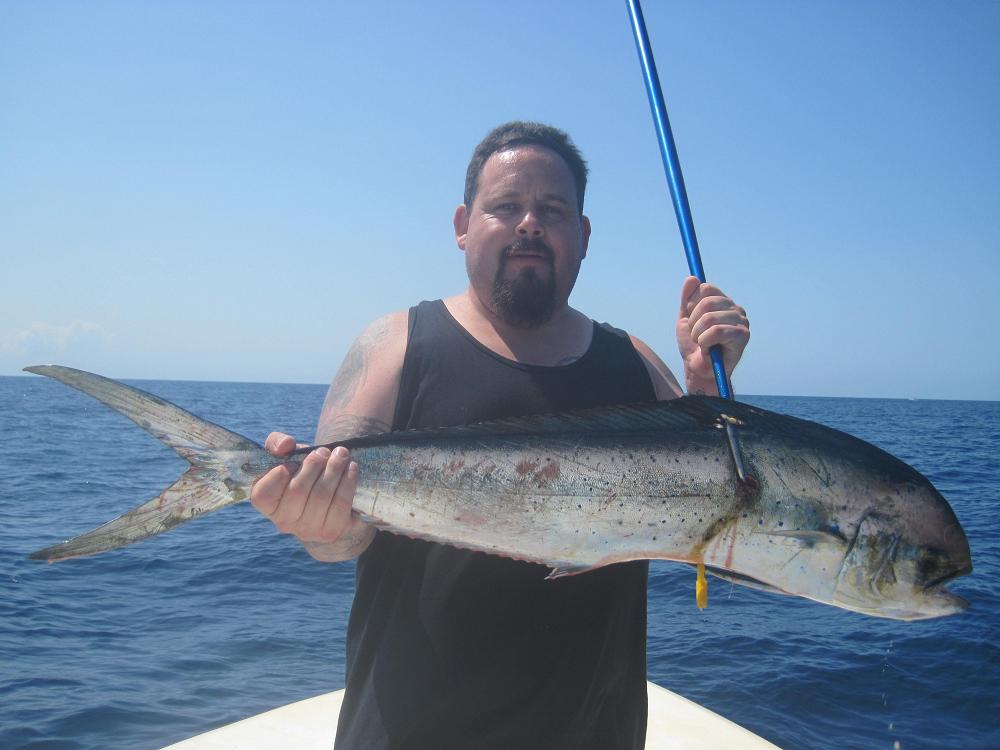
Finally, we headed to 8A to see if we could pick up a King or two to make a Slam. One line down, another out the back, and into slow gear we went. 20 minutes into the run, the downrigger released, and drag went out. This fish came to the surface and went airborne. A nice 20 lb bull Mahi was on the line. We worked it to the boat, and about a foot short of gaff range it decided it no longer wanted to play the game and unhooked itself. Big smiles were on the anglers faces despite the loss of this fish. With lobster red sunburnt skin, they were ready to return to port and clean fish.
Your Adventure Starts Today while Visiting Florida.
If you enjoyed this post about Saltwater Fishing, you might also enjoy our Fishing Blogs.
Don’t forget to follow us on Facebook, YouTube, Twitter and Instagram.

Water Sports, Charter Head Boat, Inshore Fishing, iOutdoors Blog, Key West Fishing, Miami Beach Fishing, Offshore Fishing, Party Boat Fishing, Sport Fishing, Wreck Fishing
SAFETY AT SEA AND YOUR CHARTER.
Charter Boat laws:
Operating a Charter Fishing operation requires more than just a captain and a boat. The Captain must hold a current USCG license with homeland security TWIC card. To be a saltwater Fishing Guide in Florida, you must also comply with U.S. Coast Guard (USCG) requirements. The U.S. Coast Guard (USGC) requires all operators of for-hire vessels to have a Captain license. Charter vessels must also be commercially registered. Charter, headboat and saltwater fishing guide operations must have an FWC charter captain or boat license to cover their passengers, who are not required to hold a recreational saltwater fishing license.
This license allows the captain and vessel to engage in charter fishing, whale watching, SCUBA diving, and tour cruises. This license is limited to near coastal waters only not more than 100 miles offshore and is not valid for international voyages. He must be enrolled in a random drug testing program, and carry a current first aid card. The boat must meet USCG – UPV standards (for 6 or less guest). There are many additional safety items required on a charter boat than a recreational boat. Trash and pollution place-cards are required onboard, as well as an emergency plan. Coast Pilot, Tide Charts and Light List for the waters operated are required onboard. Type 1 PFD’s with a whistle, lightened reflective tape are required for everyone on board. A life-ring is also required. This and the PFD’s are required to include either the boats name or registration numbers. Though inspections are not required, it is best if it is done to ensure compliance.
A state fishing license must be provided for all guest fishing on the boat. Federal (NOAA) Fishing Permits are required if the boat will engage in any fishing activity past state lines (3 miles Atlantic – 9 miles Gulf). Although VHF’s nor GPS locators are not required, they should be considered as a very important safety equipment that should be on every boat. Properly licensed Captains and charter operations spend a good deal of money to be so, and will not mind showing these required licenses and permits. If a charter operator will not show you these, then it may be best to look elsewhere.
Always make sure your boat and captain has these safety items on board:
-
- Working radio.
- A correctly fitting life preserver for each passenger.
- Signaling devices both visual and audible such as flairs, whistle and/or hand held air horn.
- Anchor.
- Some type of shade.
- Plenty of fresh water.
- Fire extinguisher.
- A throw-able flotation device.
- First aid kit.
You can do your part by:
-
- Wearing proper clothing for a day out in the elements.
- Using alcoholic beverages moderately.
- Following the instructions of the captain, guide or mate.
- Getting plenty of sleep the night before and staying hydrated.
- Wear sunscreen and a hat. The Florida sun can be brutal.
- Proper shoes that protect your feet and boat deck.
- A life jacket is no substitute for adult supervision of children in and around the water. Children float differently than adults. Because their body weight is distributed differently, children are more likely to float face down in the water.
If you are not sure the boat you are chartering has the necessary equipment ask your captain or guide to show you. If he does not or cannot comply think twice about continuing your charter. Your safety is your ultimately your responsibility, don’t leave it up to the other guy, insist on good boating safety practices!

![Safety Precautions on the Water]()
Hunting Fl, iOutdoors Blog, Nature Adventures, Water Sports
 Safety Precautions on the Water
When out fishing or boating in the open water, the last thing that comes to mind is emergency precautions. Some anglers and even leisure kayakers often go out into the water thinking only of the refreshing ocean breeze, catching fish and the pristine waters. However, when worse comes to worst, it is best to be prepared for water emergencies.
Safety Tips to Follow:
1. Pay attention to the weather. No matter how small or large your boat is, it is no match for the ocean and its power especially during bad weather. Weather can change in an instant out in the open water. It is best not only to rely on weather forecasts but by also observing the sky and cloud formations
2. Tell someone where you are going before heading out into the water. This will give you some reassurance that somebody knows where you are and where you were headed especially if it has taken you quite a long time to go back because of bad weather. It is a superb idea to leave a manifest of your planned trip.
3. Carry a EPIRB or the latest GPS tracking device. It is also a must to Carry a VHF marine band radio. This will make it easier for you to contact someone especially when you are in trouble.
4. Carry safety items. Items such as life jacket, flashlight, oars, bucket, first aid kit, rope, blanket, mirror or shiny object, garbage bags, or an extra expandable raft. These items should be with you at all times when you are headed into the water.
5. Learn to swim. In a worst case scenario wherein you lose your boat, it is best to know how to float and swim in order to prevent drowning.
6. Wear proper attire and carry extra attire for bad weather. The proper attire or even rain-attire will help keep you warm and dry when you are stranded in the water.
7. Carry extra food, especially water so that you won’t get dehydrated.
So many dangers can happen when you are in the water. The ocean is an unpredictable realm. It can be pleasant one minute, and then storming the next. Be prepared in order to come out alive and ready for your next boating experience.
Air to Ground, iOutdoors Blog, Sailing, Surfing, Water Sports
Windsurfing – So Much Fun!
With its long stretches of white sand beaches, it is no wonder that Florida is a haven for water frolickers. A growing number of tourists in the coastal state want to take the adventure directly into the water, and among one of the thousand possibilities for fun is windsurfing!
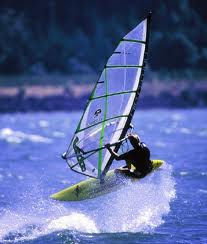
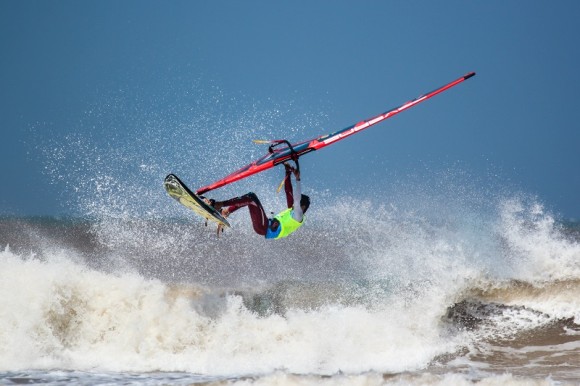
Windsurfing is quite a unique activity, being a blend of both surfing and sailing. A windsurfer can perform more freestyle maneuvers compared to one who is simply sailing and can ride more seemingly insurmountable, bigger waves in contrast to a normal surfer. As the wind blows to allow the sail to glide through the waves, a windsurfer would usually feel both the excitement of surfing and the peace intimacy of water and wind of sailing at the same time.
South Florida is the perfect place to learn windsurfing. Not only does the state’s coastal area have the widest practice playground for windsurfing, but it is also teeming with windsurfing schools. Schools offering windsurfing classes offer instructions that range from beginner level to advanced level. Classes offered also range from private to group clinics, including kid’s windsurfing camps. Most of these schools also own shops where you can buy or rent on an hourly to weekly basis, top windsurfing equipment, gears, and accessories. In choosing the best Florida windsurfing school though, make it sure that it is certified by a reputable organization.
The best thing about windsurfing is that it has no age limit! Anyone from the age of 8 and above will surely enjoy gliding through calm waters or jumping above waves. If you are a beginner, do not be intimidated. With further practice, you will soon find yourself performing freestyle moves from simple jumps to spinning and inverted loops.
There is no mistake that Florida is one of the best places in the world to go windsurfing. Not only is its coastal area dotted with hotels and establishments for tourists’ convenience, but it also has a beach lifestyle that is perfect for laidback people. Top that with an endless number of windsurfing spots to choose from like Cocoa Beach, Satellite Beach, Daytona Beach, Jacksonville Beach and the Florida’s Space Coast area. Next time you embark on a Floridian vacation, get that adrenaline rushing, and discover and enjoy the art of windsurfing!
![Safety Precautions on the Water]()
iOutdoors Blog, Lobster Catching, Surfing
JellyFish are NOT Your Friends

Jellyfish are free-swimming species that are often associated with painful stings. However, not all jellyfish species have stings that are painful or harmful to humans. Still, those that do sting humans have earned this creature a negative reputation, in general. Anyway, if you are stung by a jellyfish, it is bound to be painful and can cause red welts to break out from your skin. The following are some tips on what to do if you get stung by a jellyfish.
- Get out of the water. The sting of some jellyfish species can be so powerful and painful that it can impair you from swimming or floating – this can cause drowning. Once out of the water, use salt water to rinse the affected area.
- Get rid of the tentacles. The tentacles continue to sting anything it is in contact with. Thus, ensure that you remove them immediately – do not use your bare hands, use a towel, gloves, tweezers, seaweeds, or anything available.
- Rinse it with vinegar. Vinegar helps deactivate the remaining nematocysts that hold the venom and can also soothe the affected area. Pour a liberal amount unto the affected areas. If vinegar is not immediately available, human urine can also do the job. You can also place baking powder, flour, cornstarch, or meat tenderizer on the area to help alleviate the pain and to keep it dry.
- Use topical anesthetics. If the sting persists, you can use topical anesthetics such as hydrocortisone. Ammonia is also a good option. If the sting hurts a lot, drink pain killers.
Those who show signs of an allergic reaction or have been stung really badly must be taken to a medical facility as soon as possible.

iOutdoors Blog, Lobster Catching, Water Sports
Scuba the Keys
When in Florida, an activity that should never be missed is to dive at the Florida Keys. The Florida Keys is a beautiful underwater paradise, and where the longest living reef in the western hemisphere can be found. Scuba divers need not worry about seeing the same kinds of coral or the same kinds of fish for in the Florida Keys, the coral reef is endless, fish vary in size and color, and there are over 500 wrecks to explore. All these combined can guarantee anyone who scuba dives in Florida Keys to be left awestruck.
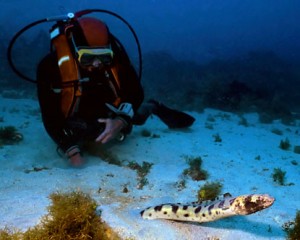
Different Dive Sites in the Keys
There are many different dive sites in the keys. These include the Key Largo dive sites, the Islamorada dive sites, the Marathon dive sites, and the Lower Keys dive sites. Most scuba diving charters in the Keys offer dive charters in these different sites. However, the choice of diving sites will depend on the skill level and interest of the scuba diving visitor.
Preparing to Scuba Dive
There are some, rather, quite a lot of preparations to do before a scuba diving activity in the Keys. First of all, the scuba diving charter will have to check ocean weather conditions for the safety of both the staff and the visitors. These conditions would include meteorological data such as temperature, dew point, sea level pressure, and pressure tendency. Wind data and oceanographic data such as sea surface temperature, wave height, and wave period must also be checked prior to a dive.
The equipments needed for scuba diving can be provided by the scuba diving charter. However, there are numerous shops and rentals for scuba diving equipment in the Florida Keys. The charter and the scuba diving instructors must possess a certification card which is required to dive. The needed dive equipment would include BC, alternate air source, air gauge, and bottom timer or watch.
Enjoy!
Scuba diving in Florida Keys is certainly worth it because the reef offers crystal clear waters with visibility of up to 120 feet. It can be done either at night, both of which are always guided by a scuba diving instructor. Aside from viewing the coral reef, an increasingly popular diving activity in the Keys is wreck diving. There are many wrecks available in Keys including Spanish galleons and Civil War wrecks. For those who just can’t seem to get enough of scuba diving in the Keys, there is even an underwater hotel where divers can stay, the first of its kind in the world.

