

How to Catch and Prepare Cobia
How to Catch and Prepare Cobia
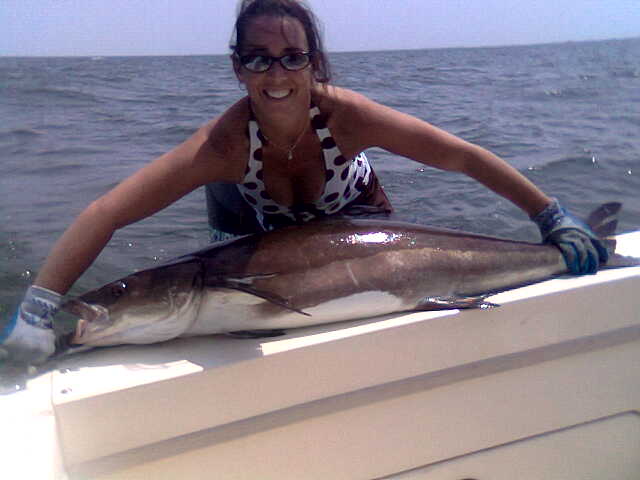
The Florida State Record for Cobia is 130 lb 1 oz, and was caught near Destin. No wonder Destin is the Cobia Capital of the World! Imagine a fish of that size! Cobia is some of the strongest fighting fish because of their beefy muscular makeup and their innate tenacity. The Cobia is a powerful fish and a thrilling catch and is one of the most sought after game fish and once hooked the thrill really begins with the line coming off a screaming reel and the angler unable to do anything but hang on! Cobia is considered an inshore/nearshore species and sight fishing is the best method to find these tasty brawlers and works even better if your vessel is equipped with a tower or raised the platform. Cobia can be found in all waters off of the coast of Florida and down into the Keys.
The appearance of the fish in local waters is temperature driven and most Cobia anglers start watching the water around mid-March for the fish to show up. Cobia is generally found in nearshore and inshore waters with inlets and bays – the fish like structure and are frequently found around buoys, pilings, and wrecks in these areas. Cobia spawns in spring and early summer and can be found throughout the summer months. Experienced Cobia anglers will look for turtles, manta ray and floating debris to find Cobia- the fish enjoy the easy pickings from the rays as they dig up the bottom foraging for their own dinner.
Cobia is a versatile game fish caught on fly and spinning tackle both. They can be found in offshore waters, nearshore waters and on the flats. So no matter what your equipment, type of boat or level of experience there is A COBIA IN YOUR FUTURE!
Best bait and tactics for catching Cobia.
The BEST TACTIC for hooking and catching Cobia it to BE PREPARED! Cobia has a reputation for being extremely finicky when it comes to living baits and lures so have several rods baited and standing by with a variety of offerings. Cobia in Florida frequently travel in at least pairs and sometimes threesomes – have several stout rods rigged and ready to go at the fish opportunity. Live crabs and small fish are good bait for cobia but eels and live pinfish and a variety of artificial baits work well especially bucktail combinations with plastic tails. My favorite bait for cobia is an artificial eel made of surgical tubing with a lead sinker at the head.
Live baits for cobia include spot, menhaden, mullet, minnows, perch, eels, shrimp, crabs, and clams. These use of these live baits vary with season and location and the only experience can tell you what to use and when. Keep bait near the surface or, if cobia are deeper, add just enough weight to get the bait down and still retain its movement. Medium to heavy tackle is generally a good idea to land these fish that average 30 pounds and as every true Cobia hunter knows can easily go over 60 pounds. Fishing for cobia along pilings with a weighted eel is a favorite tactic of experienced anglers.
 Cast the reel so it drops alongside the pilling and drops down- if you don’t get a strike the first time keep trying until you have covered all angles before moving on.
A word of caution, Cobia are a tough hard fighting fish and large specimens when gaffed and boated have caused anglers to lose equipment, be injured and have damaged boats. Have a plan when you get that fish over the side- have a fish box open and ready and the decks cleared so you can easily in one coordinated move land the fish and move it to the fish box.
Good recipes for cooking and eating Cobia.
How to Catch and Prepare Cobia, because Cobia is excellent table fare and is also great raw for sushi or sashimi. It can also be used as a replacement for fish such as tuna if people are looking for an environmentally sustainable alternative, as the texture and flavor are quite similar. Did you know that Cobia grows three times as fast as salmon and has been commercially produced in Asia, particularly in Taiwan where it is stocked in about 80% of ocean cages? Here are a few good Cobia recipes to try out- but nothing can beat a hot charcoal grill and a little Italian seasoning splashed on top!
Lemon Butter Cobia
Ingredients:
1 lb. cobia steaks
1/2 fresh lemon
1 tbsp. butter
1 tsp. olive oil
1/2 tsp. Old Bay crab seasoning or equivalent
Instructions:
Preheat oven to 400 degrees.
Drain steaks and lay in a casserole dish coated with olive oil.
Squeeze lemon juice over steaks, coat with butter and sprinkle with seasoning.
Bake for 10 minutes or until fish is white on the outside and still slightly pink in the center.
Baked Cobia with Italian Herbs
Ingredients
1 lb. cobia steaks
1 cup crushed bread crumbs
3/4 cup grated parmesan cheese
1/4 cup chopped fresh parsley
1 teaspoon salt
1/2 teaspoon pepper
1 teaspoon paprika
1/2 teaspoon fresh oregano
1/2 cup melted butter
Directions:
1. Rinse fillets and allow to drain in a colander. If necessary, blot away excess water with a paper towel.
2. Mix the dry ingredients together in a bowl.
3. Dredge fillets in butter and roll in dry season mixture. Place fillets on a greased cookie sheet.
4. Bake at 375-degrees for approximately 15-20 minutes. The fish is cooked when it is white and flakes easily
 How do you POLE a FLATS boat?