
Air to Ground, Animal Park Experience, Eco Tours, Hiking, Horseback Riding, Hunting Fl, iOutdoors Blog, Nature Adventures
Florida Venomous Snakes
Don’t Pet the Snakes!
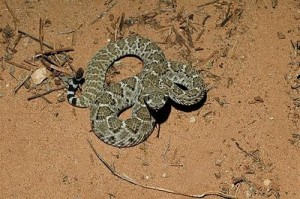
There are about 50 species of snakes in Florida but only 6 of these are venomous. Most snakes, venomous or not, generally slither away from humans unless it is provoked or feels trapped. Florida venomous snakes are all over the state. Keep away from one and do not attempt to catch or kill it, when you are hiking, especially if you are not sure if it is poisonous.
Southern copperhead
This snake is also known as the Highland moccasin, Chunkhead, and, simply, Copperhead. It can grow up to 36 inches long but some individuals have been recorded to be more than 50 inches long. Its body has crossbands that alternate reddish-brown to dark brown and light brown to grey bands. The darker bands have an hourglass shape while the head has plate-like scales.
Eastern coral snake
Also known simply as a Coral snake, this species has a body that is ringed alternately with wide black and red rings that are separated by narrow yellow rings. Most adults do not grow more than 30 inches long but some can grow to almost 50 inches.
Cottonmouth
Sometimes called Water moccasin, it is found near water bodies, especially near swamps, marshes, and lakes. It has broad, dark cheek stripes all over its body. It has a wide mouth with a whitish interior lining. It can grow up to 48 inches but the record holder is 74.5 inches long.
Eastern diamond-backed rattlesnake
This snake species grows to 72 inches (the record is 96 inches). It is the largest and most dangerous of all the venomous species in Florida. It has several rows of large, dark diamonds that have brown centers and light cream borders. Its tail ends with a rattle.
Dusky pygmy rattlesnake
This rattlesnake grows to only about 24 inches long (the record is 31 inches). It has dark blotches that are separated by reddish spots. It has a tiny rattle that produces a buzzing sound.
Timber rattlesnake
It can grow about 60 inches long but the record is at 74.5 inches. It has a pinkish-grey to brown back that contains chevron-like black crossbands. It also has a distinct reddish stripe running on its back.
![Interesting Birds of Florida]()
Bird Watching, iOutdoors Blog, Nature Adventures
Interesting Birds of Florida
Florida is home to more than 500 species of birds, many of them beautiful and interesting. Some of them can be found almost any time of the year while others come and go, depending on the season.
An example is the Magnificent Frigatebird, a species sometimes referred to as Man O’War. Males are mostly black but have a scarlet throat pouch that is inflated during mating season while females have a white breast, blue eye ring, and brown bands on their wings.
Another interesting species is the Canary-winged Parakeet, also known as the White-winged Parakeet, is a little parrot that is extremely hard to spot while bird watching. It is mostly green but has white patches on its wings.
The White-tailed Tropicbird is a seabird that is slender and mostly white in color. Its wings are very long and the inner wings have a black band.
Another interesting bird species in Florida is the Red-whiskered Bulbul which has a brown back and a white front. It is a crested bird and is especially notable for its red face patch.
The Purple Gallinule is actually a multi-colored bird species that has large yellow feet, mostly green back, red and yellow bill, and a purple-blue plumage.
The Roseate Spoonbill has a long neck, long legs, and a long bill that resembles a spatula. It is mostly pink in color but has a white neck and greenish head.
The Masked Booby is mostly white in color but has pointed black wings and tail. It also has a distinct dark grey face mask.
Other interesting species are the Audubon’s Shearwater, Anhinga, Wood Stork, Brown Noddy, Snail Kite, Short-tailed Hawk, Limpkin, Wilson’s Plover, Bridled Tern, Roseate Tern, Black Noddy, White-crowned Pigeon, Mangrove Cuckoo, Eurasian Collarde-Dove, Antillian Nighthawk, Florida Scrub-Jay, Gray Kingbird, Black-whiskered Vireo, Red-Winged Blackbird, Black-Throated Blue Warbler, Spot-breasted Oriole, Shiny Cowbird, and many others.
![Interesting Birds of Florida]()
Air Boat Ride, Eco Tours, iOutdoors Blog, Nature Adventures
 Eco-Everglades
Experiencing an ECO tour of the Eco-Everglades completes any visitor’s trip to Florida. The Everglades makes up an important part of the ecosystem not only in Florida but the whole of United States. ECO tours are done for more than just funding and recreation, it aims to educate visitors regarding the majesty of the Everglades, its impact on nature, and what the human population can do to help restore it and the rest of the ecosystems in the world.
ECO Tour Packages
There are many charters and services in Florida that offer an ECO tour of the Everglades. An ECO-Everglades tour usually comprises of a full day event with guided tours designed to explore the four main ecosystems that make up the Everglades. These include the saw grass prairie, mangrove estuary, cypress swamps, and pine savannah.
ECO tours provide variety for visitors. Tours of the Everglades will be provided on airboat rides, relaxing boat cruise, a wildlife drive, and a nature walk. Inclusive of the package is usually a southern lunch with serving the charter or service’s specialty.
The guides are exceptional professionals with expertise in the area including renowned naturalists, doctors of ornithology, herpetologists and the like.
What to Expect
Visitors should expect to see wildlife of many different species ranging from wonderful birds to predatory alligators. Seen in their natural habitat, depending on the time of year, are Manatees, Bald Eagles, Swallow-tailed Kites, Roseate Spoonbills, Bottle-nosed dolphins, and of course, the American alligator.
Many types of visitors come to the Everglades to experience the ECO tours ranging from families on vacation, students, bird enthusiasts, and more. All of those who enter leave the Everglades with a better appreciation of the ecosystems and their place in nature.

Nature Adventures, Air to Ground, Hunting Fl, iOutdoors Blog, Water Sports
Early Detection of Limes Disease
Lyme Disease or Limes Disease is an infectious disease caused by at least 3 species of bacteria that are transmitted to humans by some tick species. If left untreated or if treatment is delayed, it can cause serious damage to the central nervous system, heart, and joints. Also, as the disease progresses, the bacteria can develop immunity or resistance to antibiotics. Thus, it is important to detect the illness as early as possible.
The following are some of the symptoms that help in the early detection of limes disease.
Bull’s eye rash
If you develop a rash that resembles a bull’s eye target – a large outer ring and a circle in the middle – consult a doctor immediately because this is among the surest signs of the disease. It is possible for the rash to disappear or be located in any part of your body. Try to take a picture to show your doctor before the rash fades. However, most of the time, the rash will grow slowly, with some reported to grow to as much as 12 inches in diameter.
Numbness and arthritis
If you experience unusual stiff neck or development of arthritis, check with your doctor as this can be a symptom of Lyme Disease.
Hearing and sight problems
This disease can cause blurred vision, dry eyes, and sensitivity to light. You may also experience pain, itchiness, and a burning sensation in your ears.
Malaise and irregular weight gain or loss
The disease can also cause sudden weight gain or loss. Most patients report a general feeling of tiredness and lack of energy.
This disease can be fatal – if you experience one or more of the abovementioned symptoms, consult a doctor immediately.
Also to worry about our friend the Jelly Fish
The failure of early diagnosis
The failure to diagnose early is avoidable. The harm to patients long term is preventable with early diagnosis. Patients report that diagnostic delays are associated with false-negative test results 57% of the time. Positive test results are dismissed by their clinicians as “false positives” 13% of the time. Patients quite often are not evaluated properly, because their physicians are uneducated on the disease symptoms and incorrectly diagnose leaving patients with there is “no Lyme here.”

Bird Watching, iOutdoors Blog, Nature Adventures
Spotting Birds in the Sunshine State
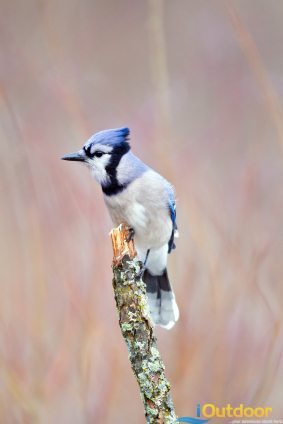
Just what exactly is it about Florida that many bird enthusiasts flock here for bird watching? There is but one simple reason and that is many migratory birds all land here in Florida. Florida’s diverse habitats are also home to many native birds. These include but are not limited to tiny hummingbirds, huge herons, plain jays, exotic spoonbills, seed-eating buntings, predatory hawks and ospreys. There are even more than 1,000 pairs of bald eagles in Florida, second only to Alaska.
 Why So Many Birds in One State?
Florida’s unique placement between tropical and temperate regions is one of the reasons why so many different types of birds can be found in the state. Another reason is the presence of two important flyways or migratory corridors which are used by Caribbean birds and birds from other faraway places. This is the reason why so many migratory birds can be seen in Florida.
The Art of Bird Watching
Timing, picking the right site, patience, and a bit of luck is important for bird watching enthusiasts. In Florida, resident birds can be spotted all year round. However, for a bit more excitement, bird enthusiasts who wish to see migratory birds can do so from mid-April to mid-May and also in October.
Picking bird watching sites isn’t spontaneous. In fact, there are already recommended bird watching sites throughout the state that bird enthusiasts can visit. There is also a program called The Great Florida Birding Trail or GBFT which was established by the Florida Fish and Wildlife Conservation Commission. The core of GBFT is a network of nearly 500 sites throughout Florida which have been deemed recommended for maximum bird watching experience and the opportunity for bird education.
Recommended Bird Watching Sites
Some of the best bird watching sites in Florida include but are not limited to the following:
- St. Mark’s Wildlife Refuge in Tallahassee,
- Payne’s Prairie in Gainesville,
- Merritt Island National Refuge in Titusville,
- Busch Gardens in Tampa,
- Suncoast Seabird Sanctuary in St. Petersburg,
- Corkscrew Swamp Sanctuary in Ft. Myers,
- J.N “Ding” Darling National Wildlife Refure in Sanibel,
- The Conservancy of Southwest Florida in Naples, and
- Everglades National Park in Miami.
![Interesting Birds of Florida]()
Air to Ground, Hunting Fl, iOutdoors Blog, Nature Adventures, Water Sports
No UV Please
Staying out under the sun can be fun but does have its consequences – sun burns, eye damage, dehydration, premature aging, immune system suppression, and certain skin illnesses. Thus, it is advisable to find ways to shield your body from the sun and its harmful rays.
Applying sunscreen and sun block is among the most effective ways to protect your body. Look for a product with high Sun Protection Factor (SPF) and have ingredients that will not harm your skin. Products that indicate “broad-spectrum” at the label is usually better because it can filter different types of ultraviolet rays – UVA, UVB, and UVC.
Remember, sunscreen contains chemicals that absorb the sun’s rays before it penetrates the skin, thereby, just “screening” the rays. On the other hand, sun block does not allow the sun to penetrate the skin at all. Thus, it is often preferable to use sun block over sunscreen.
Another way to protect your body is to wear cool, light clothing that cover most parts of the body. Then, you can use a cap or hat to protect your head but you can also use an umbrella which offers a larger coverage.
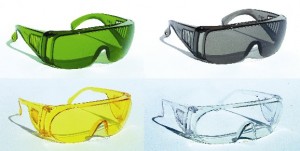
Sun glasses, especially those with UV filters, add protection to your eyes. Wrap-around sunglasses also provide more protection. Remember that the eye and the skin around it are sensitive to the sun’s rays and can be damaged easily.
There are also lipsticks and lip balms that provide protection from UV rays.
When it comes to finding the best way to shield your body from the sun, it pays to be on the side of caution – use as many shields as you can.

 Eco-Everglades