Bottom Fishing, Charter Head Boat, Grouper Fishing, iOutdoors Blog, Snapper Fishing
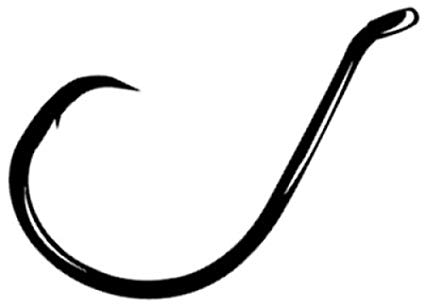
A circle hook is a fish hook which is sharply curved back to form a circular shape. It is rarely swallowed by the fish, though if swallowed, it can be easily pulled back. What is so great about this type of hook is that it hooks the fish in the corner of its mouth and not harm the gills or the internal organs. Believe it or not, when the fish swallows the bait along with the hook, all you have to do is slowly reel it in and it will not harm the internal organs but will just catch the corner of the mouth.
The Bait
When using a circle hook, hook the bait at its fleshy part, away from the bones. This way, the bait won’t be stuck on the hook and defeat the purpose of using a circle hook as the bones might gut-hook the fish or lacerate the internal organs of the fish. Most anglers that use Circle Hooks are using live bait. All live bait is great to use with circle hooks including pilchards, google-eyes, sardines, croakers, grunts and much more while Saltwater Fishing in Florida!
Uses
A circle hook is, perhaps, the greatest tool for catch-and-release fishing.
Also, if you have tried fishing even once, chances are you might have hooked a fish that is below the allowed limits for that species and must be released. If you were using a regular hook, then you must have cut the leader so as not to do further damage to the fish. However, biologists say that these hooks often slash at or damage the internal organs, gut, or gills of the fish so that its chances of survival are slim even when released immediately.
What is so great about the circle hook is that it works well on unattended lines – the fish eats the bait with the hook, tries to swim away, and is hooked in the mouth.
Whether you are fishing on a catch-and-release system or just fishing for any kind of fish that is you might release for not meeting the standards, you should try using a circle hook. You’ll find it quite useful in catching a lot of fish and improving their survival rate upon release.
Common fish that are caught with circle hooks include Sailfish, Tarpon, Marlin, Snook, and many more. The most practical uses and most common uses come from Florida Offshore Fishing. Learn and Know Your Fish and equipment before you go!
![What is a depth finder used for?]()
Bass Fishing, Bottom Fishing, Drift Fishing, Grouper Fishing, iOutdoors Blog, Offshore Fishing, Party Boat Fishing
What is a depth finder used for?
The technology used in depth finder originated during the World War II when solar technology was invented to give the Allied powers advantage over the Axis’ elusive submarines. This same technology is being used today to aid anglers catch fish lurking under the water.
A depth finder, also called a fish finder, is a hi-tech fishing tool that uses sonar (Sound Navigation & Range) to detect the bottom of the water and fish, displaying them on a remote display screen for the angler to see. 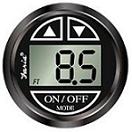
A device attached to the bottom of the watercraft transmits sonar waves through the water below, and when they hit an object, whether a fish or waterbed, they bounce back. The transmitter receives the signals back and analyzes them, displaying its findings on a small display screen. The screen then provides a visual representation of the underwater including the objects and waterbed underneath the watercraft. Depth finder technology is so advanced these days that they could distinguish between objects like seaweeds, waterbed, trash, and of course, fish; and represent them with instantly-recognizable symbols on the screen.
For anglers, they hope that their depth finder will bounce back signals of an elusive fish. Because anglers are given an approximate picture of the underwater, it could allow them to know the location of the fish. Most depth finders today could also provide an estimated depth of the fish, thus, also allowing anglers to know how deep their lures should be. The ability of the depth finder to determine the depth of the bottom of the sea or lake, also allows anglers to refrain from wandering off into shallow waters that could damage their boats.
There are several manufacturers of depth finders today including Eagle, Furuno, Garmin, Humminbird, Lowrance, Magellan and Raymarine. Some of the models sport the latest in scientific advancement such as GPS technology and electronic compass displays among others.
![What is a depth finder used for?]()
Bottom Fishing, Charter Head Boat, Drift Fishing, Grouper Fishing, iOutdoors Blog, Party Boat Fishing
Five Great Depth Finders
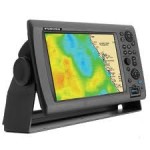 Depth finders are among the best equipment to bring on your fishing trip. You’ll surely be able to land that big fish of your dreams, if you know how to use these gadgets. Let’s list 5 of the best depth finders available in the market.
1. Lowrance
A lot of anglers would swear by Lowrance depth and fish finders. This brand has a wide range of gadgets that offer advanced GPS systems that let you calculate your position within 10 ft; thus, it is often favored not only by serious anglers but hunters, professional pilots, and backpackers as well. What’s so great about Lowrance products is that most have a built-in feature that offer full color display screens and displays various underwater conditions like temperature. Also, some models can even store coordinates of up to 1000 different locations.
2. Humminbird
Products by Humminbird are relatively cheap yet are able to provide readings of up to 600 ft and can be used even at speeds on 70 mph. These products are easy to install, easy to figure out, easy to use, and dependable. Just remember to keep it dry and away from saltwater.
3. Garmin
Garmin depth finders are in full color with a dual beam transducer which makes it quite accurate not only for finding fish under the boat but also along the sides. It can even be easily mounted on the trolling motors – you won’t need an adaptor.
4. Norcross
Norcross offers no-frills products that will show you the depth, precisely for up to 200 ft even at 63 mph. It has shallow and deep water alarms. It is also waterproof.
5. Uniden
Uniden provides products that have a large, backlit LCD screen precisely showing depths from 2.5 ft to 199 ft. It features shallow water alarms.
Bottom Fishing, Drift Fishing, Grouper Fishing, iOutdoors Blog
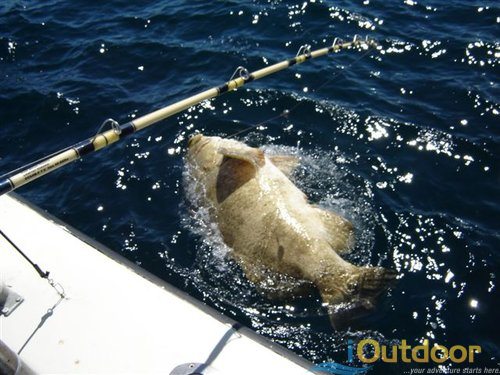
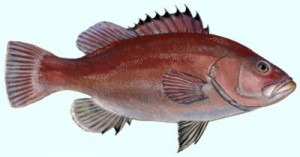
The Grouper –a bottom and drift fishing favorite!
Groupers refer to any fish belonging to the subfamily Epinephelinae of the family Serranidae in the order Perciformes. There are different species of Groupers found all over the world.
Description
Groupers are classified as teleosts which mean that the fish has a characteristic stout body and large mouth. This type of fish is not meant for long-distance swimming. Groupers can be quite large and can grow to over a meter and weigh up to 100 kilograms. Rather than chewing or biting off bits, they swallow their prey whole. The grouper does not have many teeth on the edges of their jaws but they have extreme crushing tooth plates inside the pharynx.
They eat fish, octopus, crab and lobster. Rather than chasing prey in the open water, they lie in wait for their prey to near them. They have the ability to suck in their prey from a distance because of their mouth and gills that can perform a powerful sucking system. Groupers tend to hide under crevices when threatened. Their powerful gill muscles enable them to remain in their cave or hole if they feel attacked.
Habitat
Groupers are found in tropical and warm temperate waters worldwide. Different species can be found in different countries. The Nassau grouper can be found mostly in the Caribbean, while the Mycteroperca and Ephinephelus groupers are found throughout Florida. They usually prefer areas with caves and crevices that they can use as shelters.
Modern Use
Groupers are considered an important food fish and are eaten in many parts of the world. Because of this demand for groupers as food, the grouper and some of its species are now being farmed.
![What is a depth finder used for?]()
Bottom Fishing, Charter Head Boat, Fly Fishing, Grouper Fishing, iOutdoors Blog, Marlin Fishing, Offshore Fishing, Party Boat Fishing, Sail Fishing, Shark Fishing, Sword Fishing, Tarpon Fishing, Tuna Fishing
Offshore Fishing – What to Bring
 No matter how good your fishing skills are, sometimes, they are not simply enough to get that trophy catch. To assist you in this endeavor, fishing tackles can be used, which can highly improve your chances of snagging your dream blue marlin or bluefin tuna.
Fishing tackles, also known as “fishing gear”, are the physical equipment’s needed when fishing. Almost all gears and equipment’s used in fishing can be called fishing tackles from terminal tackles such as hooks to lines, sinkers, reels and rods to name a few. Because of their number, it is impossible for you to bring all of them in an offshore fishing trip. So that you will not over pack or leave anything essential, here are the top ten fishing tackles to use for offshore fishing, which can serve as your guide in packing.
- Fishing rod. The fishing rod is the most important fishing tackle you will ever need for offshore fishing. In choosing your fishing rod, make sure that its weight and length are perfect for you so that you will still remain comfortable using it despite hours of fishing.
- Fish Hook. Hooks are the devices that impale the fish in the mouth or body. During every fishing opportunity, make it sure to bring hooks in different sizes and styles so you’ll have plenty to choose from.
- Fishing line. A fishing line is a cord used in angling, its end being where the hook is attached. Important factors in choosing your fishing line are: length, weight and material. Remember that they must be tough enough to resist offshore fishes.
- Fishing sinker. A sinker is device which weight is used to improve casting distance and the speed of sink of the bait.
- Fishing reel. Reels are devices used together with a fishing rod to allow the deployment and recovery of a fishing line with the use of a spool supported by an axle.
- Fishing bait. Baits or lures, whether natural or artificial, can also make or break your fishing expedition. Choose your bait depending on the type of fish you would like to catch.
- Net. A net can be handy to secure a fish already caught because it would be agonizing to lose a prize catch at your feet.
- Tackle box. Of course, with the number of your fishing tackles, it would be easy to damage them, or worse, misplace or lose them. Thus, it is always wise to bring a tackle box where you can keep your fishing equipment’s, gears, accessories and baits.
- Fishing basket or cooler. Having caught a prize fish, of course, you’ll need a fishing basket or cooler where to store them.
- Right Fishing Outfit. Although most people who go fishing are keen on their fishing equipment’s and gears, they rarely think about their outfit. For practicability, make it sure that you wear comfortable clothes, fishing boots or waders if you intent to stand in the riverbank fishing, fishing vest with utility pockets, and a fishing hat to keep you protected from the rays of the sun.
You should Read this blog: Why Deep-Sea Fishing Should Be In Your 2021 Fishing Trip List
Bass Fishing, Grouper Fishing, iOutdoors Blog, Marlin Fishing, Shark Fishing, Sword Fishing, Tuna Fishing
Redfish:
Redfish are one of the most popular backcountry and flats game fish. Redfish will take a wide variety of flies, lures, and top water plugs. This makes Redfish are one of the most sought after fish by light tackle anglers. They are one of the hardest fighting fish on the grass flats. Because of this reputation and the fact that they spend most of the year in shallow water they are a great fish to sight fish with light spinning tackle or fly rod!
Snook:
Snook mania! Why Snook are so popular no one knows but it is one fish that has fans every wher. Snook are seasonal in Florida waters, are a tasty treat and are very ellusive. The can be found in inlets, backcountry mangroves and flats. Snook on light tackle and fly rod are a favorite methode for serious anglers. Snook like live bait best like shrimp, crabs and fingerlings but will take artificials and flies.
Trout:
Speckled trout are a river, backwater and flats favorite. They are good eating and are fun to catch on live shrimp under a popper cork. Speckled trout also respond well to buck tails jigs anytime and surface lures in the mornings. Drift fishing across a grass flat free lining live shrimp make the best day trout fishing there is on the water!
Permit:
Permit are among the hardest fighting fish, pound for pound, and can be found throughout Florida’s salt waters. They can grow over thirty pounds and are a sought out by light tackle specialist. Permit eat small crustaceans like shrimp, crab and sand fleas. The permit, is a relative of the Jacks and relatively a common catch from wreck fishing in South Florida. Few sights on the flats are more exciting than the tail of a tailing Permit extending a foot out of the water in search of food.
Tarpon:
Tarpon are one of the most exciting and sought after game fish to be found anywhere! They can grow to immense size and are light tackle and fly favorites. There are tarpon tournaments held in several key spots on Florida’s coast during special times of the year. The Tarpon is one of the most remarkable sport fish in the world, when hooked they perform acrobatic jumps which defy belief. Spin or fly casting with lures or live bait (crabs or shrimp) and big flies are effective ways to catch Tarpon. Tarpon are generally cooperative eaters, but their bony jaws make it hard to maintain a hook up, the result is that many fish throw the hook after a few jumps.
Dolphin:
Dolphin, Mahi Mahi, Dorado. Whatever the name, the dolphin is a mainstay of offshore game species. They have a tremendous growth rate and make excellent table fare. They are primarily fished by the trolling method with artificial baits. Dolphin are a pelagic striking fish, if you get into a school you may be able to make your days catch in one sitting. Dolphin are acrobatic fighters that can make your day both in the boat and at the dinner table; Dolphin like pink and red and blue and white trolling skirts over fresh ballyhoo.
Marlin:
The Marlin is perhaps the best known of the offshore fighting billfish next to the sailfish, the differance is you can catch marlin over several hundreds of pounds- the largest are over a thousand pounds. There are several species of marlin, the black, the white, the blue and the stripped. These are heavy duty warriers that take special gear and large artificial or natural baits. A marlin catch is a lifetime accomplishment and to be envied by every angler. Marlin are found in nearly every ocean worldwide. Marlin fishing is strickly a catch and release proposition!
Cobia:
Cobia are a very tasty dish! They are migratory and like to hang out with manta rays, when the rays appear cobia are not far behind. Cobia will respond to lures thrown tipped with bally hoo and are primarily sight fished from the tower of an ocean going boat. Cobia can become very large and they are an obstinate pray- they can really put up a bulldog fight!
Barracuda:
The barracuda is one of the most underappreciated game fish in Florida. They are big (up to 5 feet and 65 pounds), they run and they jump like the most favorite of our game fish and can be found anywhere in Florida’s saltwater.. The barracuda is plentiful and fishing for them in water depths of 3 to 5 feet, with their explosive strikes is a thrill one won’t forget. They can be persuaded to take a fly and are equally unable to risk a tube lure on a spinning rig. Barracuda are plentiful and are an amazing acrobat when hooked!
Grouper:
There are many verities of grouper and most are tasty and delicious! Grouper are a bottom species that like live bait offerings and can put up a tremendous fight. In hooking and catching grouper it is primarily important in the first moments of battle to get the fish out of the vicinity of his home- be it a wreck, reef or other structure, if you do not- they will cut you off for sure! Certain species of grouper, the Goliath or Jew fish, can grow to over six hundred pounds, this species is protected from kill fishing but is an amazing thrill to catch and release. Grouper are found liberally in all Florida salt waters both inshore and offshore.
Snapper:
Snapper are one of Florida’s most sought after and tasty bottom species. There are a number of snapper varieties and all are good to eat. It takes special tackle and technique to catch these wary fish, they are very sensitive to terminal tackle and presentation of bait; fluorocarbon leaders are important part of your presentation. Snapper like shrimp, crab and other small crustaceans. Snapper like bottom cover like reefs, wrecks and other structure and can be found in all Florida saltwater bodies.
Bonefish:
Bonefish are one of the most popular sport fish on the flats. More has been written about bone fishing that almost any another light tackle species. Sight fishing for bonefish is the most popular method and is incomparable on light tackle and fly. The Keys are home to the largest bonefish species in the world. Bonefish are found on sand and grass flats on both the Ocean (Florida Straits) and Gulf (Florida Bay) sides of the Keys in water as shallow as a few inches. Bonefish feed on small crustaceans like crabs and shrimp. For a thrill of a lifetime go bone fishing!!
Sailfish:
Atlantic Sailfish. The Sailfish is a species beloved by the fisherman and captain alike, they provide endless opportunities to experience the thrill of catching a bill fish. These fish are acrobatic and present themselves at trolled bait with bill noodling in the air behind the bait, then striking with a slash and run! This is strictly a catch and release fishery and sailfish catches in an organized tournament can run in the dozens per boat. Sails are caught by kite, light spinning tackle, on fly and stand up rod and real. Truly a great game fish and most anglers’ first time bill fish. They will eat any trolled ballyhoo with or without a skirt.
Wahoo:
The don’t call it a Wahoo for nothing! When this top predator takes your bait you will know it there is no doubt about it. The first run is a reel screamer- sorry for the pun- but it is true! Wahoo are delicious on the plate and amazing underwater athletes, they seldom jump like other species but they can burn the line off of a reel and put the fear of God in any angler! Wahoo like dark lures trolled at high speed- eight to twelve knots in fact. They are a toothy critter and need to be respected when brought on board; they can weigh up to one hundred pounds.
Kingfish:
The kingfish is the poor man’s Wahoo; they have saved the day on many a charter. Kingfish are an aggressive pelagic species and love trolled bait or a pinfish drifted along the beach rigged with a circle hook and a trailing stinger treble. These guys can be single heavy weights up to 70 pounds but usually run in schools of twenty to thirty pound fish. Steaked, seasoned with Italian dressing and then grilled these fish can be tasty fare. Don’t miss out on the fun, kingfish are common to all Florida waters and should be on your fun list.
Swordfish:
Night time sword fishing has become one of the most popular offshore fishing adventures south Florida has to offer. These are mysterious looking bill fish that live in the deep waters of both the Atlantic and Gulf waters. They can grow to enormous size and love squid and are fished with a luminescence chemical light attached near the bait and at great depths. At least once in your fishing career you should experience night time sword fishing!

 No matter how good your