
Offshore Fishing, Destin Fishing, iOutdoors Blog, Key West Fishing, Marlin Fishing, Miami Beach Fishing, Sport Fishing
Best Place in Florida to Catch Marlin: Guides, reports and charters.
Where is the best place in Florida to catch a Marlin? Marlin Fishing is the purist form of big game sport fishing. Catching a marlin is one of the top dreams of offshore fisherman everywhere and Florida has its share of Marlin to catch! The most well known big game marlin fisherman was Ernest Hemmingway. The celebrated author and angler who often frequented the waters of the Gulf Stream, Hemmingway pioneered the use of outriggers in big game fishing. Marlin can be caught in deep water almost anywhere along Florida’s coast but there are two places in Florida to target marlin. One is Woods Wall, 20 miles South of Key West, lies an area known as “The Wall”. The Wall is the outer edge of the continental shelf where the ocean bottom drops sharply from 950 feet to 2000 feet in a very short distance.
In late August the adult marlin begin to dominate “The Wall”. The second is the Destin – Panama City area and around the bend in the Panhandle. October is considered the best month to catch marlin in the Panhandle. On June 14, 1985, Warren Culbertson, fishing from Destin, landed a blue marlin which tipped the scales at 980.5 pounds. To this day it still remains the largest blue caught on hook and line in the Gulf! Blue and white marlin are the targeted species available in Florida waters. The white marlin averages around 70 pounds, and the rod-and-reel world record white marlin, caught in the Gulf Stream off Miami Beach in 1938, weighed 161 pounds. The Key West Blue Marlin Tournament still ranks as the largest and most successful Marlin tournament in the Keys.
Tackle
The most effective method of targeting blue marlin is trolling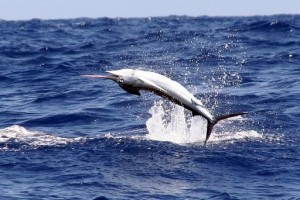 lures and rigged baits at a quick clip anywhere from 3-20 miles offshore. If you’re lucky enough to get the bite from a blue marlin, expect a world class battle as you must fight for every inch of line you retrieve. It is recommended to troll with 50 to 80 pound tackle and wide reels with plenty of line capacity- this will give you a fair chance if you hook into a really big Marlin or a big tuna which is definitely a possibility. High quality large capacity lever drag reels and matching rods are a must for successful Marlin fishing. An angler can expect even a small marlin (200 lbs) to run off 200 to 300 yards of line in a matter of seconds. Your line is only as strong as its weakest point and when I say a 500 pound raging marlin will find any weak point in the line or the angler you can count on it.
Good knot tying is absolutely essential. The double line is formed with a Bimini Twist. The Bimini Twist offers 100 % breaking strength and also acts as an additional shock absorber. I would suggest using four feet of double line on 30 and 50 lb tackle and six to eight feet on 80 and 130 lb gear. Heavy duty swivels are a must and under no circumstances should you use snap swivels. In the world of big game marlin fishing, BIG baits catch BIG fish. Dolphin, blackfin tuna, big bonita, and small to mid size yellowfin tuna are all on a big marlins menu. 14” to 20” lures with big profiles are customary when searching for a beast. A good recommendation is the original Sea Boots Kona Lure or the Knucklehead. Most marlin, even big ones, can usually be released in under an hour. The short pump and wind tactic is a good technique for breaking standoffs. Setting the Drag- Drags should be set at 25% to 30% of the line’s test by using a hand scale, pull line off the tip of the rod and adjust the drag accordingly. Remember one important thing- catching large fish like a marlin is not a one man job, it takes a minimum of two – the captain who operates the boat and the angler who operates the rod and reel. If a mate is on board then you have the perfect team and a better chance of hooking and landing a good fish.
Fly Fishing, Backcountry Fishing, Bottom Fishing, Destin Fishing, Dolphin Fishing, Drift Fishing, Flats Fishing, Grouper Fishing, Inshore Fishing, iOutdoors Blog, Islamorada Fishing, Key West Fishing, Kite Fishing, Lobster Catching, Marlin Fishing, Miami Beach Fishing, Offshore Fishing, Permit Fishing, Redfish Fishing, Sail Fishing, Shark Fishing, Snapper Fishing, Snook Fishing, Sport Fishing, Sword Fishing, Tarpon Fishing, Trout Fishing, Tuna Fishing, Wahoo fishing, Wreck Fishing
What hook should you use for which fish?
Wow! Old as man itself but it can really be overwhelming when you start to choose a hook. Freshwater, saltwater, bait hooks,“J” hook, circle hook or live bait hooks. Hook choice is VERY important! As a general rule I judge the hook size I need to use as a function of the bait size I am using, not the size of the fish I am targeting. The fish I am targeting determines the bait size. I particularly prefer circle hooks- they virtually hook themselves and are very fish friendly in catch and release situations. Experience is the best teacher on hook selection- use the right hook for the right fish and type of fishing you are doing and be prepared have a selection of hooks at hand. One common mistake is using a hook that is to big. Imagine this – if I hook you in the arm with a small quarter size hook are you going to be able to get a way or are you going to follow me anywhere? A sharp point and a strong hook is much more important than the size. Except in the case of top water lures please consider twice before you use a treble hook- there is virtually no opportunity for catch and release using a treble hook and they are banned in many areas. Treble hooks are dangerous to fisherman as well- use them sparingly and only when you plan to kill and eat the fish. One very important rule: Even though a new hook seems sharp out of the package always, always sharpen your hooks before you use them and re-sharpen them often.
Fish hooks come in several types. Knowing a few of the more popular ones and their uses can help you be successful.
Which hook should you use for which fish?
 O’SHAUGHNESSY This hook is named for the specific design of the hook. It’s a standard hook, forged with a very strong bend. This hook is relatively thick, very strong, and not likely to bend out of shape. Generally designed for saltwater, it is good for general bottom fishing use. Sizes range from #3 to as large as 19/0.
 ABERDEEN These hooks, while primarily used in smaller sizes in freshwater, are also used by saltwater anglers. They are generally made from shaped wire. Unlike the O’Shaughnessy, it can and does bend. It can be bent back into shape several times before it becomes too weak. However, once a fish is hook and the barb has completely penetrated, this hook holds quite well. These hooks are modified with bends in their shanks for use in jig molds.
 CIRCLE Perhaps the best innovation in hooks to come along, circle hooks promote healthy catch and release. The design of the hook itself, when used properly, prevents fish from being hooked in the gut. Many anglers have a problem using these hooks because they require no hook set. If you do try to set the hook, it will generally come out of the mouth of the fish. These hooks are designed to move to the corner of the fish’s mouth and set themselves as the fish swims away from you. Anglers feel a bite and simply begin reeling, slowly at first, then faster as the hook gets set.
 LIVE BAIT These hooks generally have a shorter shank than other hooks. Whether that is to allow the live bait to swim more freely or to be less apparent to the fish is debatable. My vote is to allow the bait to swim more freely. These hooks come in regular and circle designs. Regular live bait hooks will be swallowed and result in gut hooks most of the time. Circle live bait hooks provide a greater chance for a good release.
 KAHLE The curve on these hooks makes them ideal for live bait. Made from the same wire as the Aberdeen hooks, they will bend if hung on the bottom of some structure. However, once a fish is hooked, the design of the hook prevents it from being straightened.
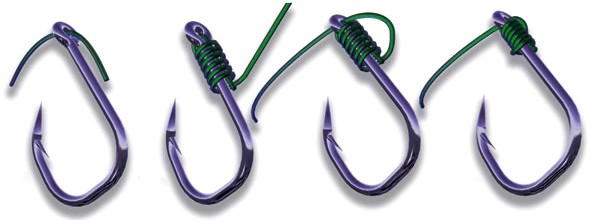
The Guide below provides an overview of the parts of a fishing hook. There are some common parts to all hooks. Those parts include the eye, shank, gap, point and barb. The variations on these characteristics result in dozens of hook styles.
Anatomy of a Hook
The Eye
The hook eye is the connection point to the fishing line or the body of lures. Ringed eyes are the most common. The metal is bent in a uniform loop and the end sits flush against the shank. Needle, looped and tapered are some other types of hook eyes, but they tend to be used for specific applications, like saltwater or dry flies.
The Shank
The shank is the length of the hook from the eye to where the bend starts. Shanks come in short, medium or long lengths. Short ones greatly reduce the size of the hook. Medium length shanks are the most common and used in an array of fishing situations. Long shanks can be used for live bait fishing where finesse isn’t critical, or to match a longer profile of an artificial bait.
The Gap
The gap is the size of the bend in a hook from the shank to its point. An average size gap will do in most situations, but sometimes a wide gap is needed. A wide gap is used for rigging thick-bodied baits to ensure that the hook point will be exposed on the hook set.
The Point
This is the tapered end of the hook. As its name suggests, it’s the sharp point that penetrates a fish’s mouth. The shape of the point will vary. Needle, knife edge, spear, or rolled ones are some examples. The most important thing, however, is that you keep your points sharp, so invest in a hook file and use it often. Quality hooks are packaged extremely sharp and will stay sharp longer than cheaper ones.
The Barb
The barb is designed to hold the hook in place once it penetrates the fish’s mouth. The larger the barb, the more difficult it is for the fish (and likely yourself) to get the hook free. Many catch and release anglers pinch barbs with pliers or file them down for easy hook removal.
Other Basic Hooks
 BAIT HOOKS come in a variety of styles. Most feature barbs on the shaft to hold bait in place. Longer shank hooks are good for teaching kids to fish, while shorter shank ones are often used in snells.
 TREBLE HOOKS feature three bends and points in one hook. Trebles provide more hooking potential to many artificial baits such as crankbaits, jerkbaits or topwaters. Bait anglers also use trebles. Cut bait for catfish or threading minnows for lake trout are two examples where trebles are regularly used.
 SIWASH HOOKS are quite strong and have a long shank and point. These hooks have a straight eye so they sit properly on lures. Siwash hooks are often used on single-hook baits, such as spinnerbaits. I also use them sometimes to replace factory-provided treble hooks on certain baits, especially spoons.

JIG HOOKS are designed to sit in specific jig molds. They feature a bend just below the hook eye, with a 90-degree bend being the most common. Pouring your own jigs can save you money and be a fun winter hobby to gear up for the next season

Offshore Fishing, Destin Fishing, Flats Boat, Inshore Fishing, iOutdoors Blog
How to Catch and Prepare Cobia
The Florida State Record for Cobia is 130 lb 1 oz, and was caught near Destin. No wonder Destin is the Cobia Capital of the World! Imagine a fish of that size! Cobia is some of the strongest fighting fish because of their beefy muscular makeup and their innate tenacity. The Cobia is a powerful fish and a thrilling catch and is one of the most sought after game fish and once hooked the thrill really begins with the line coming off a screaming reel and the angler unable to do anything but hang on! Cobia is considered an inshore/nearshore species and sight fishing is the best method to find these tasty brawlers and works even better if your vessel is equipped with a tower or raised the platform. Cobia can be found in all waters off of the coast of Florida and down into the Keys.
The appearance of the fish in local waters is temperature driven and most Cobia anglers start watching the water around mid-March for the fish to show up. Cobia is generally found in nearshore and inshore waters with inlets and bays – the fish like structure and are frequently found around buoys, pilings, and wrecks in these areas. Cobia spawns in spring and early summer and can be found throughout the summer months. Experienced Cobia anglers will look for turtles, manta ray and floating debris to find Cobia- the fish enjoy the easy pickings from the rays as they dig up the bottom foraging for their own dinner.
Cobia is a versatile game fish caught on fly and spinning tackle both. They can be found in offshore waters, nearshore waters and on the flats. So no matter what your equipment, type of boat or level of experience there is A COBIA IN YOUR FUTURE!
Best bait and tactics for catching Cobia.
The BEST TACTIC for hooking and catching Cobia it to BE PREPARED! Cobia has a reputation for being extremely finicky when it comes to living baits and lures so have several rods baited and standing by with a variety of offerings. Cobia in Florida frequently travel in at least pairs and sometimes threesomes – have several stout rods rigged and ready to go at the fish opportunity. Live crabs and small fish are good bait for cobia but eels and live pinfish and a variety of artificial baits work well especially bucktail combinations with plastic tails. My favorite bait for cobia is an artificial eel made of surgical tubing with a lead sinker at the head.
Live baits for cobia include spot, menhaden, mullet, minnows, perch, eels, shrimp, crabs, and clams. These use of these live baits vary with season and location and the only experience can tell you what to use and when. Keep bait near the surface or, if cobia are deeper, add just enough weight to get the bait down and still retain its movement. Medium to heavy tackle is generally a good idea to land these fish that average 30 pounds and as every true Cobia hunter knows can easily go over 60 pounds. Fishing for cobia along pilings with a weighted eel is a favorite tactic of experienced anglers.
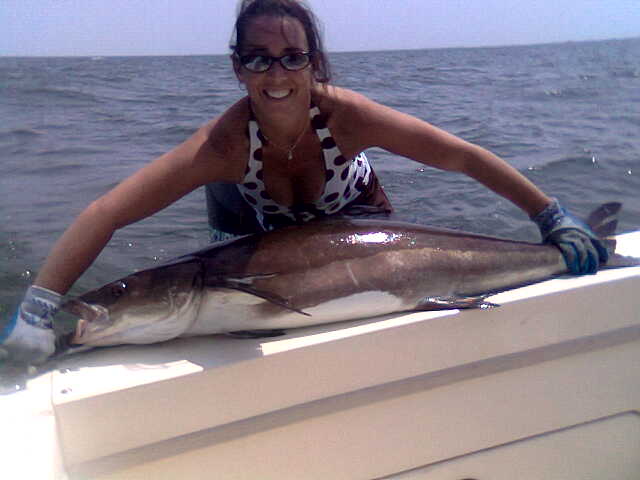 Cast the reel so it drops alongside the pilling and drops down- if you don’t get a strike the first time keep trying until you have covered all angles before moving on.
A word of caution, Cobia are a tough hard fighting fish and large specimens when gaffed and boated have caused anglers to lose equipment, be injured and have damaged boats. Have a plan when you get that fish over the side- have a fish box open and ready and the decks cleared so you can easily in one coordinated move land the fish and move it to the fish box.
Good recipes for cooking and eating Cobia.
How to Catch and Prepare Cobia, because Cobia is excellent table fare and is also great raw for sushi or sashimi. It can also be used as a replacement for fish such as tuna if people are looking for an environmentally sustainable alternative, as the texture and flavor are quite similar. Did you know that Cobia grows three times as fast as salmon and has been commercially produced in Asia, particularly in Taiwan where it is stocked in about 80% of ocean cages? Here are a few good Cobia recipes to try out- but nothing can beat a hot charcoal grill and a little Italian seasoning splashed on top!
Lemon Butter Cobia
Ingredients:
1 lb. cobia steaks
1/2 fresh lemon
1 tbsp. butter
1 tsp. olive oil
1/2 tsp. Old Bay crab seasoning or equivalent
Instructions:
Preheat oven to 400 degrees.
Drain steaks and lay in a casserole dish coated with olive oil.
Squeeze lemon juice over steaks, coat with butter and sprinkle with seasoning.
Bake for 10 minutes or until fish is white on the outside and still slightly pink in the center.
Baked Cobia with Italian Herbs
Ingredients
1 lb. cobia steaks
1 cup crushed bread crumbs
3/4 cup grated parmesan cheese
1/4 cup chopped fresh parsley
1 teaspoon salt
1/2 teaspoon pepper
1 teaspoon paprika
1/2 teaspoon fresh oregano
1/2 cup melted butter
Directions:
1. Rinse fillets and allow to drain in a colander. If necessary, blot away excess water with a paper towel.
2. Mix the dry ingredients together in a bowl.
3. Dredge fillets in butter and roll in dry season mixture. Place fillets on a greased cookie sheet.
4. Bake at 375-degrees for approximately 15-20 minutes. The fish is cooked when it is white and flakes easily

Destin Fishing, Inshore Fishing, iOutdoors Blog, Offshore Fishing, Sport Fishing
Why is DESTIN, Florida called “The luckiest fishing village in the world”?
Ask any angler what his favorite tourist spot is, and he’d surely exclaim with gusto, “Destin!” Located in Florida, the city is called “the luckiest fishing village in the world because fishing is not just a sport or a hobby in this emerald coast; it is such a burning passion that angling is done all year round in this city.”
The Luckiest Fishing Village in the Whole Wide World!
Destin is a heavenly tourist destination because it offers the beauty of white sandy beaches, emerald-green waters, and easy fishing that does not even require anglers to be on a boat. Sport fishes may be caught off of the jetty and the pier. The best fishing months are between April and October, and you could readily hook a bunch of Pompano, King Mackerel, Cobia, Bonito, and Jack Crevalle fishes. All kinds of baits also work on Destin’s waters, so that live, frozen and even artificial ones could result in a great fishing adventure.
If you’re aiming for some inshore trolling, you’d have to fly into Destin between March and November to experience sight fishing of huge preys like the hundred-pound Cobia, for example. You will get the thrill of first spotting the Cobia and then hooking it. The joy of wrestling it out of the waters will surely make you want to do sight casting over and over again!
Other favorite fishing activities include deep sea bottom fishing and offshore trolling. Fishing is a passion within Destin, and there are fleets of boats that are available to cater to your angling needs and wants, no matter how intricate they may be.
Come explore the Luckiest Fishing Village in the World for some of the best fishing adventures you can imagine! We look forward to sharing this unique fishing destination with you next time you Visit the Emerald Coast!!
![Tuna – About the Species and Characteristics]()
Destin Fishing, iOutdoors Blog, Islamorada Fishing, Key West Fishing, Miami Beach Fishing, Tuna Fishing
 Tuna – About the Species and Characteristics
Tuna are sea water fish belonging to the family Scombridae, mostly belonging to the genus Thunnus. Tuna are known to be fast swimmers and are capable of swimming up to speeds of 70 kilometers per hour. Tuna is unlike other fish because its muscle tissue ranges from pink to dark red which is owed to their myoglobin levels, which is found to be higher in tuna than in other fish.
Physical Characteristics
The tuna is a streamlined fish, stout in the middle and then tapering to points at both ends. Two closely spaced dorsal fins can be found rising from its back. There are also seven to ten yellow finlets that fun between these fins and the tail. The tuna has a very slender caudal peduncle which has three stabilizing keels on each side. This species’ dorsal side is generally metallic dark blue in color while the underside is silvery or white.
Distribution
Tuna are considered epipelagic-to-midwater fish, which means they inhabit the upper and middle layers of ocean water. They can be found in oceans all over the world except in polar seas. They roam long distances in an extensive north-south pattern and even the transoceanic migration patters. These fish migrate on a yearly cycle.
Behavior
Tuna normally travel in small schools which range from six to 40 fish. Their prey depends on what is locally available but their common food is herring, menhaden, hake, cod, bluefish, whiting, mackerel, squid and crustaceans. Their large size owes their lack of or few predators like the billfish, sharks, and toothed whales.
![Tuna – About the Species and Characteristics]()
Destin Fishing, iOutdoors Blog, Islamorada Fishing, Key West Fishing, Marlin Fishing, Miami Beach Fishing, Offshore Fishing
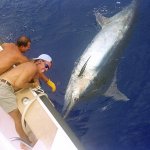
When trying to land that trophy marlin or, if you are ambitious enough, a thousand-pounder, you need all the information and help that you could find. When trying to catch the marlin of your dreams, try using these lures.
 1. Mold Craft Wide Range
What is so great about the Mold Craft Wide Range is that it can be used in a wide range (thus its name) of conditions and speed. Thus, it is a favorite among anglers who want to land the big fish because it can be used in rough waters. This feature is accomplished by the center hole and squared-off nose.
2. Pakula Lumo Sprocket
The Pakula Lumo Sprocket was designed mostly as a straight runner and has a very tight swimming action. Lures by Pakula were first marketed in Hawaii for many years before these were sold in Australia, then, and the rest of the world.
3. Mold Craft Super Chugger
One of the lures you really must have, the Mold Craft Super Chugger has a concave face that enables it to grab a gulp of air which it then lets out in a thick bubble stream. This lure also moves in a side-to-side wiggle so that it resembles the swimming movement of fish.
4. Joe Yee Super Plunger
The Joe Yee Super Plunger is among the most popular and most widely used plungers, worldwide. A favorite by many anglers, these lures have caught their fair share of thousand-pound marlins.
5. Marlin Magic Ruckus
Another favorite among anglers, the Marlin Magic Ruckus is among the most productive lures used for catching marlin.


 Long shanks can be used for live bait fishing where finesse isn’t critical, or to match a longer profile of an artificial bait.


