Fly Fishing, Backcountry Fishing, Bottom Fishing, Destin Fishing, Dolphin Fishing, Drift Fishing, Flats Fishing, Grouper Fishing, Inshore Fishing, iOutdoors Blog, Islamorada Fishing, Key West Fishing, Kite Fishing, Lobster Catching, Marlin Fishing, Miami Beach Fishing, Offshore Fishing, Permit Fishing, Redfish Fishing, Sail Fishing, Shark Fishing, Snapper Fishing, Snook Fishing, Sport Fishing, Sword Fishing, Tarpon Fishing, Trout Fishing, Tuna Fishing, Wahoo fishing, Wreck Fishing
What hook should you use for which fish?
Wow! Old as man itself but it can really be overwhelming when you start to choose a hook. Freshwater, saltwater, bait hooks,“J” hook, circle hook or live bait hooks. Hook choice is VERY important! As a general rule I judge the hook size I need to use as a function of the bait size I am using, not the size of the fish I am targeting. The fish I am targeting determines the bait size. I particularly prefer circle hooks- they virtually hook themselves and are very fish friendly in catch and release situations. Experience is the best teacher on hook selection- use the right hook for the right fish and type of fishing you are doing and be prepared have a selection of hooks at hand. One common mistake is using a hook that is to big. Imagine this – if I hook you in the arm with a small quarter size hook are you going to be able to get a way or are you going to follow me anywhere? A sharp point and a strong hook is much more important than the size. Except in the case of top water lures please consider twice before you use a treble hook- there is virtually no opportunity for catch and release using a treble hook and they are banned in many areas. Treble hooks are dangerous to fisherman as well- use them sparingly and only when you plan to kill and eat the fish. One very important rule: Even though a new hook seems sharp out of the package always, always sharpen your hooks before you use them and re-sharpen them often.
Fish hooks come in several types. Knowing a few of the more popular ones and their uses can help you be successful.
Which hook should you use for which fish?
 O’SHAUGHNESSY This hook is named for the specific design of the hook. It’s a standard hook, forged with a very strong bend. This hook is relatively thick, very strong, and not likely to bend out of shape. Generally designed for saltwater, it is good for general bottom fishing use. Sizes range from #3 to as large as 19/0.
 ABERDEEN These hooks, while primarily used in smaller sizes in freshwater, are also used by saltwater anglers. They are generally made from shaped wire. Unlike the O’Shaughnessy, it can and does bend. It can be bent back into shape several times before it becomes too weak. However, once a fish is hook and the barb has completely penetrated, this hook holds quite well. These hooks are modified with bends in their shanks for use in jig molds.
 CIRCLE Perhaps the best innovation in hooks to come along, circle hooks promote healthy catch and release. The design of the hook itself, when used properly, prevents fish from being hooked in the gut. Many anglers have a problem using these hooks because they require no hook set. If you do try to set the hook, it will generally come out of the mouth of the fish. These hooks are designed to move to the corner of the fish’s mouth and set themselves as the fish swims away from you. Anglers feel a bite and simply begin reeling, slowly at first, then faster as the hook gets set.
 LIVE BAIT These hooks generally have a shorter shank than other hooks. Whether that is to allow the live bait to swim more freely or to be less apparent to the fish is debatable. My vote is to allow the bait to swim more freely. These hooks come in regular and circle designs. Regular live bait hooks will be swallowed and result in gut hooks most of the time. Circle live bait hooks provide a greater chance for a good release.
 KAHLE The curve on these hooks makes them ideal for live bait. Made from the same wire as the Aberdeen hooks, they will bend if hung on the bottom of some structure. However, once a fish is hooked, the design of the hook prevents it from being straightened.
The Guide below provides an overview of the parts of a fishing hook. There are some common parts to all hooks. Those parts include the eye, shank, gap, point and barb. The variations on these characteristics result in dozens of hook styles.
Anatomy of a Hook
The Eye
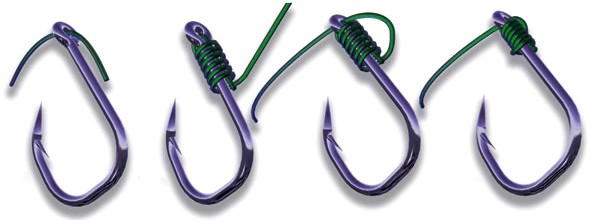
The hook eye is the connection point to the fishing line or the body of lures. Ringed eyes are the most common. The metal is bent in a uniform loop and the end sits flush against the shank. Needle, looped and tapered are some other types of hook eyes, but they tend to be used for specific applications, like saltwater or dry flies.
The Shank
The shank is the length of the hook from the eye to where the bend starts. Shanks come in short, medium or long lengths. Short ones greatly reduce the size of the hook. Medium length shanks are the most common and used in an array of fishing situations. Long shanks can be used for live bait fishing where finesse isn’t critical, or to match a longer profile of an artificial bait.
The Gap
The gap is the size of the bend in a hook from the shank to its point. An average size gap will do in most situations, but sometimes a wide gap is needed. A wide gap is used for rigging thick-bodied baits to ensure that the hook point will be exposed on the hook set.
The Point
This is the tapered end of the hook. As its name suggests, it’s the sharp point that penetrates a fish’s mouth. The shape of the point will vary. Needle, knife edge, spear, or rolled ones are some examples. The most important thing, however, is that you keep your points sharp, so invest in a hook file and use it often. Quality hooks are packaged extremely sharp and will stay sharp longer than cheaper ones.
The Barb
The barb is designed to hold the hook in place once it penetrates the fish’s mouth. The larger the barb, the more difficult it is for the fish (and likely yourself) to get the hook free. Many catch and release anglers pinch barbs with pliers or file them down for easy hook removal.
Other Basic Hooks
 BAIT HOOKS come in a variety of styles. Most feature barbs on the shaft to hold bait in place. Longer shank hooks are good for teaching kids to fish, while shorter shank ones are often used in snells.
 TREBLE HOOKS feature three bends and points in one hook. Trebles provide more hooking potential to many artificial baits such as crankbaits, jerkbaits or topwaters. Bait anglers also use trebles. Cut bait for catfish or threading minnows for lake trout are two examples where trebles are regularly used.
 SIWASH HOOKS are quite strong and have a long shank and point. These hooks have a straight eye so they sit properly on lures. Siwash hooks are often used on single-hook baits, such as spinnerbaits. I also use them sometimes to replace factory-provided treble hooks on certain baits, especially spoons.

JIG HOOKS are designed to sit in specific jig molds. They feature a bend just below the hook eye, with a 90-degree bend being the most common. Pouring your own jigs can save you money and be a fun winter hobby to gear up for the next season

Offshore Fishing, Bottom Fishing, iOutdoors Blog, Marlin Fishing, Redfish Fishing, Snook Fishing, Sport Fishing, Tarpon Fishing, Tuna Fishing
What kind of bottom fish can you find in the offshore waters of Tampa?
If you’re passionate about fishing, you must try your hand in Offshore Sports Fishing at Tampa Bay in Florida. Catching some bottom fish in your adventure is especially most rewarding, as it is a unique experience to have bottom fishes like the sea bass, and the tautog as your prize catches.
There are also other bottom dwellers that could amaze you with their peculiarity, too, and they’re just waiting for you to go hook them good. These include famous names like the redfish, the tarpon or silver king, and the snook. The redfish are known as bruisers because they are feisty and put up a great fight once they’re hooked. Tarpons meanwhile, are acrobatic wonders, as they could leap as high as ten feet just to escape from an angler’s grasp. The snook, on the other hand, is the starfish in Florida, one of the most pursued species of bottom fishes.
Offshore Fishing 101
Anglers head out 20-30 miles from the beach when they go off-shore sports fishing. This means they’re out to get some blue water fishes including wahoo, tuna, and marlin. Bottom fishes meanwhile are caught when boats go near wrecks or reefs where deep water bottom dwellers may be found. If one is lucky enough, the Speckled Hind and the Marble Grouper may be hooked in such waters.
Going on a fishing adventure in Tampa Bay is certainly worth it. You may do it all by yourself to enjoy some peace and quiet or you might want to bring your entire family to experience sports fishing in the best way possible. The best thing about choosing Tampa Bay as your fishing adventure destination is that you could simply charter a boat that would take you to the appropriate offshore spot where to catch your precious bottom fishes.
![What are Outriggers Used For?]()
iOutdoors Blog, Islamorada Fishing, Key West Fishing, Marlin Fishing, Offshore Fishing, Sail Fishing, Tuna Fishing
What are Outriggers Used For?
 Mainly used in deep sea trolling, outriggers are a pair of long poles fitted on both sides of a boat that holds fishing lines away from the boat. It is usually made of fiberglass and aluminum, and is tilted at an angle between 70 to 80 degrees.
When being used, outriggers are lowered to an angle nearly the same level as the water’s surface. At the edge of each outrigger is a pulley with a cord, attached to which is a quick release clip that holds the fishing line. Once a fish strikes, the line is released so that it can be landed with the use of the traditional rod and reel.
Generally, outriggers improve the chances of a fish striking because not only does it allow the angler to cover more ocean space, it also permits the use of multiple lines. Because outriggers allow the use of multiple rods and reels, anglers can troll as many fishing lines as it may allow, thus, simulating a school of bait fish. It also allows the leader out of the water, thus, preventing bubbles that may scare the fish away.
Outriggers also hold the fishing lines at a distance from both sides of the boat, spreading the lines far enough to prevent the risk of tangling. With more lines in the water, the angler can set them at different distances and depths that can create a variety of natural patterns to increase the chances of a strike.
The shallow, rocky reefs are also home to many fish species, however, trolling in these grounds are dangerous. With the use of outriggers, the fishing boat can stay in the safe deeper water while the lures are positioned to graze the shallow waters.
![What are Outriggers Used For?]()
Destin Fishing, iOutdoors Blog, Islamorada Fishing, Key West Fishing, Miami Beach Fishing, Tuna Fishing
 Tuna – About the Species and Characteristics
Tuna are sea water fish belonging to the family Scombridae, mostly belonging to the genus Thunnus. Tuna are known to be fast swimmers and are capable of swimming up to speeds of 70 kilometers per hour. Tuna is unlike other fish because its muscle tissue ranges from pink to dark red which is owed to their myoglobin levels, which is found to be higher in tuna than in other fish.
Physical Characteristics
The tuna is a streamlined fish, stout in the middle and then tapering to points at both ends. Two closely spaced dorsal fins can be found rising from its back. There are also seven to ten yellow finlets that fun between these fins and the tail. The tuna has a very slender caudal peduncle which has three stabilizing keels on each side. This species’ dorsal side is generally metallic dark blue in color while the underside is silvery or white.
Distribution
Tuna are considered epipelagic-to-midwater fish, which means they inhabit the upper and middle layers of ocean water. They can be found in oceans all over the world except in polar seas. They roam long distances in an extensive north-south pattern and even the transoceanic migration patters. These fish migrate on a yearly cycle.
Behavior
Tuna normally travel in small schools which range from six to 40 fish. Their prey depends on what is locally available but their common food is herring, menhaden, hake, cod, bluefish, whiting, mackerel, squid and crustaceans. Their large size owes their lack of or few predators like the billfish, sharks, and toothed whales.
![What are Outriggers Used For?]()
Bottom Fishing, Charter Head Boat, Fly Fishing, Grouper Fishing, iOutdoors Blog, Marlin Fishing, Offshore Fishing, Party Boat Fishing, Sail Fishing, Shark Fishing, Sword Fishing, Tarpon Fishing, Tuna Fishing
Offshore Fishing – What to Bring
 No matter how good your fishing skills are, sometimes, they are not simply enough to get that trophy catch. To assist you in this endeavor, fishing tackles can be used, which can highly improve your chances of snagging your dream blue marlin or bluefin tuna.
Fishing tackles, also known as “fishing gear”, are the physical equipment’s needed when fishing. Almost all gears and equipment’s used in fishing can be called fishing tackles from terminal tackles such as hooks to lines, sinkers, reels and rods to name a few. Because of their number, it is impossible for you to bring all of them in an offshore fishing trip. So that you will not over pack or leave anything essential, here are the top ten fishing tackles to use for offshore fishing, which can serve as your guide in packing.
- Fishing rod. The fishing rod is the most important fishing tackle you will ever need for offshore fishing. In choosing your fishing rod, make sure that its weight and length are perfect for you so that you will still remain comfortable using it despite hours of fishing.
- Fish Hook. Hooks are the devices that impale the fish in the mouth or body. During every fishing opportunity, make it sure to bring hooks in different sizes and styles so you’ll have plenty to choose from.
- Fishing line. A fishing line is a cord used in angling, its end being where the hook is attached. Important factors in choosing your fishing line are: length, weight and material. Remember that they must be tough enough to resist offshore fishes.
- Fishing sinker. A sinker is device which weight is used to improve casting distance and the speed of sink of the bait.
- Fishing reel. Reels are devices used together with a fishing rod to allow the deployment and recovery of a fishing line with the use of a spool supported by an axle.
- Fishing bait. Baits or lures, whether natural or artificial, can also make or break your fishing expedition. Choose your bait depending on the type of fish you would like to catch.
- Net. A net can be handy to secure a fish already caught because it would be agonizing to lose a prize catch at your feet.
- Tackle box. Of course, with the number of your fishing tackles, it would be easy to damage them, or worse, misplace or lose them. Thus, it is always wise to bring a tackle box where you can keep your fishing equipment’s, gears, accessories and baits.
- Fishing basket or cooler. Having caught a prize fish, of course, you’ll need a fishing basket or cooler where to store them.
- Right Fishing Outfit. Although most people who go fishing are keen on their fishing equipment’s and gears, they rarely think about their outfit. For practicability, make it sure that you wear comfortable clothes, fishing boots or waders if you intent to stand in the riverbank fishing, fishing vest with utility pockets, and a fishing hat to keep you protected from the rays of the sun.
You should Read this blog: Why Deep-Sea Fishing Should Be In Your 2021 Fishing Trip List
Bass Fishing, Grouper Fishing, iOutdoors Blog, Marlin Fishing, Shark Fishing, Sword Fishing, Tuna Fishing
Redfish:
Redfish are one of the most popular backcountry and flats game fish. Redfish will take a wide variety of flies, lures, and top water plugs. This makes Redfish are one of the most sought after fish by light tackle anglers. They are one of the hardest fighting fish on the grass flats. Because of this reputation and the fact that they spend most of the year in shallow water they are a great fish to sight fish with light spinning tackle or fly rod!
Snook:
Snook mania! Why Snook are so popular no one knows but it is one fish that has fans every wher. Snook are seasonal in Florida waters, are a tasty treat and are very ellusive. The can be found in inlets, backcountry mangroves and flats. Snook on light tackle and fly rod are a favorite methode for serious anglers. Snook like live bait best like shrimp, crabs and fingerlings but will take artificials and flies.
Trout:
Speckled trout are a river, backwater and flats favorite. They are good eating and are fun to catch on live shrimp under a popper cork. Speckled trout also respond well to buck tails jigs anytime and surface lures in the mornings. Drift fishing across a grass flat free lining live shrimp make the best day trout fishing there is on the water!
Permit:
Permit are among the hardest fighting fish, pound for pound, and can be found throughout Florida’s salt waters. They can grow over thirty pounds and are a sought out by light tackle specialist. Permit eat small crustaceans like shrimp, crab and sand fleas. The permit, is a relative of the Jacks and relatively a common catch from wreck fishing in South Florida. Few sights on the flats are more exciting than the tail of a tailing Permit extending a foot out of the water in search of food.
Tarpon:
Tarpon are one of the most exciting and sought after game fish to be found anywhere! They can grow to immense size and are light tackle and fly favorites. There are tarpon tournaments held in several key spots on Florida’s coast during special times of the year. The Tarpon is one of the most remarkable sport fish in the world, when hooked they perform acrobatic jumps which defy belief. Spin or fly casting with lures or live bait (crabs or shrimp) and big flies are effective ways to catch Tarpon. Tarpon are generally cooperative eaters, but their bony jaws make it hard to maintain a hook up, the result is that many fish throw the hook after a few jumps.
Dolphin:
Dolphin, Mahi Mahi, Dorado. Whatever the name, the dolphin is a mainstay of offshore game species. They have a tremendous growth rate and make excellent table fare. They are primarily fished by the trolling method with artificial baits. Dolphin are a pelagic striking fish, if you get into a school you may be able to make your days catch in one sitting. Dolphin are acrobatic fighters that can make your day both in the boat and at the dinner table; Dolphin like pink and red and blue and white trolling skirts over fresh ballyhoo.
Marlin:
The Marlin is perhaps the best known of the offshore fighting billfish next to the sailfish, the differance is you can catch marlin over several hundreds of pounds- the largest are over a thousand pounds. There are several species of marlin, the black, the white, the blue and the stripped. These are heavy duty warriers that take special gear and large artificial or natural baits. A marlin catch is a lifetime accomplishment and to be envied by every angler. Marlin are found in nearly every ocean worldwide. Marlin fishing is strickly a catch and release proposition!
Cobia:
Cobia are a very tasty dish! They are migratory and like to hang out with manta rays, when the rays appear cobia are not far behind. Cobia will respond to lures thrown tipped with bally hoo and are primarily sight fished from the tower of an ocean going boat. Cobia can become very large and they are an obstinate pray- they can really put up a bulldog fight!
Barracuda:
The barracuda is one of the most underappreciated game fish in Florida. They are big (up to 5 feet and 65 pounds), they run and they jump like the most favorite of our game fish and can be found anywhere in Florida’s saltwater.. The barracuda is plentiful and fishing for them in water depths of 3 to 5 feet, with their explosive strikes is a thrill one won’t forget. They can be persuaded to take a fly and are equally unable to risk a tube lure on a spinning rig. Barracuda are plentiful and are an amazing acrobat when hooked!
Grouper:
There are many verities of grouper and most are tasty and delicious! Grouper are a bottom species that like live bait offerings and can put up a tremendous fight. In hooking and catching grouper it is primarily important in the first moments of battle to get the fish out of the vicinity of his home- be it a wreck, reef or other structure, if you do not- they will cut you off for sure! Certain species of grouper, the Goliath or Jew fish, can grow to over six hundred pounds, this species is protected from kill fishing but is an amazing thrill to catch and release. Grouper are found liberally in all Florida salt waters both inshore and offshore.
Snapper:
Snapper are one of Florida’s most sought after and tasty bottom species. There are a number of snapper varieties and all are good to eat. It takes special tackle and technique to catch these wary fish, they are very sensitive to terminal tackle and presentation of bait; fluorocarbon leaders are important part of your presentation. Snapper like shrimp, crab and other small crustaceans. Snapper like bottom cover like reefs, wrecks and other structure and can be found in all Florida saltwater bodies.
Bonefish:
Bonefish are one of the most popular sport fish on the flats. More has been written about bone fishing that almost any another light tackle species. Sight fishing for bonefish is the most popular method and is incomparable on light tackle and fly. The Keys are home to the largest bonefish species in the world. Bonefish are found on sand and grass flats on both the Ocean (Florida Straits) and Gulf (Florida Bay) sides of the Keys in water as shallow as a few inches. Bonefish feed on small crustaceans like crabs and shrimp. For a thrill of a lifetime go bone fishing!!
Sailfish:
Atlantic Sailfish. The Sailfish is a species beloved by the fisherman and captain alike, they provide endless opportunities to experience the thrill of catching a bill fish. These fish are acrobatic and present themselves at trolled bait with bill noodling in the air behind the bait, then striking with a slash and run! This is strictly a catch and release fishery and sailfish catches in an organized tournament can run in the dozens per boat. Sails are caught by kite, light spinning tackle, on fly and stand up rod and real. Truly a great game fish and most anglers’ first time bill fish. They will eat any trolled ballyhoo with or without a skirt.
Wahoo:
The don’t call it a Wahoo for nothing! When this top predator takes your bait you will know it there is no doubt about it. The first run is a reel screamer- sorry for the pun- but it is true! Wahoo are delicious on the plate and amazing underwater athletes, they seldom jump like other species but they can burn the line off of a reel and put the fear of God in any angler! Wahoo like dark lures trolled at high speed- eight to twelve knots in fact. They are a toothy critter and need to be respected when brought on board; they can weigh up to one hundred pounds.
Kingfish:
The kingfish is the poor man’s Wahoo; they have saved the day on many a charter. Kingfish are an aggressive pelagic species and love trolled bait or a pinfish drifted along the beach rigged with a circle hook and a trailing stinger treble. These guys can be single heavy weights up to 70 pounds but usually run in schools of twenty to thirty pound fish. Steaked, seasoned with Italian dressing and then grilled these fish can be tasty fare. Don’t miss out on the fun, kingfish are common to all Florida waters and should be on your fun list.
Swordfish:
Night time sword fishing has become one of the most popular offshore fishing adventures south Florida has to offer. These are mysterious looking bill fish that live in the deep waters of both the Atlantic and Gulf waters. They can grow to enormous size and love squid and are fished with a luminescence chemical light attached near the bait and at great depths. At least once in your fishing career you should experience night time sword fishing!

 O’SHAUGHNESSY This hook is named for the specific design of the hook. It’s a standard hook, forged with a very strong bend. This hook is relatively thick, very strong, and not likely to bend out of shape. Generally designed for saltwater, it is good for general bottom fishing use. Sizes range from #3 to as large as 19/0.
 ABERDEEN These hooks, while primarily used in smaller sizes in freshwater, are also used by saltwater anglers. They are generally made from shaped wire. Unlike the O’Shaughnessy, it can and does bend. It can be bent back into shape several times before it becomes too weak. However, once a fish is hook and the barb has completely penetrated, this hook holds quite well. These hooks are modified with bends in their shanks for use in jig molds.
 CIRCLE Perhaps the best innovation in hooks to come along, circle hooks promote healthy catch and release. The design of the hook itself, when used properly, prevents fish from being hooked in the gut. Many anglers have a problem using these hooks because they require no hook set. If you do try to set the hook, it will generally come out of the mouth of the fish. These hooks are designed to move to the corner of the fish’s mouth and set themselves as the fish swims away from you. Anglers feel a bite and simply begin reeling, slowly at first, then faster as the hook gets set.
 LIVE BAIT These hooks generally have a shorter shank than other hooks. Whether that is to allow the live bait to swim more freely or to be less apparent to the fish is debatable. My vote is to allow the bait to swim more freely. These hooks come in regular and circle designs. Regular live bait hooks will be swallowed and result in gut hooks most of the time. Circle live bait hooks provide a greater chance for a good release.
 KAHLE The curve on these hooks makes them ideal for live bait. Made from the same wire as the Aberdeen hooks, they will bend if hung on the bottom of some structure. However, once a fish is hooked, the design of the hook prevents it from being straightened.
 Long shanks can be used for live bait fishing where finesse isn’t critical, or to match a longer profile of an artificial bait.
 BAIT HOOKS come in a variety of styles. Most feature barbs on the shaft to hold bait in place. Longer shank hooks are good for teaching kids to fish, while shorter shank ones are often used in snells.
 TREBLE HOOKS feature three bends and points in one hook. Trebles provide more hooking potential to many artificial baits such as crankbaits, jerkbaits or topwaters. Bait anglers also use trebles. Cut bait for catfish or threading minnows for lake trout are two examples where trebles are regularly used.
 SIWASH HOOKS are quite strong and have a long shank and point. These hooks have a straight eye so they sit properly on lures. Siwash hooks are often used on single-hook baits, such as spinnerbaits. I also use them sometimes to replace factory-provided treble hooks on certain baits, especially spoons.
 Mainly used in
  No matter how good your