Fly Fishing, Backcountry Fishing, Inshore Fishing, iOutdoors Blog, Miami Beach Fishing, Sport Fishing, Tarpon Fishing
TARPON: The Silver King!
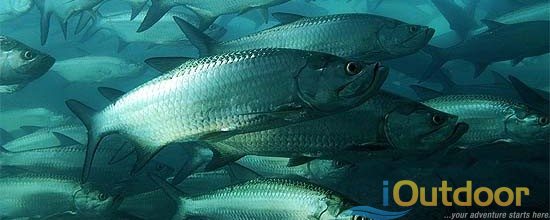
 Tarpon are also known as The Silver King and for good reason! Tarpon are large, hard fighting fish and are judged by many to be the world’s most exciting game fish on both fly and spinning reel. Once a tarpon is hooked, it begins a spectacular display of leaping and twisting acrobatic displays into the air. Tips for Tarpon are generally between 25 to 80 pounds on average but can range from a few inches in length to almost 300 pounds. The world all tackle record is 283 pounds 4ounces, a truly mighty fish! Tarpon eat crabs, shrimp, pinfish and mullet.
Fishing Technique.
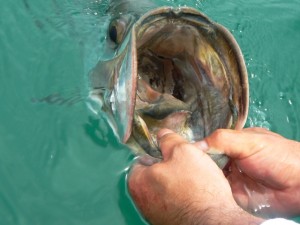
You really need a game plan if you are going to be a successful light tackle tarpon master. Tarpon are powerful and have hard rough mouths, sharp gill plates and abrasive scales. They have extremely tough mouths that are hard and boney and it takes special skill to successfully stick the big ones and get a good hook set. Rule number one – use a sturdy sharp hook and re-sharpen it often! Because of their sharp gill plates and equally sharp tough scales leaders and leader materials are very important I suggest tarpon fishing leaders should be about 6 to 12 feet in length and of heavy monofilament or fluorocarbon line from 60 to 125 LB test. A 6/0 live bait hook to an 11/0 circle hook is a good place to start when selecting a hook. Your choice of rod and reel is less important – spend your time on a variety of fresh live bait and on your terminal tackle and on getting it right.
Baits
 Tarpon are difficult fish to catch. One day they will like small pinfish and another day crabs and on another day something else entirely different, so having a good variety of bait to offer when you go out is important and will increase your chance of a hook up. Tarpon are successfully caught on artificial lures and fly rods and is really considered the top of the sport. From old stand bys like the topwater Zara Spook to sophisticated handcrafted fly’s- the choices for artificial baits are endless. In my opinion fly fishing tips for Tarpon is at the very pinnacle of the game and my all-time preferred method of hunting and catching these fantastic game fish. On light tackle or fly, a large tarpon can take you on an hour-long adventure that will cover most of the available landscape as you chase him and he pulls you around. Your skill as an angler and the quality of your gear and terminal tackle are tested to the extreme. Knots! Knots, knots, and more knots!! All fishing depends on good knot tying- if you don’t have a good understanding of knots then start learning how to tie them now- there is nothing more important to any angler and especially so in big tough game fish like tarpon fishing. At a bare minimum know these knots and how to constantly and successfully tie them under a variety of conditions and with a variety of line sizes and types of line materials- the loop knot, the clinch knot or uni-knot, the surgeons’ knot and the blood knot. Always be sure you pull your knots uptight!
Catch and Release!
We don’t eat Tarpon– they are strictly a catch and release game fish. Always take the greatest care with these beautiful prehistoric sea creatures. These incredible fish were made for angling and you should do everything possible to preserve our tarpon fishery for the generations to come. When using live bait tarpon fishing with circle hooks are the best for releasing the fish unharmed. Try not to fight a tarpon so long that it becomes completely exhausted- their perfect shark food in this state. Releasing tarpon at the side of the boat without lifting the fish out of the water produces the best results for the health of the tarpon. Lifting a tarpon out of the water or dragging a tarpon over the side of a boat for a photograph will potentially kill or damage the fish. Wear gloves to the leader and handle a tarpon so you can leave the tarpon in the water and grab the lower jaw you’re your gloved hand to remove a hook. If you can’t remove the hook don’t panic- just cut the leader as short as possible- the saltwater will dissolve the hook and the fish will recover fine.
Bass Fishing, Backcountry Fishing, Inshore Fishing, iOutdoors Blog
What kind of bait should I use?
Artificial-Live-Cut
There are as many choices for baits as there are fisherman! Do I use an artificial? Is a Live bait best? What about frozen baits? A bit of history: In early times, fishing lures were made from bone or bronze. The Chinese and Egyptians used fishing rods, hooks, and lines as early as 2,000 B.C., though most of the first fishermen used hand lines. The first hooks were made of bronze which were strong but still very thin and less visible to the fish. The Chinese were the first to make fishing line, spun from fine silk. The modern fishing lure was made commercially in the United States in the early 1900s by the firm of Heddon and Pflueger in Michigan.
Before this time most fishing lures were handmade by individual craftsman. Commercial-made lures were based on the same ideas as the individual craftsmen were making but on a production scale. There are literally thousands of artificial baits so let’s narrow it down to just saltwater fishing. And to start off let’s say that nothing beats a properly presented live bait. The problem with live bait is the ability to find them when you need them and to keep the life in the bait, thus the advent of artificial lures.
Artificial Baits
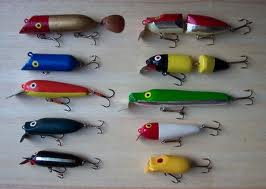 Since all artificial lures mimic live bait your first job is to find out what your targeted fish like to eat. Are they top water feeders? Do they eat crab and shrimp? Lures are made to mimic every variety of saltwater bait fish and crustacean imaginable. Proper technique is important when using artificial, retrieve speed is probably where most angles fail when using artificial. Improve your skills in casting and retrieving to get the best results from lure fishing. One of the basic axioms is “Retrieve fast in warm water, retrieve slowly in cold water.” Fish strike for many reasons, they could be hungry, reacting to instinct, or protecting their nests, and sometimes change in retrieve will trigger a response, vary your retrieve, both the speed and the style.
Try to cast beyond your target area so that the lure is working properly by the time it reaches the fish. In choosing a lure color, another good axiom says “Light days, light colors; dark days, dark colors.” You may think just the opposite would work since the contrast would show off the lure, but the fish would recognize that something is off and won’t bite. Remember two keywords: Presentation and Presence. You are bringing an artificial object into a fish’s environment, trying to trick that fish into biting that lure. The more naturally and deliberately that lure moves through their environment, the better your chances of success. Lead head jigs with hair skirts are one of the most successful artificial baits and are one of the easiest to use- to ensure a successful day of saltwater fishing, bring along an assortment of saltwater jigs.
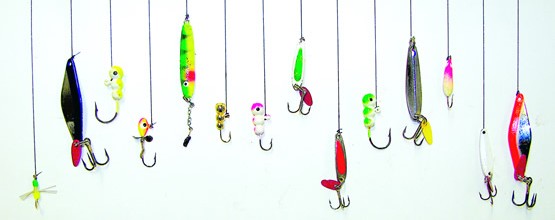
Artificial lures come in many types, here are a few of the basics:
Crank Baits. Usually refers to a floating or diving plug of medium size used by freshwater anglers. The term gets its name from the cranking motion of casting reels. Can be reeled in or trolled.
Hard Iron. These are heavy lures meant to be thrown longer distances, normally for surfcasting. Examples are Salas Jigs, Point Wilson Darts, Crippled Herring, Stinger, Hopkins, and larger Kastmasters.
Jerk Baits. The style of jerking or pulling a lure created this name. It’s most often a floating lure used in freshwater, though sometimes any lure can be used for this style of fishing. Excalibur, Rebel, and Rapala have models for this. On a much larger scale, Pencil Poppers are similar.
Jigs. Though it was primarily named for the style of fishing, dropping the lure letting it settle, then pulling it up and dropping it again. Now a jig means anything with a lead head fastened on the top of the hook. Bucktail jigs like Hair Raisers or Bug Eyes are the most popular examples. They can be used jig-style or cast and retrieved.
Plastics. Almost always means soft plastic like worms, crayfish, frogs, and swim baits. Modern times have rendered it essentially meaningless as a term.
Plugs. Made from wood or hard plastic, these lures are classified in three categories: Floating/diving, Sinking, or Surface. There is something called a suspension plug, which is a very slowly floating lure. Examples of all three categories are found in Rapala, Shad Rap, Bomber, Rebel, Rat-L-Trap, and Pencil Poppers.
Spinner Baits. This is the lure with a leadhead (like a jighead) on one end of a v-shaped wire and a blade or pair of blades on the other. It is almost always a black bass lure.
Spinners. Mostly used in freshwater fishing, these lures are also used for salmon, steelhead, and ocean bass. The design is basic: a spinning blade just under the eye of a hook, followed by either beads or a metal bell-shaped body. Blue Fox, Mepps, and Panther Martin are examples. It’s a hard lure to throw because it is so lightweight and is more often a trolling lure.
Spoons. Both shape and effect define these lures. Spoons wobble and ripple the water, and more often than not they reflect light. They can be thrown or trolled with great effect. Most of them, like Krocodile, Pet Spoon, and Kastmaster, are metal, but there are some plastic varieties such as one made by Apex.
Stick Baits. This is a top-water, minnow-shaped lure that is supposed to resemble darting, skipping baitfish on the surface. It can be retrieved steadily or jerked. Examples are Zara Spook and Bagley’s Bang-O-Lure.
Swim Baits. Just about every angler saw the Banjo Minnow on TV, and most of us scoffed that it was too ridiculous to be taken seriously. Just one more gimmick. Maybe. But there is quite a lot to be said for swim baits. They do catch fish. The one drawback is that they don’t last very long, especially with the more toothy fish, like halibut. One or two strikes can often be the end of a swim bait. However, most anglers will sacrifice a relatively inexpensive swim bait for a nice fish. They throw beautifully and retrieve splendidly; there isn’t much doubt about that. Rigging is fairly easy once you get the hang of it. It’s best to lay the jighead beneath the bait for a look-see before you fasten it.
By definition:
- A jig is a weighted hook with a lead head opposite the sharp tip. They are often covered with a minnow or crawfish or even a plastic worm to get the fish’s attention. The operator moves the rod to make the jig move.
- Surface lures are also known as top water lures. They float and resemble prey that is on top of the water. They can make a popping sound from a concave-cut head, a burbling sound from “side fins” or scoops or a buzzing commotion from one or several propellers. A few have only whatever motion the fisherman applies through the rod itself, though if skillfully used, they can be very effective.
- Spoon lures are made to resemble the inside of a table spoon. They flash in the light while wobbling or darting due to their shape, and attract fish.
- Plugs are also known as crankbaits. These lures have a fishlike body shape and they are run through the water where they can make a variety of different movements caused by instability due to the scoop under the head.
- Spinnerbait are pieces of wire bent at about a 60 degree angle with a hook on the lower end and a flashy spinner mechanism on the upper end.
- Swimbait is a minnow- like soft plastic bait that is reeled like a plug. Some of these have a swimming tail.
- A Daisy Chain is a “chain” of plastic lures, however they do not have hooks – their main purpose is to merely attract a school of fish closer to the lures with hooks.
Live Baits
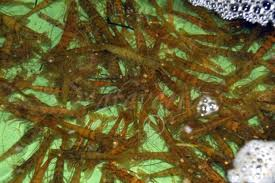 Nothing really beats live or cut baits. For offshore bottom and reef species, cigar minnows, pinfish, squid, goggle eyes, ballyhoo and Spanish sardines work well. Offshore top water mullet use pinfish and ballyhoo. For inshore; shrimp, crab and mud minnows work well. And then there is shrimp! Shrimp are probably the best all round bait you can use. You will get results on the bottom, top and mid water range under a bobber.
Keeping the shrimp alive is a must to achieve best results, although many bottom feeders like whiting, will eat cut dead shrimp. A properly aerated bait box is a must for keeping live bait fresh and frisky. The best results are obtained from containers constructed without corners so the bait can swim smoothly along without crowding. When considering an aeration system, choose a system that employs water circulation from outside and pumps that are not contained in the tank. Keeping your live baits cool is another important factor for long life and frisky lusty kickers! If you find a need to cool the water temperature, add sealed containers of ice or frozen gel-packs.
Another good bait for surf fishing and offshore reef fishing are cut clams. Let’s not forget sand fleas – I have had some of the best shallow water reef fishing using a frozen sand flea and a piece of frozen shrimp on the same hook. Small crabs and fiddler crabs make excellent bait, fish like redfish and sheepshead absolutely love them. There are two methods most often used when fishing for specks and reds with live bait. The first method is in shallow water along reefs where various type corks are used to suspend the bait below the water. Corks such as weighted or non-weighted popping, clicking or sliding work well depending on what effect you want to achieve. Corks mimics a deep gulping sound of a fish hitting bait on the surface, simultaneously producing a water spray, the water spray gives the effect of fleeing baitfish on the surface.
Ballyhoo
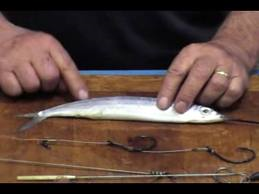
Ballyhoo are the king of live trolled baits like the shrimp are for still fishing. The most popular big game fishing bait of all time is the rigged ballyhoo. Millions are used each year to catch a variety of game fish from marlin to king fish.
..
Rigging ballyhoo can be done in may ways but the object is simple; get the rigged bait to perform effectively for the fish you are targeting. First, thaw the bait in a brine solution of water, kosher salt and baking soda . The baking soda helps the baitfish retain its vibrant silver and white colors and kills any bacteria that can lead to deterioration. The kosher salt toughens the skin, which keeps the bait together longer on the line. Now remove the eyes by pushing a dowel or a small deboning tool through the eye sockets. The next step is the most important. Flip the ballyhoo over in your hand and begin pinching the top of the ballyhoo with your thumb and forefinger starting from just behind the head and working back to the tail. As you pinch, feel the meat loosen from the backbone. When done correctly, the ballyhoo will become even more flexible once it’s rigged and it will swim beautifully. Last step is to remove the stomach contents and air bladder by making a half inch incision at the anal vent and milking the belly contents out the opening. This is done by holding the fish upside down in one hand and placing your other thumb just behind the head and running it down the belly using a moderate amount of pressure. Be sure to empty the belly contents completely. Then rinse the baits in your brine and they are ready to rig. Now you are ready to use the prepared bait for different methods of rigging split-bills to cover a variety of species and circumstances.
Fly Fishing, Backcountry Fishing, Bottom Fishing, Destin Fishing, Dolphin Fishing, Drift Fishing, Flats Fishing, Grouper Fishing, Inshore Fishing, iOutdoors Blog, Islamorada Fishing, Key West Fishing, Kite Fishing, Lobster Catching, Marlin Fishing, Miami Beach Fishing, Offshore Fishing, Permit Fishing, Redfish Fishing, Sail Fishing, Shark Fishing, Snapper Fishing, Snook Fishing, Sport Fishing, Sword Fishing, Tarpon Fishing, Trout Fishing, Tuna Fishing, Wahoo fishing, Wreck Fishing
What hook should you use for which fish?
Wow! Old as man itself but it can really be overwhelming when you start to choose a hook. Freshwater, saltwater, bait hooks,“J” hook, circle hook or live bait hooks. Hook choice is VERY important! As a general rule I judge the hook size I need to use as a function of the bait size I am using, not the size of the fish I am targeting. The fish I am targeting determines the bait size. I particularly prefer circle hooks- they virtually hook themselves and are very fish friendly in catch and release situations. Experience is the best teacher on hook selection- use the right hook for the right fish and type of fishing you are doing and be prepared have a selection of hooks at hand. One common mistake is using a hook that is to big. Imagine this – if I hook you in the arm with a small quarter size hook are you going to be able to get a way or are you going to follow me anywhere? A sharp point and a strong hook is much more important than the size. Except in the case of top water lures please consider twice before you use a treble hook- there is virtually no opportunity for catch and release using a treble hook and they are banned in many areas. Treble hooks are dangerous to fisherman as well- use them sparingly and only when you plan to kill and eat the fish. One very important rule: Even though a new hook seems sharp out of the package always, always sharpen your hooks before you use them and re-sharpen them often.
Fish hooks come in several types. Knowing a few of the more popular ones and their uses can help you be successful.
Which hook should you use for which fish?
 O’SHAUGHNESSY This hook is named for the specific design of the hook. It’s a standard hook, forged with a very strong bend. This hook is relatively thick, very strong, and not likely to bend out of shape. Generally designed for saltwater, it is good for general bottom fishing use. Sizes range from #3 to as large as 19/0.
 ABERDEEN These hooks, while primarily used in smaller sizes in freshwater, are also used by saltwater anglers. They are generally made from shaped wire. Unlike the O’Shaughnessy, it can and does bend. It can be bent back into shape several times before it becomes too weak. However, once a fish is hook and the barb has completely penetrated, this hook holds quite well. These hooks are modified with bends in their shanks for use in jig molds.
 CIRCLE Perhaps the best innovation in hooks to come along, circle hooks promote healthy catch and release. The design of the hook itself, when used properly, prevents fish from being hooked in the gut. Many anglers have a problem using these hooks because they require no hook set. If you do try to set the hook, it will generally come out of the mouth of the fish. These hooks are designed to move to the corner of the fish’s mouth and set themselves as the fish swims away from you. Anglers feel a bite and simply begin reeling, slowly at first, then faster as the hook gets set.
 LIVE BAIT These hooks generally have a shorter shank than other hooks. Whether that is to allow the live bait to swim more freely or to be less apparent to the fish is debatable. My vote is to allow the bait to swim more freely. These hooks come in regular and circle designs. Regular live bait hooks will be swallowed and result in gut hooks most of the time. Circle live bait hooks provide a greater chance for a good release.
 KAHLE The curve on these hooks makes them ideal for live bait. Made from the same wire as the Aberdeen hooks, they will bend if hung on the bottom of some structure. However, once a fish is hooked, the design of the hook prevents it from being straightened.
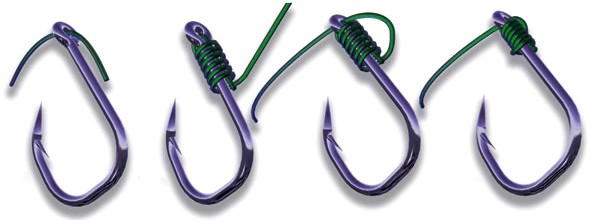
The Guide below provides an overview of the parts of a fishing hook. There are some common parts to all hooks. Those parts include the eye, shank, gap, point and barb. The variations on these characteristics result in dozens of hook styles.
Anatomy of a Hook
The Eye
The hook eye is the connection point to the fishing line or the body of lures. Ringed eyes are the most common. The metal is bent in a uniform loop and the end sits flush against the shank. Needle, looped and tapered are some other types of hook eyes, but they tend to be used for specific applications, like saltwater or dry flies.
The Shank
The shank is the length of the hook from the eye to where the bend starts. Shanks come in short, medium or long lengths. Short ones greatly reduce the size of the hook. Medium length shanks are the most common and used in an array of fishing situations. Long shanks can be used for live bait fishing where finesse isn’t critical, or to match a longer profile of an artificial bait.
The Gap
The gap is the size of the bend in a hook from the shank to its point. An average size gap will do in most situations, but sometimes a wide gap is needed. A wide gap is used for rigging thick-bodied baits to ensure that the hook point will be exposed on the hook set.
The Point
This is the tapered end of the hook. As its name suggests, it’s the sharp point that penetrates a fish’s mouth. The shape of the point will vary. Needle, knife edge, spear, or rolled ones are some examples. The most important thing, however, is that you keep your points sharp, so invest in a hook file and use it often. Quality hooks are packaged extremely sharp and will stay sharp longer than cheaper ones.
The Barb
The barb is designed to hold the hook in place once it penetrates the fish’s mouth. The larger the barb, the more difficult it is for the fish (and likely yourself) to get the hook free. Many catch and release anglers pinch barbs with pliers or file them down for easy hook removal.
Other Basic Hooks
 BAIT HOOKS come in a variety of styles. Most feature barbs on the shaft to hold bait in place. Longer shank hooks are good for teaching kids to fish, while shorter shank ones are often used in snells.
 TREBLE HOOKS feature three bends and points in one hook. Trebles provide more hooking potential to many artificial baits such as crankbaits, jerkbaits or topwaters. Bait anglers also use trebles. Cut bait for catfish or threading minnows for lake trout are two examples where trebles are regularly used.
 SIWASH HOOKS are quite strong and have a long shank and point. These hooks have a straight eye so they sit properly on lures. Siwash hooks are often used on single-hook baits, such as spinnerbaits. I also use them sometimes to replace factory-provided treble hooks on certain baits, especially spoons.

JIG HOOKS are designed to sit in specific jig molds. They feature a bend just below the hook eye, with a 90-degree bend being the most common. Pouring your own jigs can save you money and be a fun winter hobby to gear up for the next season
Backcountry Fishing, Bottom Fishing, Charter Head Boat, Everglades Fishing, Flamingo Fishing, Flats Fishing, Inshore Fishing, iOutdoors Blog, Permit Fishing, Trout Fishing
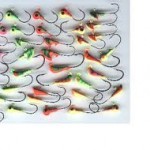
Top 5 most popular jigs for saltwater
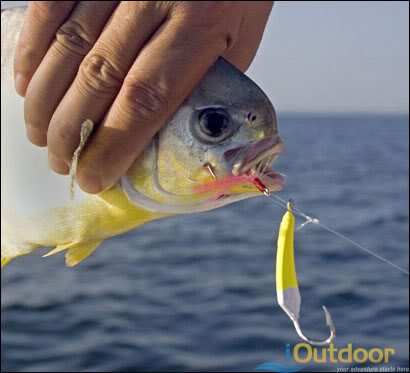
Fishing using jigs will help you have better chances of landing a bigger fish as compared to using other types of bait. Jigging is done in both freshwater and saltwater alike, though it works better in areas that offer some type of obstruction.
Different anglers will surely have different preferences and favorites in terms of the jigs they choose in fishing. Also, different fish species will be attracted to different forms of jigs. Still, based on sales and usage, there really are jigs that stand out from all the rest, in terms of popularity. Whether this is because they are effective or because a lot of people are trying to fish the same fish species, it is difficult to determine but the following are the top 5 most popular jigs for saltwater.
1. Jig with a round head
The jig with a round head is quite popular because it easily sinks and moves in the direction and speed that the angler wants it to take.
2. Bucktail jig
The bucktail jig comes in different colors and shapes. What is so great about this jig is that it attracts a wide range of fish species. It is also better to use a tapered head bucktail.
3. The jig that closely resembles live bait (such as holographic live jig)
If the jig resembles live bait, there is a higher chance of tricking the fish in thinking that this is real fish or fly – effectively increasing your chances of hooking a big one.
4. Football-shaped jig
This jig is especially popular for bass fishing and was so-named because the head resembles that of a football.
5. Flipping jig
Although the flipping jig is great for seasoned anglers, many claims that this is difficult to use. Still, with technique, the jig will help you catch that elusive trophy fish.
![Snook Migratory Habits]()
Backcountry Fishing, Everglades Fishing, Flamingo Fishing, Flats Fishing, Fly Fishing, Inshore Fishing, iOutdoors Blog, Snook Fishing
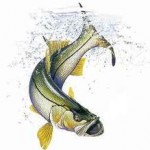
Snook Migratory Habits
Snook are fish that live either in saltwater or fresh water. Tricky to catch, Snook are still much sought-after because of their delicious meat and the challenge of catching one. Like most fish, Snook are cold blooded animals. Thus, they rely on the water temperature to regulate the temperature of their bodies. Cold temperatures are detrimental to the health of this fish species and sudden drops in temperature can be deadly. Thus, Snook have to migrate to warmer waters such as Flamingo in the Florida Keys when winter begins.
The migration patterns largely depend on where they are currently located, what temperature that location has, and in what direction is the warmer body of water. Snook migrating through the waters of Florida follow an east to west pattern, as opposed to the usual north to south that many fish species do.
Snook can easily move from freshwater to salt water and vice versa. Those who have observed them swim upstream say that they stay close to the center of the water body – be it a large river or a small creek. Also, Snook love to travel during day time.
The problem with migrating Snook is that they ignore your bait, most of the time, no matter how delicious it might be. They are also easily spooked so fly fishing for Snook can be frustrating. In fact, Snook are the most difficult to catch when they are migrating. Still, if you try to be as subtle as you can, you’d probably be able to entice one to take your bait.
Snook Fishing in Florida:
Snook Fishing in Florida in the ultimate inshore fishing experience. You truly can’t beat the action especially once the snook move in during their migrations. Most of the migrations are due to mating and that search for warmer weather. Summer months are the most productive months to catch them but also the time of year that you can’t harvest them. According to FWC, Dec. 15- Jan. 31st and June 1st- Aug. 31st seasons of harvest are closed.
September 1st brings about one of the most incredible times to go Night Fishing in Fort Lauderdale. Inshore Fishing for these elusive beasts will be one of the most action packed fishing adventures of your lifetime!
![Snook Migratory Habits]()
Backcountry Fishing, Bottom Fishing, Drift Fishing, Flats Fishing, Fly Fishing, iOutdoors Blog, Permit Fishing, Redfish Fishing, Sail Fishing, Snook Fishing
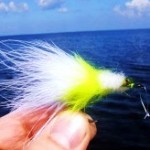 Should you sharpen a new hook?
Compared to a greenhorn fisherman, a seasoned fisherman will spend some time sharpening fishing hooks. If a recent fisherman would ask a veteran in fishing whether or not a new hook should be sharpened, his answer would surely be yes.
Whether you are a simple beginner fisherman or an experienced angler offshore angler, your point of contact with a fish is by the hook. It is the hook that lures a fish towards you, thus, making it a critical tool in fishing. The importance of the hook, especially a sharp hook, cannot be gainsaid especially when using crankbaits and similar baits where the grip of the hook to the mouth of the fish is extremely low.
Check your Hooks
To check your new hook’s sharpness, don’t just rely on the package when it says the contents are sharp. It is worth to check its sharpness by drawing its point across your fingernail. If it doesn’t leave a mark at the gentlest draw, then it is not sharp enough and needs some sharpening.
Although new hooks are sharp, sometimes, they are not sharp enough, thus, the need to sharpen them. Sharper hooks could land more fish especially when flats fishing, fly fishing, and sailfishing. A hook, although new, when not sharp enough could lose that high-priced fish you could have caught! Thus, the need to sharpen even a new hook in preparation for a fishing expedition.
Even while fishing, you should also be conscious of the sharpness of your hook especially when you have used them after a few casts or when you’re fishing in rocky areas. Once in awhile, touch the point and hone it if it is dull, otherwise, it won’t stick into a fish’s mouth.
Learn more about how to get your hooks as sharp as possible!

 Tarpon are difficult fish to catch. One day they will like small pinfish and another day crabs and on another day something else entirely different, so having a good variety of bait to offer when you go out is important and will increase your chance of a hook up. Tarpon are successfully caught on artificial lures and fly rods and is really considered the top of the sport. From old stand bys like the topwater Zara Spook to sophisticated handcrafted fly’s- the choices for artificial baits are endless. In my opinion fly fishing tips for Tarpon is at the very pinnacle of the game and my all-time preferred method of hunting and catching these fantastic game fish. On light tackle or fly, a large tarpon can take you on an hour-long adventure that will cover most of the available landscape as you chase him and he pulls you around. Your skill as an angler and the quality of your gear and terminal tackle are tested to the extreme. Knots! Knots, knots, and more knots!! All fishing depends on good knot tying- if you don’t have a good understanding of knots then start learning how to tie them now- there is nothing more important to any angler and especially so in big tough game fish like tarpon fishing. At a bare minimum know these knots and how to constantly and successfully tie them under a variety of conditions and with a variety of line sizes and types of line materials- the loop knot, the clinch knot or uni-knot, the surgeons’ knot and the blood knot. Always be sure you pull your knots uptight!


 Long shanks can be used for live bait fishing where finesse isn’t critical, or to match a longer profile of an artificial bait.


