Flats Fishing, Inshore Fishing, iOutdoors Blog, Miami Beach Fishing, Snook Fishing, Trout Fishing
Biscayne Bay Inshore Fishing Trip
Hello everyone this is Capt Brian Leibowitz with the fishing report for Biscayne Bay Inshore. Today I guided for Wesley and his brother Casey from Oklahoma. They were looking to explore Miami in a unique way. After spending time on the beach, they wanted to get a look at what the city from a water view. A Miami Inshore Fishing was one of the best ways to do so.
We caught a mixed bag of Sea Trout and Mangrove Snapper. When you come out fishing here with Captain Brian in Miami, you will have a great time. The stories and entertainment alone will keep the trip filled with smiles. Wesley and Casey enjoying catching quality Sea Trout and bonding together. Wesley and Casey caught them a variety of different ways but the most successful technique would be Berkley Gulp Shrimp. You can also catch them with live shrimp in the grass flats.
Captain Brian is looking forward to the next time they come to Visit Miami Beach. We had a blast together as they got to set the hook in an urban city setting. If you are interested in exploring Florida Bay Fishing, Don’t hesitate. You can never predict what you can catch when adventuring out from trout, snapper, shark, ladyfish and more. Inshore Fishing
Our Biscayne Bay Fishing trips are perfect for the family. Young kids love hooking up to these inshore species. It is always amazing to watch the smiles light up on their faces. One of the best parts about being a Captain is the ability to share these moments with new fisherman that want to learn. A Miami Biscayne Bay Inshore Fishing Trip is the perfect opportunity to do so. Next time visiting the beautiful beaches and city life makes sure you get hooked up for an adventure of a lifetime!
[fusion_builder_container hundred_percent=”yes” overflow=”visible”][fusion_builder_row][fusion_builder_column type=”1_1″ background_position=”left top” background_color=”” border_size=”” border_color=”” border_style=”solid” spacing=”yes” background_image=”” background_repeat=”no-repeat” padding=”” margin_top=”0px” margin_bottom=”0px” class=”” id=”” animation_type=”” animation_speed=”0.3″ animation_direction=”left” hide_on_mobile=”no” center_content=”no” min_height=”none”][fusion_imageframe lightbox=”yes” lightbox_image=”https://ioutdoor.com/wp-content/uploads/2016/08/unnamed.jpg” style_type=”glow” hover_type=”zoomout” bordercolor=”#5187B9″ bordersize=”3px” borderradius=”4px” stylecolor=”” align=”left” link=”” linktarget=”_self” animation_type=”0″ animation_direction=”down” animation_speed=”0.1″ animation_offset=”” class=”” id=””]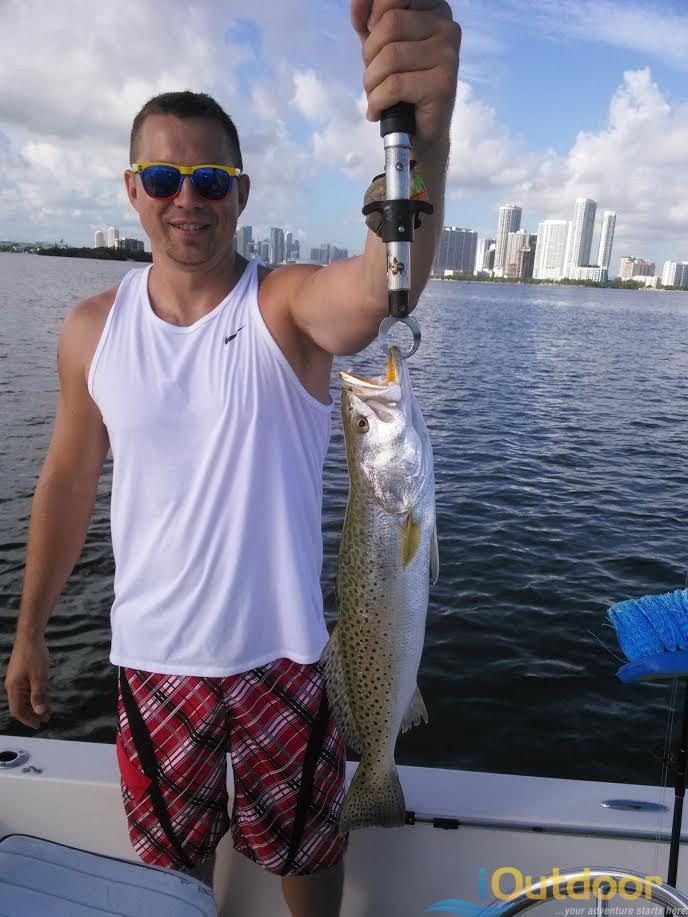 [/fusion_imageframe]
[fusion_imageframe lightbox=”yes” lightbox_image=”https://ioutdoor.com/wp-content/uploads/2016/08/unnamed-1.jpg” style_type=”glow” hover_type=”zoomout” bordercolor=”#5187B9″ bordersize=”3px” borderradius=”4px” stylecolor=”” align=”left” link=”” linktarget=”_self” animation_type=”0″ animation_direction=”down” animation_speed=”0.1″ animation_offset=”” class=”” id=””]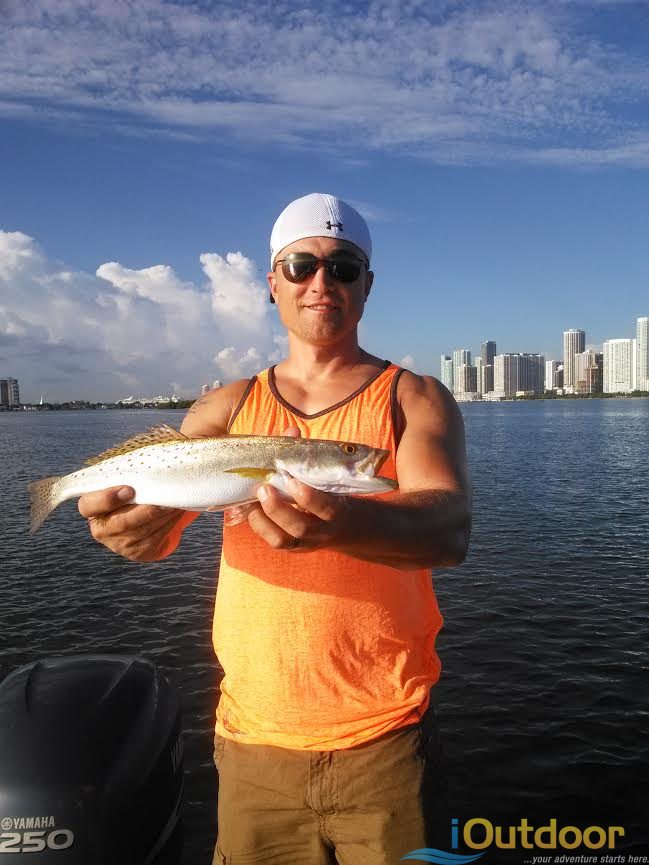 [/fusion_imageframe]
[/fusion_builder_column][/fusion_builder_row][/fusion_builder_container]
Your Adventure Starts Today while Visiting Miami Beach.
If you enjoyed this post about Saltwater Fishing, you might also enjoy our Fishing Blogs.
Don’t forget to follow us on Facebook, YouTube, Twitter and Instagram.

iOutdoors Blog, Backcountry Fishing, Everglades Fishing, Flats Fishing, Inshore Fishing, Offshore Fishing, Redfish Fishing, Snook Fishing, Tarpon Fishing, Trout Fishing
By Will Geraghty, Daily News Correspondent
A mixed bag best describes the weather and the catching both shallow and deep for the Southwest Fishing report in Florida. Anglers lucky enough to score ideal conditions have been rewarded, while those faced with lumpy seas and brisk winds have experienced a tough grind.
It truly has been an unpredictable weather pattern over the last several weeks. Tropical storms, waves of low pressure and a rare June cold front passage. Despite the fact that it is now officially summer, have kept us on our toes in deciding where to go and what to throw.
The inshore arena experienced a brief cleanup between storm systems, affording anglers some great Snook fishing. A strictly catch-and-release fishery, Snook have poured into the passes and middle bays in increasing numbers. Taking a variety of live and artificial baits, most of the Snook catches have consisted of medium- to over-the-slot-sized fish making their way to the landing net.
Also between weather events, the offshore bite has continued to become more active. Sharks are on the prowl virtually anywhere anglers drop bait, while red grouper have returned in aggregate to their traditional month of June half-day and full-day range haunts.
What has been an added bonus for anglers searching for a light-tackle thrill has been the return of solid numbers of the mighty barracuda. Often referred to as pesky or annoying while prospecting the numerous artificial fish havens, barracuda are quite the adversary when matched to light tackle spinning gear.
A slow trolled/free-lined thread-fin herring or palm-sized blue runner will draw the attention of a ravenous barracuda. If live bait is not available, try casting a brightly colored/multi-hook tube lure. Each presentation should be rigged with wire to avoid cut-offs and all fish should be handled with care to ensure a healthy release.
Gulf fishing between weather systems has proved fruitful for my clients aboard the Grand Slam. Docked at Port of Naples Marina, we have been prospecting select natural hard bottom areas northwest of Gordon Pass in the 8- to 12-mile range, and returning to port with red grouper and an assortment of reef species.
Large profile live baits including pinfish, pigfish and grunts truly have the red grouper responding. Deployed on a traditional fish finder rig, I have had to increase the monofilament leader size to 80- to 100-pound class due to the abundant shark numbers.
Turbid water has lane/mangrove snapper and porgies hitting live shrimp, small bits of squid on a chicken rig or a 1/2-ounce chrome metal jigs worked vertically in a slow fashion. So far the spring bite has yielded excellent size and numbers of snapper, so let’s hope the action remains strong.
In the same range and closer to shore, the fish havens or artificial reefs are producing action packed outings with sharks and barracuda being the highlight. I have been targeting both species on light/medium spinning tackle to ensure exciting, hard-charging battles. The sharks cannot refuse an offering of chunk bait, while the barracuda are responding well to live baits and tube lures cast and rapidly retrieved back to the boat. To continue with Southwest fishing report…
“The backwaters between Naples and Marco Island have been action-packed when the conditions have been calm, fishing between rough weather has been good for us as well.
We have been working the area passes and bays with a variety of live shrimp, scaled sardines and jigs. Primarily targeting Snook, Redfish and mangrove snapper, reports are that the best action has been at the beginning and end of the strong outgoing tide phase.
Casting shrimp tipped tube jigs in the deeper cuts, passes and flats has yielded mixed bag catches of Jack Crevalle, Speckled trout and a scattering of Pompano.
“For the first time since the devastating 2010 freeze/fish kill, we are experiencing great numbers of big Snook on the outside points from the Chatham River south to the Broad River.
With traditional pilchards or white bait difficult to procure, Turner has been using live finger mullet to entice his Snook catches. Concentrating on the outgoing tide phase, we have been averaging double-digit Snook catches on each outing. Free-lining or presenting his live baits rigged with a small pinch weigh has kept the Snook rods bent for our customers.
Tarpon have also captured everyone’s attention early in the fishing day. While the numbers have diminished over the last several weeks, reports of a few of the popular game fish still prowling the river mouths until the mid morning hours. Large offerings of cut bait have proved as effective natural bait, while larger, well-presented top water lures are also drawing the attention of feeding sliver kings.
Till next time, look for our next Southwest fishing report!

Flats Fishing, Inshore Fishing, iOutdoors Blog
Florida Fishing Adventure For Sheepshead in Tampa Bay- iOutdoor
Hello this is Capt Chris Taylor here with your fishing report forTampa Bay.
With the end of Winter in sight, and the weather being mildly warmer many anglers are looking to wet their lines as the new year starts to race by. It was time for a Florida Fishing Adventure For Sheepshead in Tampa Bay. They have made their way into Tampa Bay in great force and they are well known for their dominant presence during the winter months, and historically peak in their numbers February and March.
Sheepshead are a blast to catch on light tackle, and make for great table fare. They can be found at any of the Tampa Bay bridges, docks, seawalls, and jetties. I always travel to my favorite Mangrove Snapper spots this time of year to find Sheepshead. Sheepshead desire the same structure and environment as Mangrove Snapper. Most of the time when fishing these areas you will catch more Sheepshead than Snapper just because of their great numbers during these months.
Choice of baits to use are live shrimp, and Fiddler crabs. These baits should be presented on a size 1/0 hook free-lined using 20-25 lb fluorocarbon leader, or your favorite 1/8-1/4 oz. Jig-head. Where theirs one their are a bunch waiting to try and steal your bait.
Counting Sheep is quite important when catching these guys because you can fill a cooler quick when the bite is right.
For all your fishing needs, Contact iOudoor or Captain Chris Taylor for a trip of a lifetime Counting Sheep.
Don’t forget to follow us on Facebook, YouTube, Twitter and Instagram.
[fusion_accordion]
[fusion_toggle title=”CLICK HERE TO WRITE A REVIEW” open=”no”]
[/fusion_toggle]
[/fusion_accordion]
Fly Fishing, Backcountry Fishing, Cape Canaveral Fishing, Flats Fishing, Inshore Fishing, Redfish Fishing
Mosquito Lagoon Fishing Report
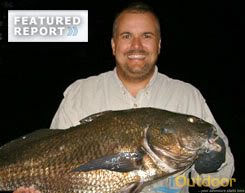 “Fishing has improved along Florida’s Space Coast. During the past few days, calm conditions and warmer temperatures have allowed anglers several opportunities to catch some nice fish throughout our region. To begin with, several nice speckled trout have been caught in both the Indian and Banana Rivers. Live shrimp or small scented jerk baits rigged under a popping cork has worked well during the mid-morning hours. When targeting trout, anglers can expect these fish to feed near sandy potholes in 2-4 feet of water. Anglers should keep in mind trout can be easily spooked at times. Making long casts while drifting can help increase your chances of catching a nice fish,” reports Capt. Keith Mixon of Mixin’ Work With Play Fishing Charters for this Mosquito Lagoon Fishing Report.
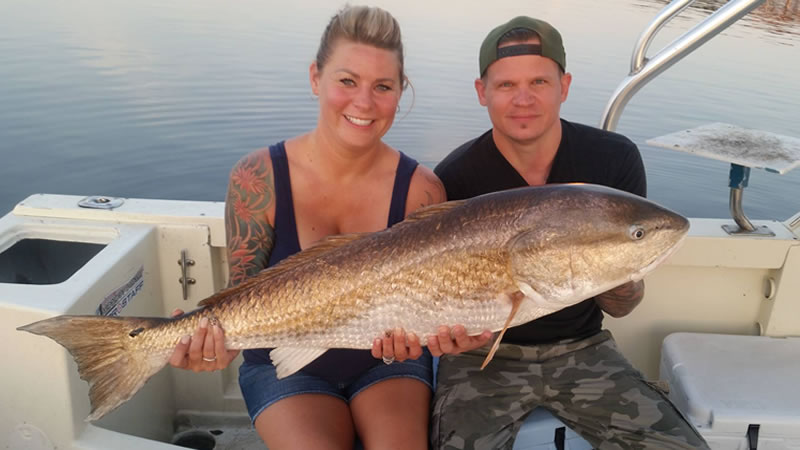
“A few slot size redfish have also been caught in the northern end of the Indian River. Sight casting to them has worked best during calm conditions. Live shrimp or Bass Assassin’s four-inch Saltwater Assassin’s Shrimp Cocktail in Houdini or Drunk Monkey color has worked well when rigged weedless. The key to hooking up with one of these redfish is to fish the bait as slowly as possible,” Mixon reports.
“At the port, a few tripletail have been caught along the Canaveral buoy line as well as a floating structure. A free-lined shrimp has been the bait of choice for these hard fighting fish. Sight casting is the best way to catch them when conditions are calm during mid-day. Some of these fish have measured up to 22 inches in length,” Mixon reports.
Capt. Keith Mixon
February 5, 2014
Our Mosquito Lagoon Fishing Report allows you access to understand how the fish are moving and where you can catch Redfish. The Cape Canaveral Area is one of the best Red Fish destinations in Florida. Inshore Fishing dominates and this is the perfect reason why. These river systems that make up the Lagoon provide ample fishing territory to enjoy an amazing fishing trip. Bring along your friends or families for an adventure of a lifetime on an iOutdoor Fishing Charter.
Your Adventure Starts Today while Visiting Florida.
If you enjoyed this post about Saltwater Fishing, you might also enjoy our other Fishing Blogs.
Don’t forget to follow us on Facebook, YouTube, Twitter and Instagram.
Fly Fishing, Everglades Fishing, Flamingo Fishing, Flats Fishing, Inshore Fishing, iOutdoors Blog, Snook Fishing
Recreational Harvest Snook Season
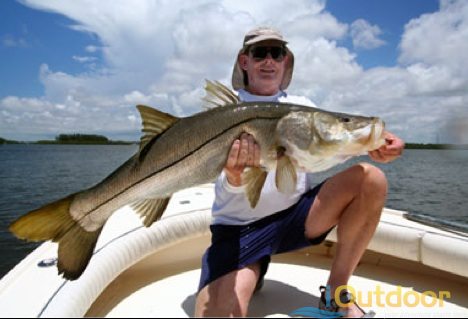
FLORIDA (AP) — Snook Fishing season is back in Florida’s Atlantic coastal and inland waters.
The recreational harvest season reopens Saturday from the Miami-Dade and Monroe county line north, including Lake Okeechobee and the Kissimmee River. The season runs through May 31.
The Florida Fish and Wildlife Conservation Commission says anglers can keep one snook per day during the season. The fish can’t be less than 28 or more than 32 inches in length. A snook permit is required to keep Snook, along with a saltwater fishing license unless exempt from the license requirements. Only hook-and-line gear is allowed.
The FWC says it’s illegal to buy or sell snook. Make sure you abide by these rules and not allow any one convince you to break the law. FWC will be monitoring the boat ramps to protect our species and fishing regulations.
The harvest of snook in all of Florida’s Gulf of Mexico state waters will reopen March 1. Snook Fishing along the Gulf of Mexico is also very good especially along the Paradise Coast. You never know what you will experience and catch while adventuring down the mangroves and back islands.
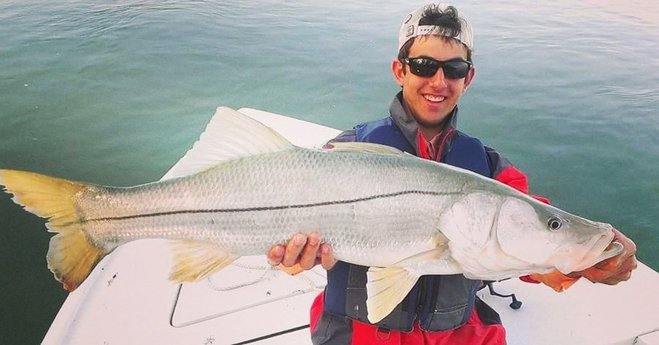
Harvesting a Snook under legal limits is well worth the fishing and wait. Snook are an excellent Inshore Fishing game species. They put up an excellent fight that is worth experiencing. You can catch them across the whole state of Florida, but the Atlantic Coast has some of the BEST in the state. Recreational Harvest Snook Season is the perfect time to put away some tasty meals. iOutdoor Fishing Captains and local experts know the Migratory Habits of this incredible fish. Port Canaveral is a great destination to explore Saltwater Inshore Snook Fishing.
iOutdoor Inshore Fishing Charters will provide you with the best experience possible. Our professional service is perfect for the family, friends or die-hard inshore angler. We look forward to seeing you during this season! Let’s catch some tasty treats.
Your Adventure Starts Today while Visiting Florida
Don’t forget to follow us on Facebook, YouTube, Twitter and Instagram.
Fly Fishing, Backcountry Fishing, Bottom Fishing, Destin Fishing, Dolphin Fishing, Drift Fishing, Flats Fishing, Grouper Fishing, Inshore Fishing, iOutdoors Blog, Islamorada Fishing, Key West Fishing, Kite Fishing, Lobster Catching, Marlin Fishing, Miami Beach Fishing, Offshore Fishing, Permit Fishing, Redfish Fishing, Sail Fishing, Shark Fishing, Snapper Fishing, Snook Fishing, Sport Fishing, Sword Fishing, Tarpon Fishing, Trout Fishing, Tuna Fishing, Wahoo fishing, Wreck Fishing
What hook should you use for which fish?
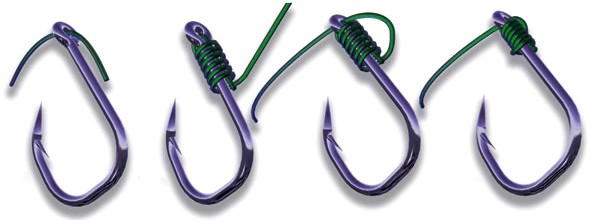
Wow! Old as man itself but it can really be overwhelming when you start to choose a hook. Freshwater, saltwater, bait hooks,“J” hook, circle hook or live bait hooks. Hook choice is VERY important! As a general rule I judge the hook size I need to use as a function of the bait size I am using, not the size of the fish I am targeting. The fish I am targeting determines the bait size. I particularly prefer circle hooks- they virtually hook themselves and are very fish friendly in catch and release situations. Experience is the best teacher on hook selection- use the right hook for the right fish and type of fishing you are doing and be prepared have a selection of hooks at hand. One common mistake is using a hook that is to big. Imagine this – if I hook you in the arm with a small quarter size hook are you going to be able to get a way or are you going to follow me anywhere? A sharp point and a strong hook is much more important than the size. Except in the case of top water lures please consider twice before you use a treble hook- there is virtually no opportunity for catch and release using a treble hook and they are banned in many areas. Treble hooks are dangerous to fisherman as well- use them sparingly and only when you plan to kill and eat the fish. One very important rule: Even though a new hook seems sharp out of the package always, always sharpen your hooks before you use them and re-sharpen them often.
Fish hooks come in several types. Knowing a few of the more popular ones and their uses can help you be successful.
Which hook should you use for which fish?
 O’SHAUGHNESSY This hook is named for the specific design of the hook. It’s a standard hook, forged with a very strong bend. This hook is relatively thick, very strong, and not likely to bend out of shape. Generally designed for saltwater, it is good for general bottom fishing use. Sizes range from #3 to as large as 19/0.
 ABERDEEN These hooks, while primarily used in smaller sizes in freshwater, are also used by saltwater anglers. They are generally made from shaped wire. Unlike the O’Shaughnessy, it can and does bend. It can be bent back into shape several times before it becomes too weak. However, once a fish is hook and the barb has completely penetrated, this hook holds quite well. These hooks are modified with bends in their shanks for use in jig molds.
 CIRCLE Perhaps the best innovation in hooks to come along, circle hooks promote healthy catch and release. The design of the hook itself, when used properly, prevents fish from being hooked in the gut. Many anglers have a problem using these hooks because they require no hook set. If you do try to set the hook, it will generally come out of the mouth of the fish. These hooks are designed to move to the corner of the fish’s mouth and set themselves as the fish swims away from you. Anglers feel a bite and simply begin reeling, slowly at first, then faster as the hook gets set.
 LIVE BAIT These hooks generally have a shorter shank than other hooks. Whether that is to allow the live bait to swim more freely or to be less apparent to the fish is debatable. My vote is to allow the bait to swim more freely. These hooks come in regular and circle designs. Regular live bait hooks will be swallowed and result in gut hooks most of the time. Circle live bait hooks provide a greater chance for a good release.
 KAHLE The curve on these hooks makes them ideal for live bait. Made from the same wire as the Aberdeen hooks, they will bend if hung on the bottom of some structure. However, once a fish is hooked, the design of the hook prevents it from being straightened.
The Guide below provides an overview of the parts of a fishing hook. There are some common parts to all hooks. Those parts include the eye, shank, gap, point and barb. The variations on these characteristics result in dozens of hook styles.
Anatomy of a Hook
The Eye
The hook eye is the connection point to the fishing line or the body of lures. Ringed eyes are the most common. The metal is bent in a uniform loop and the end sits flush against the shank. Needle, looped and tapered are some other types of hook eyes, but they tend to be used for specific applications, like saltwater or dry flies.
The Shank
The shank is the length of the hook from the eye to where the bend starts. Shanks come in short, medium or long lengths. Short ones greatly reduce the size of the hook. Medium length shanks are the most common and used in an array of fishing situations. Long shanks can be used for live bait fishing where finesse isn’t critical, or to match a longer profile of an artificial bait.
The Gap
The gap is the size of the bend in a hook from the shank to its point. An average size gap will do in most situations, but sometimes a wide gap is needed. A wide gap is used for rigging thick-bodied baits to ensure that the hook point will be exposed on the hook set.
The Point
This is the tapered end of the hook. As its name suggests, it’s the sharp point that penetrates a fish’s mouth. The shape of the point will vary. Needle, knife edge, spear, or rolled ones are some examples. The most important thing, however, is that you keep your points sharp, so invest in a hook file and use it often. Quality hooks are packaged extremely sharp and will stay sharp longer than cheaper ones.
The Barb
The barb is designed to hold the hook in place once it penetrates the fish’s mouth. The larger the barb, the more difficult it is for the fish (and likely yourself) to get the hook free. Many catch and release anglers pinch barbs with pliers or file them down for easy hook removal.
Other Basic Hooks
 BAIT HOOKS come in a variety of styles. Most feature barbs on the shaft to hold bait in place. Longer shank hooks are good for teaching kids to fish, while shorter shank ones are often used in snells.
 TREBLE HOOKS feature three bends and points in one hook. Trebles provide more hooking potential to many artificial baits such as crankbaits, jerkbaits or topwaters. Bait anglers also use trebles. Cut bait for catfish or threading minnows for lake trout are two examples where trebles are regularly used.
 SIWASH HOOKS are quite strong and have a long shank and point. These hooks have a straight eye so they sit properly on lures. Siwash hooks are often used on single-hook baits, such as spinnerbaits. I also use them sometimes to replace factory-provided treble hooks on certain baits, especially spoons.

JIG HOOKS are designed to sit in specific jig molds. They feature a bend just below the hook eye, with a 90-degree bend being the most common. Pouring your own jigs can save you money and be a fun winter hobby to gear up for the next season



 Long shanks can be used for live bait fishing where finesse isn’t critical, or to match a longer profile of an artificial bait.


