
Offshore Fishing, Destin Fishing, iOutdoors Blog, Key West Fishing, Marlin Fishing, Miami Beach Fishing, Sport Fishing
Best Place in Florida to Catch Marlin: Guides, reports and charters.
Where is the best place in Florida to catch a Marlin? Marlin Fishing is the purist form of big game sport fishing. Catching a marlin is one of the top dreams of offshore fisherman everywhere and Florida has its share of Marlin to catch! The most well known big game marlin fisherman was Ernest Hemmingway. The celebrated author and angler who often frequented the waters of the Gulf Stream, Hemmingway pioneered the use of outriggers in big game fishing. Marlin can be caught in deep water almost anywhere along Florida’s coast but there are two places in Florida to target marlin. One is Woods Wall, 20 miles South of Key West, lies an area known as “The Wall”. The Wall is the outer edge of the continental shelf where the ocean bottom drops sharply from 950 feet to 2000 feet in a very short distance.
In late August the adult marlin begin to dominate “The Wall”. The second is the Destin – Panama City area and around the bend in the Panhandle. October is considered the best month to catch marlin in the Panhandle. On June 14, 1985, Warren Culbertson, fishing from Destin, landed a blue marlin which tipped the scales at 980.5 pounds. To this day it still remains the largest blue caught on hook and line in the Gulf! Blue and white marlin are the targeted species available in Florida waters. The white marlin averages around 70 pounds, and the rod-and-reel world record white marlin, caught in the Gulf Stream off Miami Beach in 1938, weighed 161 pounds. The Key West Blue Marlin Tournament still ranks as the largest and most successful Marlin tournament in the Keys.
Tackle
The most effective method of targeting blue marlin is trolling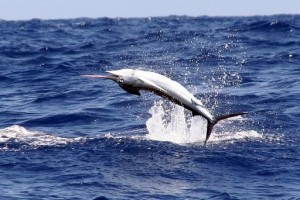 lures and rigged baits at a quick clip anywhere from 3-20 miles offshore. If you’re lucky enough to get the bite from a blue marlin, expect a world class battle as you must fight for every inch of line you retrieve. It is recommended to troll with 50 to 80 pound tackle and wide reels with plenty of line capacity- this will give you a fair chance if you hook into a really big Marlin or a big tuna which is definitely a possibility. High quality large capacity lever drag reels and matching rods are a must for successful Marlin fishing. An angler can expect even a small marlin (200 lbs) to run off 200 to 300 yards of line in a matter of seconds. Your line is only as strong as its weakest point and when I say a 500 pound raging marlin will find any weak point in the line or the angler you can count on it.
Good knot tying is absolutely essential. The double line is formed with a Bimini Twist. The Bimini Twist offers 100 % breaking strength and also acts as an additional shock absorber. I would suggest using four feet of double line on 30 and 50 lb tackle and six to eight feet on 80 and 130 lb gear. Heavy duty swivels are a must and under no circumstances should you use snap swivels. In the world of big game marlin fishing, BIG baits catch BIG fish. Dolphin, blackfin tuna, big bonita, and small to mid size yellowfin tuna are all on a big marlins menu. 14” to 20” lures with big profiles are customary when searching for a beast. A good recommendation is the original Sea Boots Kona Lure or the Knucklehead. Most marlin, even big ones, can usually be released in under an hour. The short pump and wind tactic is a good technique for breaking standoffs. Setting the Drag- Drags should be set at 25% to 30% of the line’s test by using a hand scale, pull line off the tip of the rod and adjust the drag accordingly. Remember one important thing- catching large fish like a marlin is not a one man job, it takes a minimum of two – the captain who operates the boat and the angler who operates the rod and reel. If a mate is on board then you have the perfect team and a better chance of hooking and landing a good fish.
Fly Fishing, Backcountry Fishing, Bottom Fishing, Destin Fishing, Dolphin Fishing, Drift Fishing, Flats Fishing, Grouper Fishing, Inshore Fishing, iOutdoors Blog, Islamorada Fishing, Key West Fishing, Kite Fishing, Lobster Catching, Marlin Fishing, Miami Beach Fishing, Offshore Fishing, Permit Fishing, Redfish Fishing, Sail Fishing, Shark Fishing, Snapper Fishing, Snook Fishing, Sport Fishing, Sword Fishing, Tarpon Fishing, Trout Fishing, Tuna Fishing, Wahoo fishing, Wreck Fishing
What hook should you use for which fish?
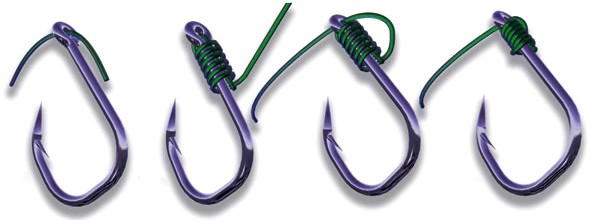
Wow! Old as man itself but it can really be overwhelming when you start to choose a hook. Freshwater, saltwater, bait hooks,“J” hook, circle hook or live bait hooks. Hook choice is VERY important! As a general rule I judge the hook size I need to use as a function of the bait size I am using, not the size of the fish I am targeting. The fish I am targeting determines the bait size. I particularly prefer circle hooks- they virtually hook themselves and are very fish friendly in catch and release situations. Experience is the best teacher on hook selection- use the right hook for the right fish and type of fishing you are doing and be prepared have a selection of hooks at hand. One common mistake is using a hook that is to big. Imagine this – if I hook you in the arm with a small quarter size hook are you going to be able to get a way or are you going to follow me anywhere? A sharp point and a strong hook is much more important than the size. Except in the case of top water lures please consider twice before you use a treble hook- there is virtually no opportunity for catch and release using a treble hook and they are banned in many areas. Treble hooks are dangerous to fisherman as well- use them sparingly and only when you plan to kill and eat the fish. One very important rule: Even though a new hook seems sharp out of the package always, always sharpen your hooks before you use them and re-sharpen them often.
Fish hooks come in several types. Knowing a few of the more popular ones and their uses can help you be successful.
Which hook should you use for which fish?
 O’SHAUGHNESSY This hook is named for the specific design of the hook. It’s a standard hook, forged with a very strong bend. This hook is relatively thick, very strong, and not likely to bend out of shape. Generally designed for saltwater, it is good for general bottom fishing use. Sizes range from #3 to as large as 19/0.
 ABERDEEN These hooks, while primarily used in smaller sizes in freshwater, are also used by saltwater anglers. They are generally made from shaped wire. Unlike the O’Shaughnessy, it can and does bend. It can be bent back into shape several times before it becomes too weak. However, once a fish is hook and the barb has completely penetrated, this hook holds quite well. These hooks are modified with bends in their shanks for use in jig molds.
 CIRCLE Perhaps the best innovation in hooks to come along, circle hooks promote healthy catch and release. The design of the hook itself, when used properly, prevents fish from being hooked in the gut. Many anglers have a problem using these hooks because they require no hook set. If you do try to set the hook, it will generally come out of the mouth of the fish. These hooks are designed to move to the corner of the fish’s mouth and set themselves as the fish swims away from you. Anglers feel a bite and simply begin reeling, slowly at first, then faster as the hook gets set.
 LIVE BAIT These hooks generally have a shorter shank than other hooks. Whether that is to allow the live bait to swim more freely or to be less apparent to the fish is debatable. My vote is to allow the bait to swim more freely. These hooks come in regular and circle designs. Regular live bait hooks will be swallowed and result in gut hooks most of the time. Circle live bait hooks provide a greater chance for a good release.
 KAHLE The curve on these hooks makes them ideal for live bait. Made from the same wire as the Aberdeen hooks, they will bend if hung on the bottom of some structure. However, once a fish is hooked, the design of the hook prevents it from being straightened.
The Guide below provides an overview of the parts of a fishing hook. There are some common parts to all hooks. Those parts include the eye, shank, gap, point and barb. The variations on these characteristics result in dozens of hook styles.
Anatomy of a Hook
The Eye
The hook eye is the connection point to the fishing line or the body of lures. Ringed eyes are the most common. The metal is bent in a uniform loop and the end sits flush against the shank. Needle, looped and tapered are some other types of hook eyes, but they tend to be used for specific applications, like saltwater or dry flies.
The Shank
The shank is the length of the hook from the eye to where the bend starts. Shanks come in short, medium or long lengths. Short ones greatly reduce the size of the hook. Medium length shanks are the most common and used in an array of fishing situations. Long shanks can be used for live bait fishing where finesse isn’t critical, or to match a longer profile of an artificial bait.
The Gap
The gap is the size of the bend in a hook from the shank to its point. An average size gap will do in most situations, but sometimes a wide gap is needed. A wide gap is used for rigging thick-bodied baits to ensure that the hook point will be exposed on the hook set.
The Point
This is the tapered end of the hook. As its name suggests, it’s the sharp point that penetrates a fish’s mouth. The shape of the point will vary. Needle, knife edge, spear, or rolled ones are some examples. The most important thing, however, is that you keep your points sharp, so invest in a hook file and use it often. Quality hooks are packaged extremely sharp and will stay sharp longer than cheaper ones.
The Barb
The barb is designed to hold the hook in place once it penetrates the fish’s mouth. The larger the barb, the more difficult it is for the fish (and likely yourself) to get the hook free. Many catch and release anglers pinch barbs with pliers or file them down for easy hook removal.
Other Basic Hooks
 BAIT HOOKS come in a variety of styles. Most feature barbs on the shaft to hold bait in place. Longer shank hooks are good for teaching kids to fish, while shorter shank ones are often used in snells.
 TREBLE HOOKS feature three bends and points in one hook. Trebles provide more hooking potential to many artificial baits such as crankbaits, jerkbaits or topwaters. Bait anglers also use trebles. Cut bait for catfish or threading minnows for lake trout are two examples where trebles are regularly used.
 SIWASH HOOKS are quite strong and have a long shank and point. These hooks have a straight eye so they sit properly on lures. Siwash hooks are often used on single-hook baits, such as spinnerbaits. I also use them sometimes to replace factory-provided treble hooks on certain baits, especially spoons.

JIG HOOKS are designed to sit in specific jig molds. They feature a bend just below the hook eye, with a 90-degree bend being the most common. Pouring your own jigs can save you money and be a fun winter hobby to gear up for the next season
Flats Fishing, Fly Fishing, Inshore Fishing, iOutdoors Blog, Islamorada Fishing, Key West Fishing, Permit Fishing, Redfish Fishing, Snook Fishing, Tarpon Fishing
What is a Flats Boat and what is it used for in the Keys?
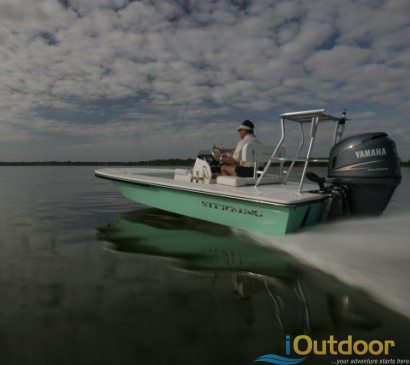
A Flats Boat, also known as a skiff, is a saltwater fishing boat commonly used in Flats fishing in Florida and is perfect to use in protected, shallow coastal waters.
Features of a Flats Boat
The Flats Boat is the best and most durable fishing boat to use when fishing in protected, shallow waters that is 12 inches deep. There are also models though that can safely glide through the water as thin as 5 inches. This boat normally spans a length of 15 to 25 feet and is equipped with outboard engine propulsion. It can comfortably accommodate two to three people and can be maneuvered with the use of a pole. Most Flats Boats are designed to have enough casting deck space for fishing and ample storage area for fishing equipment and gears.
Flats Fishing in Florida Keys
Florida is one of the best places to fish including the flats or the shallow areas of the sea which are abundant with grass. These shallow, grassy areas are home to crustaceans that serve as food to predatory fishes. Those who want to catch these fishes may head to the Florida Keys as the area is rich in marine life that thrives in shallow waters. The best fishing vessel to use when fishing in these parts of the Keys is the Flats Boat.
A Flats Boat would perfectly run over the shallow waters of Florida Keys, providing you the convenience that will increase your chances of finding a trophy-worthy catch. Possible catches in the Keys through flats fishing include species like the bonefish, redfish, snook, and tarpon.
Choosing a Flats Boat
There are several charter companies in the Florida Keys, from which you can rent out a Flats Boat. You could also choose to purchase one should flats fishing is your regular hobby.
When finding a Flats Boat to rent or purchase, use one that will provide you a stable in shallow waters. You should also choose one that is quite otherwise it would be futile to catch a fish with all noise the engine makes. So as not to get wet, also choose a Flats Boat that provides a smooth ride since you will be standing most of the time. In most cases, the larger the size of the boat, the more stable it is. You could also choose a Flats Boat that has extra accessories like a custom flats helm tower.
The quality of the Flats Boat can also be influenced by its brand. So also take note of the following reputable manufacturers of Flats Boats:
- Action Craft
- Hells Bay
- Sterling
- Century Coastline
- Flats Cat
- Egret
- Ranger
- Sea Hunter

iOutdoors Blog, Key West Fishing, Offshore Fishing, Sport Fishing
iOutdoor,
We had a great trip and we thought the captain Rich and his mate Ben were great. We wanted to catch a sailfish and Rich tried to put us on a fish but to no avail. It certainly was not because he didn’t know what to do or try, it just did not happen.
He did however, make sure we caught some fish. He planned that out time-wise before we started our trip. The boat was very well kept and appeared to us to be equipped perfectly for what we were doing.
I would not hesitate to recommend this captain to anyone. When I go back to Key West, we will definitely book Capt Rich again and his boat.
I have some more pictures but these are the ones I could get to right away.
![What is a rigging needle?]()
iOutdoors Blog, Key West Fishing, Kite Fishing, Marlin Fishing, Offshore Fishing, Sail Fishing
 A rigging needle is simply a needle used for rigging bait to help aid on offshore fishing such as Trolling, Kite Fishing, or live-bait fishing. One end has a hole where the thread is placed while the other end is sharp to be able to penetrate the bait/lure body.
How to Rig the Bait
Of course, there are many different ways to rig your bait, lure, etc. In general, you have to understand that something that you are about to rig to the line. What is it made of? Does it have a head and a body? What is the shape and type of its head? These are just some of the things you have to deal with.
Learn when to use a leader and what leader to use. Select the bait or lure. Cut several pieces of bowstring (or other sturdy string), prepare strings as many (or more than) as your lures/baits. Get some pieces of Dacron or similar material. Glue all these stuff together and use a rigging needle to stitch them securely, making sure to arrange them in such a way that you will maximize your chances of landing as many fish as you can.
There are needles readily available, though you can also make your own.
Making Your Own Rigging Needle
What you need is a piece of wire coat hanger, file, hammer, and a drill with a 1/8” drill bit. It is quite simple to improvise a rigging needle. First, untwist the coat hanger and cut off a 12” piece (make it shorter or longer, depending on your bait; 12” is good for rigging eels). Use a file to sharpen one end. Use the hammer to flatten the opposite end. Drill a hole in the flattened portion and that’s it – you’ve just finished making your own needle.
Where can I purchase a Needle?
The best way to purchase a rigging needle would be from a local tackle store or online. If you are looking to learn more about the practical uses of rigging needles, local knowledge could be very helpful. Once you understand the applications, you can purchase your needles online conveniently. R & R Tackle make an exceptional tool to help increase your odds of success on the water.
![What is a rigging needle?]()
iOutdoors Blog, Islamorada Fishing, Key West Fishing, Marlin Fishing, Offshore Fishing, Sail Fishing, Tuna Fishing
What are Outriggers Used For?
 Mainly used in deep sea trolling, outriggers are a pair of long poles fitted on both sides of a boat that holds fishing lines away from the boat. It is usually made of fiberglass and aluminum, and is tilted at an angle between 70 to 80 degrees.
When being used, outriggers are lowered to an angle nearly the same level as the water’s surface. At the edge of each outrigger is a pulley with a cord, attached to which is a quick release clip that holds the fishing line. Once a fish strikes, the line is released so that it can be landed with the use of the traditional rod and reel.
Generally, outriggers improve the chances of a fish striking because not only does it allow the angler to cover more ocean space, it also permits the use of multiple lines. Because outriggers allow the use of multiple rods and reels, anglers can troll as many fishing lines as it may allow, thus, simulating a school of bait fish. It also allows the leader out of the water, thus, preventing bubbles that may scare the fish away.
Outriggers also hold the fishing lines at a distance from both sides of the boat, spreading the lines far enough to prevent the risk of tangling. With more lines in the water, the angler can set them at different distances and depths that can create a variety of natural patterns to increase the chances of a strike.
The shallow, rocky reefs are also home to many fish species, however, trolling in these grounds are dangerous. With the use of outriggers, the fishing boat can stay in the safe deeper water while the lures are positioned to graze the shallow waters.


 Long shanks can be used for live bait fishing where finesse isn’t critical, or to match a longer profile of an artificial bait.


 Mainly used in