Fly Fishing, Backcountry Fishing, Inshore Fishing, iOutdoors Blog, Miami Beach Fishing, Sport Fishing, Tarpon Fishing
TARPON: The Silver King!
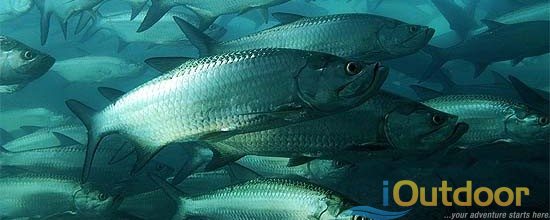
 Tarpon are also known as The Silver King and for good reason! Tarpon are large, hard fighting fish and are judged by many to be the world’s most exciting game fish on both fly and spinning reel. Once a tarpon is hooked, it begins a spectacular display of leaping and twisting acrobatic displays into the air. Tips for Tarpon are generally between 25 to 80 pounds on average but can range from a few inches in length to almost 300 pounds. The world all tackle record is 283 pounds 4ounces, a truly mighty fish! Tarpon eat crabs, shrimp, pinfish and mullet.
Fishing Technique.
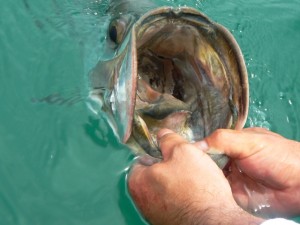
You really need a game plan if you are going to be a successful light tackle tarpon master. Tarpon are powerful and have hard rough mouths, sharp gill plates and abrasive scales. They have extremely tough mouths that are hard and boney and it takes special skill to successfully stick the big ones and get a good hook set. Rule number one – use a sturdy sharp hook and re-sharpen it often! Because of their sharp gill plates and equally sharp tough scales leaders and leader materials are very important I suggest tarpon fishing leaders should be about 6 to 12 feet in length and of heavy monofilament or fluorocarbon line from 60 to 125 LB test. A 6/0 live bait hook to an 11/0 circle hook is a good place to start when selecting a hook. Your choice of rod and reel is less important – spend your time on a variety of fresh live bait and on your terminal tackle and on getting it right.
Baits
 Tarpon are difficult fish to catch. One day they will like small pinfish and another day crabs and on another day something else entirely different, so having a good variety of bait to offer when you go out is important and will increase your chance of a hook up. Tarpon are successfully caught on artificial lures and fly rods and is really considered the top of the sport. From old stand bys like the topwater Zara Spook to sophisticated handcrafted fly’s- the choices for artificial baits are endless. In my opinion fly fishing tips for Tarpon is at the very pinnacle of the game and my all-time preferred method of hunting and catching these fantastic game fish. On light tackle or fly, a large tarpon can take you on an hour-long adventure that will cover most of the available landscape as you chase him and he pulls you around. Your skill as an angler and the quality of your gear and terminal tackle are tested to the extreme. Knots! Knots, knots, and more knots!! All fishing depends on good knot tying- if you don’t have a good understanding of knots then start learning how to tie them now- there is nothing more important to any angler and especially so in big tough game fish like tarpon fishing. At a bare minimum know these knots and how to constantly and successfully tie them under a variety of conditions and with a variety of line sizes and types of line materials- the loop knot, the clinch knot or uni-knot, the surgeons’ knot and the blood knot. Always be sure you pull your knots uptight!
Catch and Release!
We don’t eat Tarpon– they are strictly a catch and release game fish. Always take the greatest care with these beautiful prehistoric sea creatures. These incredible fish were made for angling and you should do everything possible to preserve our tarpon fishery for the generations to come. When using live bait tarpon fishing with circle hooks are the best for releasing the fish unharmed. Try not to fight a tarpon so long that it becomes completely exhausted- their perfect shark food in this state. Releasing tarpon at the side of the boat without lifting the fish out of the water produces the best results for the health of the tarpon. Lifting a tarpon out of the water or dragging a tarpon over the side of a boat for a photograph will potentially kill or damage the fish. Wear gloves to the leader and handle a tarpon so you can leave the tarpon in the water and grab the lower jaw you’re your gloved hand to remove a hook. If you can’t remove the hook don’t panic- just cut the leader as short as possible- the saltwater will dissolve the hook and the fish will recover fine.
Fly Fishing, Backcountry Fishing, Bottom Fishing, Destin Fishing, Dolphin Fishing, Drift Fishing, Flats Fishing, Grouper Fishing, Inshore Fishing, iOutdoors Blog, Islamorada Fishing, Key West Fishing, Kite Fishing, Lobster Catching, Marlin Fishing, Miami Beach Fishing, Offshore Fishing, Permit Fishing, Redfish Fishing, Sail Fishing, Shark Fishing, Snapper Fishing, Snook Fishing, Sport Fishing, Sword Fishing, Tarpon Fishing, Trout Fishing, Tuna Fishing, Wahoo fishing, Wreck Fishing
What hook should you use for which fish?
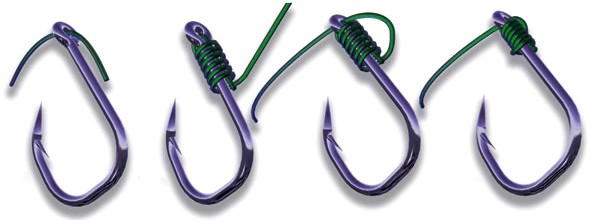
Wow! Old as man itself but it can really be overwhelming when you start to choose a hook. Freshwater, saltwater, bait hooks,“J” hook, circle hook or live bait hooks. Hook choice is VERY important! As a general rule I judge the hook size I need to use as a function of the bait size I am using, not the size of the fish I am targeting. The fish I am targeting determines the bait size. I particularly prefer circle hooks- they virtually hook themselves and are very fish friendly in catch and release situations. Experience is the best teacher on hook selection- use the right hook for the right fish and type of fishing you are doing and be prepared have a selection of hooks at hand. One common mistake is using a hook that is to big. Imagine this – if I hook you in the arm with a small quarter size hook are you going to be able to get a way or are you going to follow me anywhere? A sharp point and a strong hook is much more important than the size. Except in the case of top water lures please consider twice before you use a treble hook- there is virtually no opportunity for catch and release using a treble hook and they are banned in many areas. Treble hooks are dangerous to fisherman as well- use them sparingly and only when you plan to kill and eat the fish. One very important rule: Even though a new hook seems sharp out of the package always, always sharpen your hooks before you use them and re-sharpen them often.
Fish hooks come in several types. Knowing a few of the more popular ones and their uses can help you be successful.
Which hook should you use for which fish?
 O’SHAUGHNESSY This hook is named for the specific design of the hook. It’s a standard hook, forged with a very strong bend. This hook is relatively thick, very strong, and not likely to bend out of shape. Generally designed for saltwater, it is good for general bottom fishing use. Sizes range from #3 to as large as 19/0.
 ABERDEEN These hooks, while primarily used in smaller sizes in freshwater, are also used by saltwater anglers. They are generally made from shaped wire. Unlike the O’Shaughnessy, it can and does bend. It can be bent back into shape several times before it becomes too weak. However, once a fish is hook and the barb has completely penetrated, this hook holds quite well. These hooks are modified with bends in their shanks for use in jig molds.
 CIRCLE Perhaps the best innovation in hooks to come along, circle hooks promote healthy catch and release. The design of the hook itself, when used properly, prevents fish from being hooked in the gut. Many anglers have a problem using these hooks because they require no hook set. If you do try to set the hook, it will generally come out of the mouth of the fish. These hooks are designed to move to the corner of the fish’s mouth and set themselves as the fish swims away from you. Anglers feel a bite and simply begin reeling, slowly at first, then faster as the hook gets set.
 LIVE BAIT These hooks generally have a shorter shank than other hooks. Whether that is to allow the live bait to swim more freely or to be less apparent to the fish is debatable. My vote is to allow the bait to swim more freely. These hooks come in regular and circle designs. Regular live bait hooks will be swallowed and result in gut hooks most of the time. Circle live bait hooks provide a greater chance for a good release.
 KAHLE The curve on these hooks makes them ideal for live bait. Made from the same wire as the Aberdeen hooks, they will bend if hung on the bottom of some structure. However, once a fish is hooked, the design of the hook prevents it from being straightened.
The Guide below provides an overview of the parts of a fishing hook. There are some common parts to all hooks. Those parts include the eye, shank, gap, point and barb. The variations on these characteristics result in dozens of hook styles.
Anatomy of a Hook
The Eye
The hook eye is the connection point to the fishing line or the body of lures. Ringed eyes are the most common. The metal is bent in a uniform loop and the end sits flush against the shank. Needle, looped and tapered are some other types of hook eyes, but they tend to be used for specific applications, like saltwater or dry flies.
The Shank
The shank is the length of the hook from the eye to where the bend starts. Shanks come in short, medium or long lengths. Short ones greatly reduce the size of the hook. Medium length shanks are the most common and used in an array of fishing situations. Long shanks can be used for live bait fishing where finesse isn’t critical, or to match a longer profile of an artificial bait.
The Gap
The gap is the size of the bend in a hook from the shank to its point. An average size gap will do in most situations, but sometimes a wide gap is needed. A wide gap is used for rigging thick-bodied baits to ensure that the hook point will be exposed on the hook set.
The Point
This is the tapered end of the hook. As its name suggests, it’s the sharp point that penetrates a fish’s mouth. The shape of the point will vary. Needle, knife edge, spear, or rolled ones are some examples. The most important thing, however, is that you keep your points sharp, so invest in a hook file and use it often. Quality hooks are packaged extremely sharp and will stay sharp longer than cheaper ones.
The Barb
The barb is designed to hold the hook in place once it penetrates the fish’s mouth. The larger the barb, the more difficult it is for the fish (and likely yourself) to get the hook free. Many catch and release anglers pinch barbs with pliers or file them down for easy hook removal.
Other Basic Hooks
 BAIT HOOKS come in a variety of styles. Most feature barbs on the shaft to hold bait in place. Longer shank hooks are good for teaching kids to fish, while shorter shank ones are often used in snells.
 TREBLE HOOKS feature three bends and points in one hook. Trebles provide more hooking potential to many artificial baits such as crankbaits, jerkbaits or topwaters. Bait anglers also use trebles. Cut bait for catfish or threading minnows for lake trout are two examples where trebles are regularly used.
 SIWASH HOOKS are quite strong and have a long shank and point. These hooks have a straight eye so they sit properly on lures. Siwash hooks are often used on single-hook baits, such as spinnerbaits. I also use them sometimes to replace factory-provided treble hooks on certain baits, especially spoons.

JIG HOOKS are designed to sit in specific jig molds. They feature a bend just below the hook eye, with a 90-degree bend being the most common. Pouring your own jigs can save you money and be a fun winter hobby to gear up for the next season

Offshore Fishing, iOutdoors Blog, Snapper Fishing, Tarpon Fishing
What Kind of Bait Do You Use to Catch SNAPPER in the Gulf of Mexico?
 The Snapper, particularly the Gulf Red Snapper, is one of the most prized fish to catch in the Gulf of Mexico. Not only is it known for its tasty meat but also for its display of strength in the fishing sports world. It thrives in abundance in the Gulf of Mexico due to the favorable warmer climate and rich marine life in the area.
The key to successful Snapper Fishing in the Gulf of Mexico is a wide variety of bait. Remember that just like any game fish, Snappers are very discerning creatures, that one bait may not necessarily be effective the next time.
Of course, you can choose between artificial and live bait. It is observed, however, that Snappers take artificial baits with less vigor compared to natural bait. That is why, when choosing artificial lures, always bring along different kinds and sizes since Snappers to have a range of choices.
Although artificial baits nowadays may have the best in technological advancement, it doesn’t mean that live bait won’t do anymore. In fact, Tarpons respond the most to live baits. Snappers can eat absolutely almost anything although they have developed a preference for small fishes such as sardines and cigar mirror, and crustaceans. In fact, the Red Snapper derives its reddish tint from its diet of mostly shrimps.
In the Gulf of Mexico, Snappers can be caught in waters as deep as 30 feet to 300 feet. They tend to cluster at the bottom of the ocean and prefer rocky reefs, ridges and ledges, and artificial refuges such as shipwrecks and oil rigs. Also, note that in the Gulf of Mexico, their appropriate regulations cover Snapper fishing.
What Kind of Bait Do You Use? to Catch SNAPPER in the Gulf of Mexico.

Offshore Fishing, Bottom Fishing, iOutdoors Blog, Marlin Fishing, Redfish Fishing, Snook Fishing, Sport Fishing, Tarpon Fishing, Tuna Fishing
What kind of bottom fish can you find in the offshore waters of Tampa?
If you’re passionate about fishing, you must try your hand in Offshore Sports Fishing at Tampa Bay in Florida. Catching some bottom fish in your adventure is especially most rewarding, as it is a unique experience to have bottom fishes like the sea bass, and the tautog as your prize catches.
There are also other bottom dwellers that could amaze you with their peculiarity, too, and they’re just waiting for you to go hook them good. These include famous names like the redfish, the tarpon or silver king, and the snook. The redfish are known as bruisers because they are feisty and put up a great fight once they’re hooked. Tarpons meanwhile, are acrobatic wonders, as they could leap as high as ten feet just to escape from an angler’s grasp. The snook, on the other hand, is the starfish in Florida, one of the most pursued species of bottom fishes.
Offshore Fishing 101
Anglers head out 20-30 miles from the beach when they go off-shore sports fishing. This means they’re out to get some blue water fishes including wahoo, tuna, and marlin. Bottom fishes meanwhile are caught when boats go near wrecks or reefs where deep water bottom dwellers may be found. If one is lucky enough, the Speckled Hind and the Marble Grouper may be hooked in such waters.
Going on a fishing adventure in Tampa Bay is certainly worth it. You may do it all by yourself to enjoy some peace and quiet or you might want to bring your entire family to experience sports fishing in the best way possible. The best thing about choosing Tampa Bay as your fishing adventure destination is that you could simply charter a boat that would take you to the appropriate offshore spot where to catch your precious bottom fishes.
Flats Fishing, Fly Fishing, Inshore Fishing, iOutdoors Blog, Islamorada Fishing, Key West Fishing, Permit Fishing, Redfish Fishing, Snook Fishing, Tarpon Fishing
What is a Flats Boat and what is it used for in the Keys?
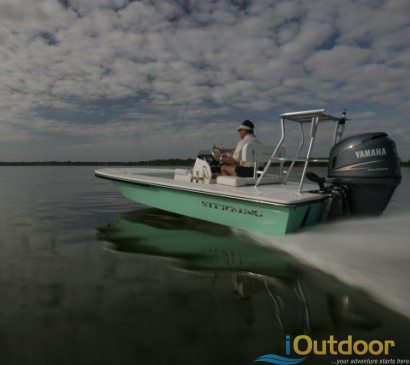
A Flats Boat, also known as a skiff, is a saltwater fishing boat commonly used in Flats fishing in Florida and is perfect to use in protected, shallow coastal waters.
Features of a Flats Boat
The Flats Boat is the best and most durable fishing boat to use when fishing in protected, shallow waters that is 12 inches deep. There are also models though that can safely glide through the water as thin as 5 inches. This boat normally spans a length of 15 to 25 feet and is equipped with outboard engine propulsion. It can comfortably accommodate two to three people and can be maneuvered with the use of a pole. Most Flats Boats are designed to have enough casting deck space for fishing and ample storage area for fishing equipment and gears.
Flats Fishing in Florida Keys
Florida is one of the best places to fish including the flats or the shallow areas of the sea which are abundant with grass. These shallow, grassy areas are home to crustaceans that serve as food to predatory fishes. Those who want to catch these fishes may head to the Florida Keys as the area is rich in marine life that thrives in shallow waters. The best fishing vessel to use when fishing in these parts of the Keys is the Flats Boat.
A Flats Boat would perfectly run over the shallow waters of Florida Keys, providing you the convenience that will increase your chances of finding a trophy-worthy catch. Possible catches in the Keys through flats fishing include species like the bonefish, redfish, snook, and tarpon.
Choosing a Flats Boat
There are several charter companies in the Florida Keys, from which you can rent out a Flats Boat. You could also choose to purchase one should flats fishing is your regular hobby.
When finding a Flats Boat to rent or purchase, use one that will provide you a stable in shallow waters. You should also choose one that is quite otherwise it would be futile to catch a fish with all noise the engine makes. So as not to get wet, also choose a Flats Boat that provides a smooth ride since you will be standing most of the time. In most cases, the larger the size of the boat, the more stable it is. You could also choose a Flats Boat that has extra accessories like a custom flats helm tower.
The quality of the Flats Boat can also be influenced by its brand. So also take note of the following reputable manufacturers of Flats Boats:
- Action Craft
- Hells Bay
- Sterling
- Century Coastline
- Flats Cat
- Egret
- Ranger
- Sea Hunter
![Boat shoes a Tarpon fisherman’s best friend!]()
Charter Head Boat, Inshore Fishing, iOutdoors Blog, Tarpon Fishing
Boat shoes- a Tarpon fisherman’s best friend!
The best shoes to wear on a boat are simple and it is known as boat shoes. Boat shoes, also known as deck shoes, are mainly worn to withstand the slippery condition often experienced in the deck of the boat.
Advantage of Boat Shoes
Boat shoes do not only provide anti-slip properties, it is also quite comfortable. These shoes are also perfect for boat wear because they are one of the fast-drying shoes in the industry. Fast-drying shoes mean anti-microbial protection so your feet are free from bad smells.
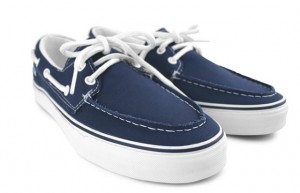 Boat shoes are made of leather which are resistant to water. It is perfect to wear when out on a leisure day of fishing, sailing or yachting. Aside from wetness and slip protection, boat shoes are also capable of giving you good posture.
Anti-slip properties of boat shoes are owed to its specially designed treads. It treats give its wearers sure footing as well as prevent scraping and scuffing the surface of the boat. One of the most common accidents on boating trips is caused by slips and falls. In order to prevent this, it is best to wear the right kind of shoes. They also help in getting and out of the boat quite easily.
Maintaining Your Boat Shoes
Boat shoes may be designed to withstand rough conditions on a boat, in order to keep its properties working, it must be maintained regularly. This can be done by applying quality oil to the leather to maintain its water resistance and suppleness. Insoles of the shoes should also be removed, sprayed, and allowed to air dry to prevent growth of bacteria or fungi. Worn soles should be repaired or replaced to ensure maximum slip protection.
Don’t miss out on getting your feet comfortable in a pair of boat shoes while landing that Tarpon of a Lifetime next time Visiting the Florida Keys on an iOutdoor Fishing Adventure!

 Tarpon are difficult fish to catch. One day they will like small pinfish and another day crabs and on another day something else entirely different, so having a good variety of bait to offer when you go out is important and will increase your chance of a hook up. Tarpon are successfully caught on artificial lures and fly rods and is really considered the top of the sport. From old stand bys like the topwater Zara Spook to sophisticated handcrafted fly’s- the choices for artificial baits are endless. In my opinion fly fishing tips for Tarpon is at the very pinnacle of the game and my all-time preferred method of hunting and catching these fantastic game fish. On light tackle or fly, a large tarpon can take you on an hour-long adventure that will cover most of the available landscape as you chase him and he pulls you around. Your skill as an angler and the quality of your gear and terminal tackle are tested to the extreme. Knots! Knots, knots, and more knots!! All fishing depends on good knot tying- if you don’t have a good understanding of knots then start learning how to tie them now- there is nothing more important to any angler and especially so in big tough game fish like tarpon fishing. At a bare minimum know these knots and how to constantly and successfully tie them under a variety of conditions and with a variety of line sizes and types of line materials- the loop knot, the clinch knot or uni-knot, the surgeons’ knot and the blood knot. Always be sure you pull your knots uptight!


 Long shanks can be used for live bait fishing where finesse isn’t critical, or to match a longer profile of an artificial bait.


